upcoming workshop: Look / Mira


Next week, I’ll be teaching a virtual generative workshop on Latinx/e ways of looking in poetry and prose. In the spirit of the workshop, I’ve been thinking about looking as attention, inheritance, witness, and return. What it means to look with language. To look with the body. To look while carrying what family, place, fear, tenderness, and survival have taught us to notice.

The Spanish word mira carries both invitation and urgency. Look. See. Notice. Pay attention. It can be tender, corrective, playful, protective. It can also be a way of saying: something is happening here, and I need you to witness it with me.

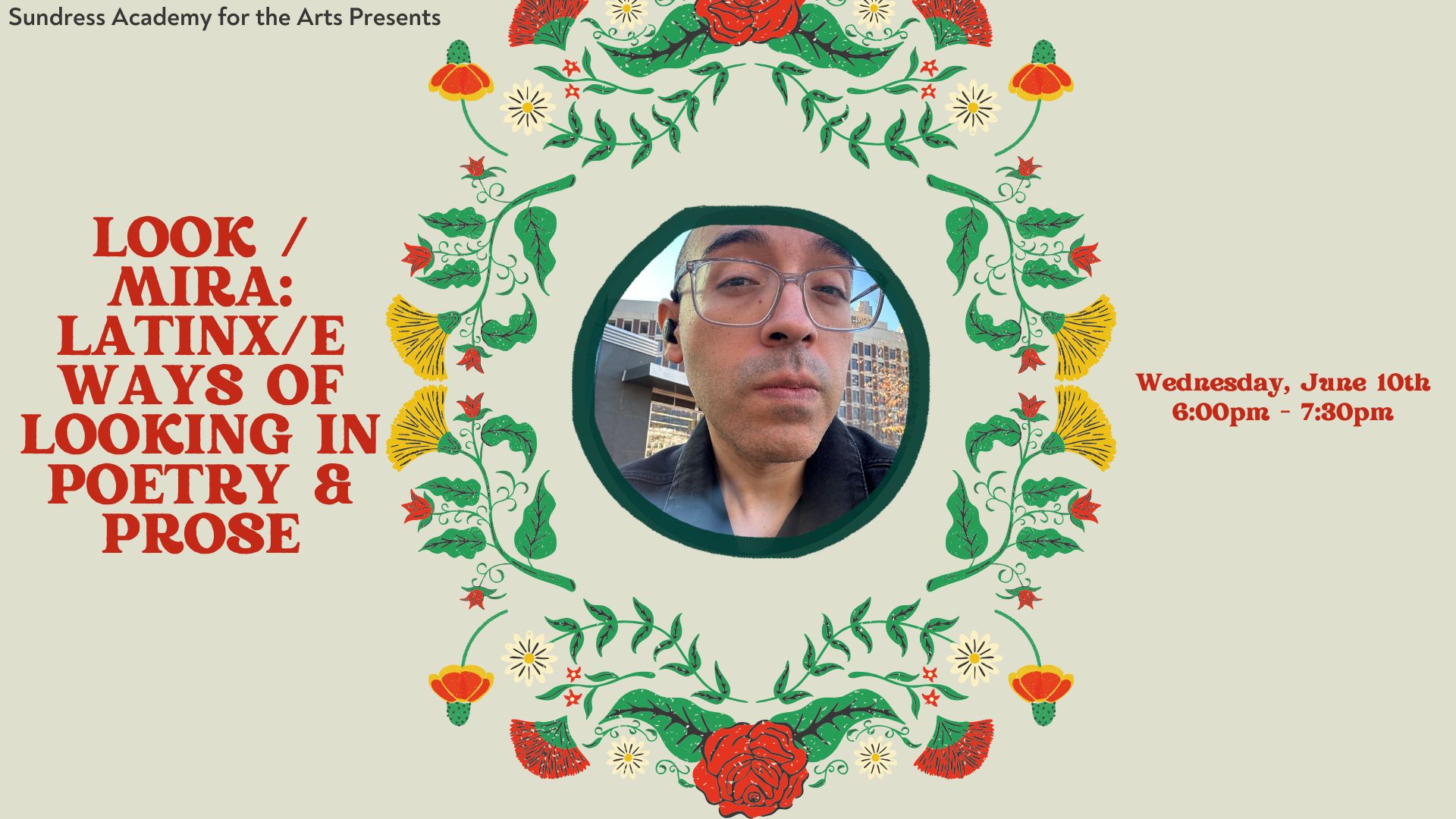
That is the spirit behind my upcoming generative workshop, “Look / Mira: Latinx/e Ways of Looking in Poetry & Prose,” hosted by the Sundress Academy for the Arts on Wednesday, June 10, from 6:00–7:30 PM EST. This event will be held over Zoom. Participants can register and access the FREE event at tiny.utk.edu/sundress (password: SAFTA).

In the workshop, we’ll read brief excerpts from poetry and prose and use them as openings into our own writing. We’ll think about looking as inheritance, looking as refusal, looking through place, and looking toward what might still be possible. The goal is not to explain identity or experience, but rather to notice how writing can hold the layered ways we have learned to see and be seen.

Participants will be invited to write in response to low-stakes prompts. Poetry, prose, fragments, lists, memory, speculation, and hybrid forms are all welcome. Sharing will be optional.

I’m especially interested in the moments when the gaze shifts: from the self to the family, from the room to the remembered place, from the body to the ancestor, from what happened to what language makes possible.

What have you inherited as a way of seeing?

What have you learned not to look at directly?

What might become visible if you let memory, place, and language look back?

I hope you’ll join me.
Thoughts on the 2024 Presidential debate + new project

I looked it up—which is to say I found the transcript and hit CTRL+F—and can verify that the word “border” was used a total of 38 times during the first 2024 Presidential debate.

Trump said it the most, of course.

Mind, I didn’t go in expecting to have a good time. What surprised me, though, was how I felt every time Trump brought it back to the border: badgered, bullied, berated. All the B words.

I also thought of my students and what they must be feeling. That this is the world we must contend with together.

Because as much as Trump kept on about the border, there was more violence in what wasn’t spoken about by either candidate.

And when the two candidates went off about their golf game, I felt like so much of the world was erased.  


What often gets lost in discussions about “borders” is the reality and history of U.S. involvement in Latin America as well as in other parts of the world. More and more, people are compelled to cross borders because they are fleeing violence, persecution, extreme poverty, or environmental disasters.

Behind every number cited in a statistic, there are individuals, human faces and needs. Every time Trump said the word “border,” those human faces were reduced to rhetoric.

It’s like he is building a wall, only its made of words, and the more he foments hate against marginalized communities, the more words are weaponized against us, and the more obfuscated I feel from the world.

And I know I’m not the only one.


Human beings are not problems to be managed. The scapegoating of migrants has broad implications. It perpetuates stereotypes, fuels division, and distracts from addressing the systemic issues that contribute to migration flows. It risks normalizing discriminatory attitudes and policies that can have far-reaching consequences for our communities and abroad.

This presidential debate serves as a stark reminder of the power of language and discourse in shaping public opinion and policy. I mean, the word “border” was used a total of 38 times—which is to say that 38 times I felt the world get smaller—and here I am trying to show how presence is political.

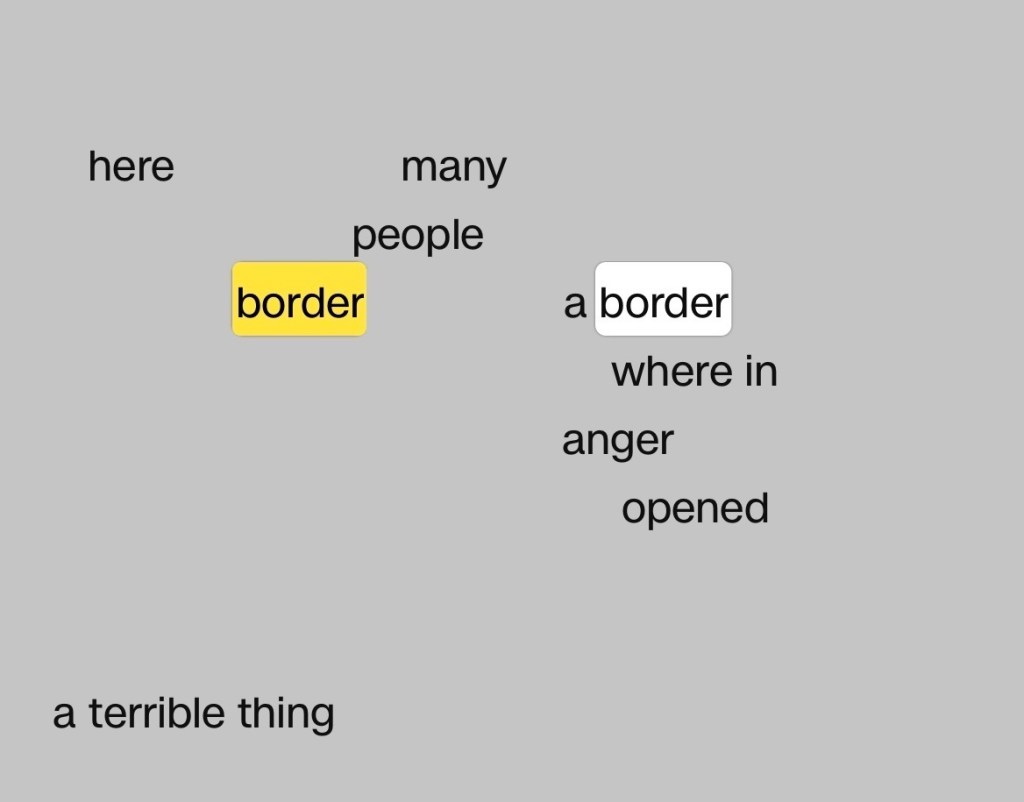
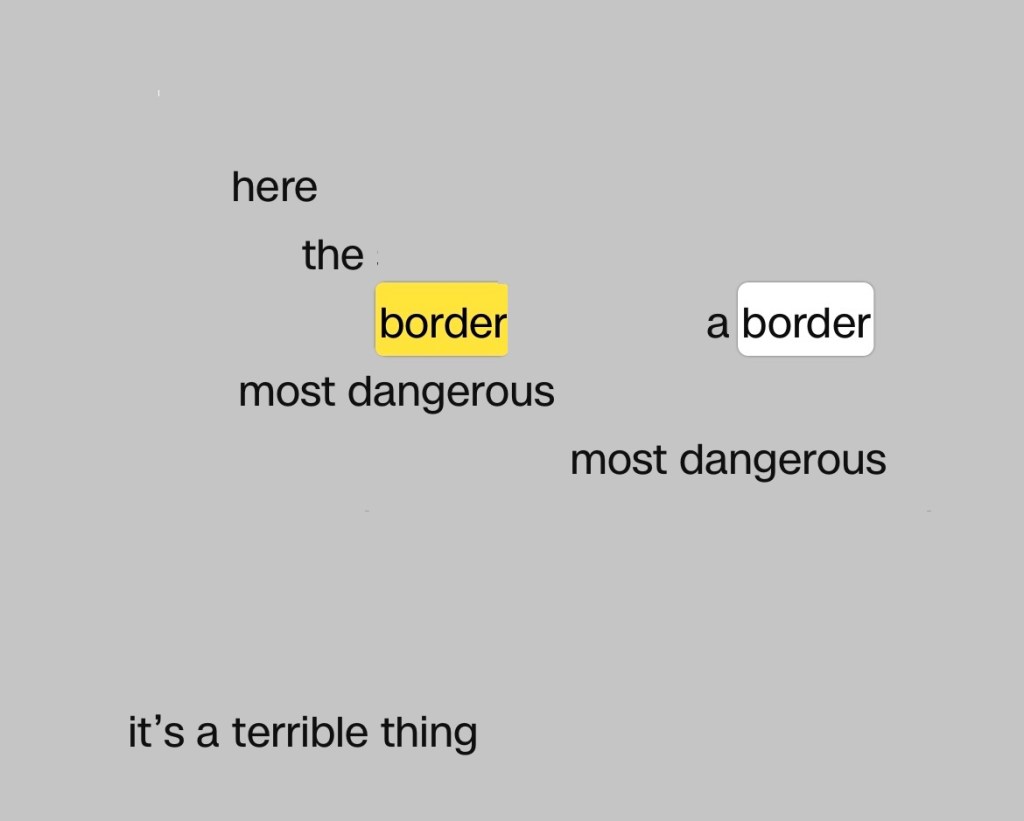
My act of presence this time around includes this post but also a series of erasures based on the aforementioned transcript. I’ll be sharing the Debate Series here and on my Instagram account, @poetryamano, over the next few weeks. See the first set below. I ended up doing two takes on each quote to represent the “two sides” of the debate.


More than my communities are hurt by this mix of violence, neglect, and erasure by those in power.

For now, I can only speak about my corner of it and let it be known that at least here, in these words, is the debate continuing—not the slapped-together debate we saw last week, but the debate of how we will survive despite it.


Debate Series: takes 1.1 & 1.2


Debate Series: takes 2.1 & 2.2


Abrazos,

= José =