I looked it up—which is to say I found the transcript and hit CTRL+F—and can verify that the word “border” was used a total of 38 times during the first 2024 Presidential debate.
Trump said it the most, of course.
Mind, I didn’t go in expecting to have a good time. What surprised me, though, was how I felt every time Trump brought it back to the border: badgered, bullied, berated. All the B words.
I also thought of my students and what they must be feeling. That this is the world we must contend with together.
Because as much as Trump kept on about the border, there was more violence in what wasn’t spoken about by either candidate.
And when the two candidates went off about their golf game, I felt like so much of the world was erased.
What often gets lost in discussions about “borders” is the reality and history of U.S. involvement in Latin America as well as in other parts of the world. More and more, people are compelled to cross borders because they are fleeing violence, persecution, extreme poverty, or environmental disasters.
Behind every number cited in a statistic, there are individuals, human faces and needs. Every time Trump said the word “border,” those human faces were reduced to rhetoric.
It’s like he is building a wall, only its made of words, and the more he foments hate against marginalized communities, the more words are weaponized against us, and the more obfuscated I feel from the world.
And I know I’m not the only one.
Human beings are not problems to be managed. The scapegoating of migrants has broad implications. It perpetuates stereotypes, fuels division, and distracts from addressing the systemic issues that contribute to migration flows. It risks normalizing discriminatory attitudes and policies that can have far-reaching consequences for our communities and abroad.
This presidential debate serves as a stark reminder of the power of language and discourse in shaping public opinion and policy. I mean, the word “border” was used a total of 38 times—which is to say that 38 times I felt the world get smaller—and here I am trying to show how presence is political.
My act of presence this time around includes this post but also a series of erasures based on the aforementioned transcript. I’ll be sharing the Debate Series here and on my Instagram account, @poetryamano, over the next few weeks. See the first set below. I ended up doing two takes on each quote to represent the “two sides” of the debate.
More than my communities are hurt by this mix of violence, neglect, and erasure by those in power.
For now, I can only speak about my corner of it and let it be known that at least here, in these words, is the debate continuing—not the slapped-together debate we saw last week, but the debate of how we will survive despite it.
Debate Series: takes 1.1 & 1.2
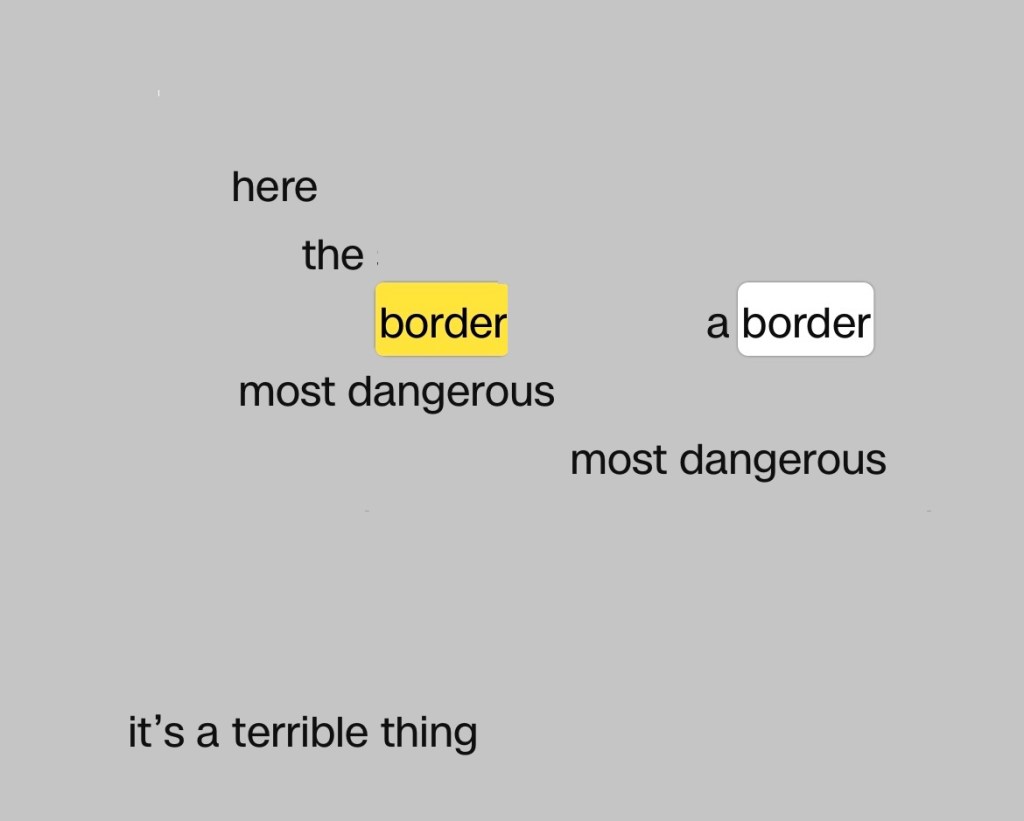
An erasure poem that reads: here the border a border most dangerous most dangerous it’s a terrible thing. 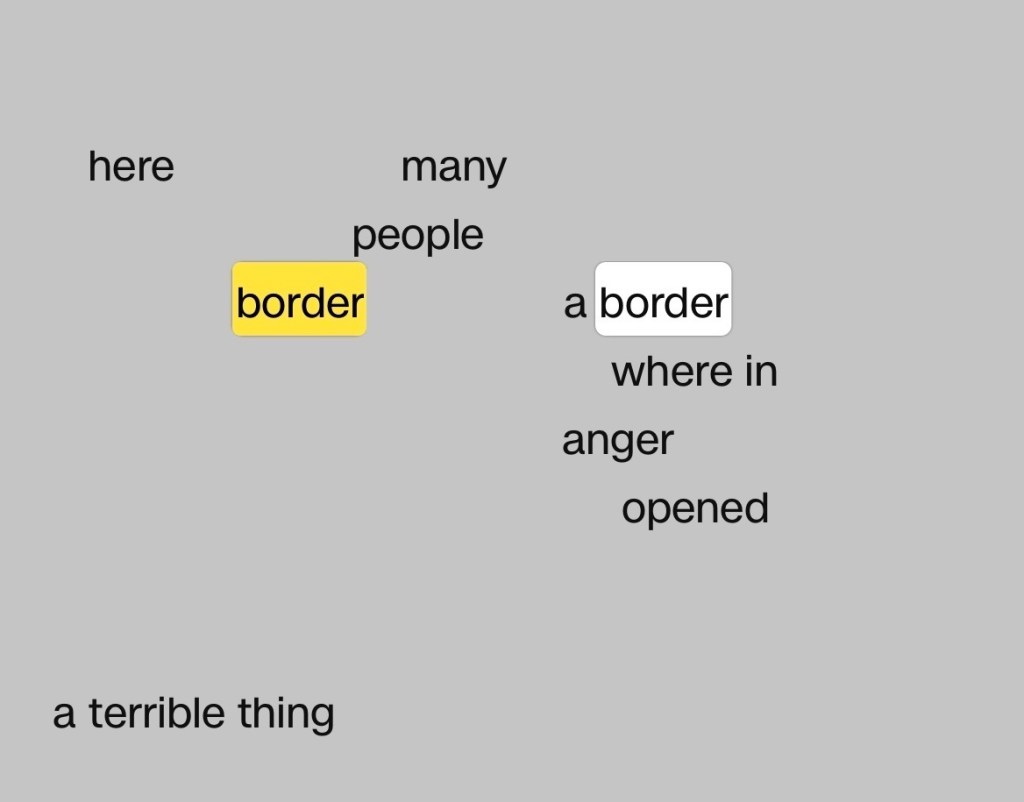
An erasure poem that reads: here many people border a border where in anger opened a terrible thing.
Debate Series: takes 2.1 & 2.2

An erasure poem that reads: borders illegally cross border on border states and cities and in some cases trust. 
An erasure poem that reads: border resident rants border on overwhelm border and burden using us to crisis.
Abrazos,
= José =
 The Influence