This week’s lyrical alignment is drawn from an interview with writer Richard Rodriguez conducted by Hector A. Torres for the book Conversations with Contemporary Chicana and Chicano Writers (University of New Mexico Press).
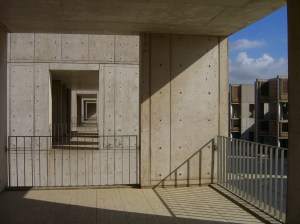 I came across the passage below from a journal entry during my third year doing the PhD. I remember being struck by Rodriguez’s apt and rich metaphor in response to being asked about style. Not only is the narrative he develops through anecdote compelling, but the way he pivots its meaning towards his own writing process at the end really hits home with me. It’s the kind of statement that acknowledges the form and method side of writing but also allows for the fluidity and surprise that lie at the heart of the best writing.
In setting the prose into verse, I settled on working with five words per line; while the poem ends unevenly outside this structure, it almost feels appropriate. The last line is four words long, and that space where the fifth word would be feels like a space where the reader is allowed to think about the question being asked at the end. This question, furthermore, is one of those wonderful questions that echoes itself back as not a question. Not sure how to articulate this last bit fully, other than to add that some questions can simultaneously sound like requests for an answer as well as like statements we’re unsure of.
Richard Rodriguez responds to the question “How do you define style for yourself?”
lyrical alignment by José Angel Araguz
drawn from an interview with Richard Rodriguez
conducted by Hector A. Torres
There was a great architect
called Louis Kahn, a wonderful
modernist architect. He had on
staff at his architectural firm
in Philadelphia a kind of
guru or a mystic or
something. This guy used to
go with him — I think
he was Buddhist — to these
architectural sites where they were
going to build the building
whether it was in Bangladesh
or Houston or wherever it
was. They would sit there
for several days and see
the same site from different
angles, several shadows, several times
of the day, and they
would ask the question: What
does this space want to
become? It seems to me
that’s all I ask when
I write. When I look
at the blank page, I’m
trying to decipher in it:
What does it want to
tell me? See, it’s almost
as though when I write
I’m cracking it open, you
know what I’m saying?
from Conversations with Contemporary Chicana and Chicano Writers, ed. Hector Torres (University of New Mexico Press)
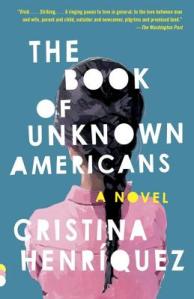 This week’s lyrical alignment comes from
  The Influence