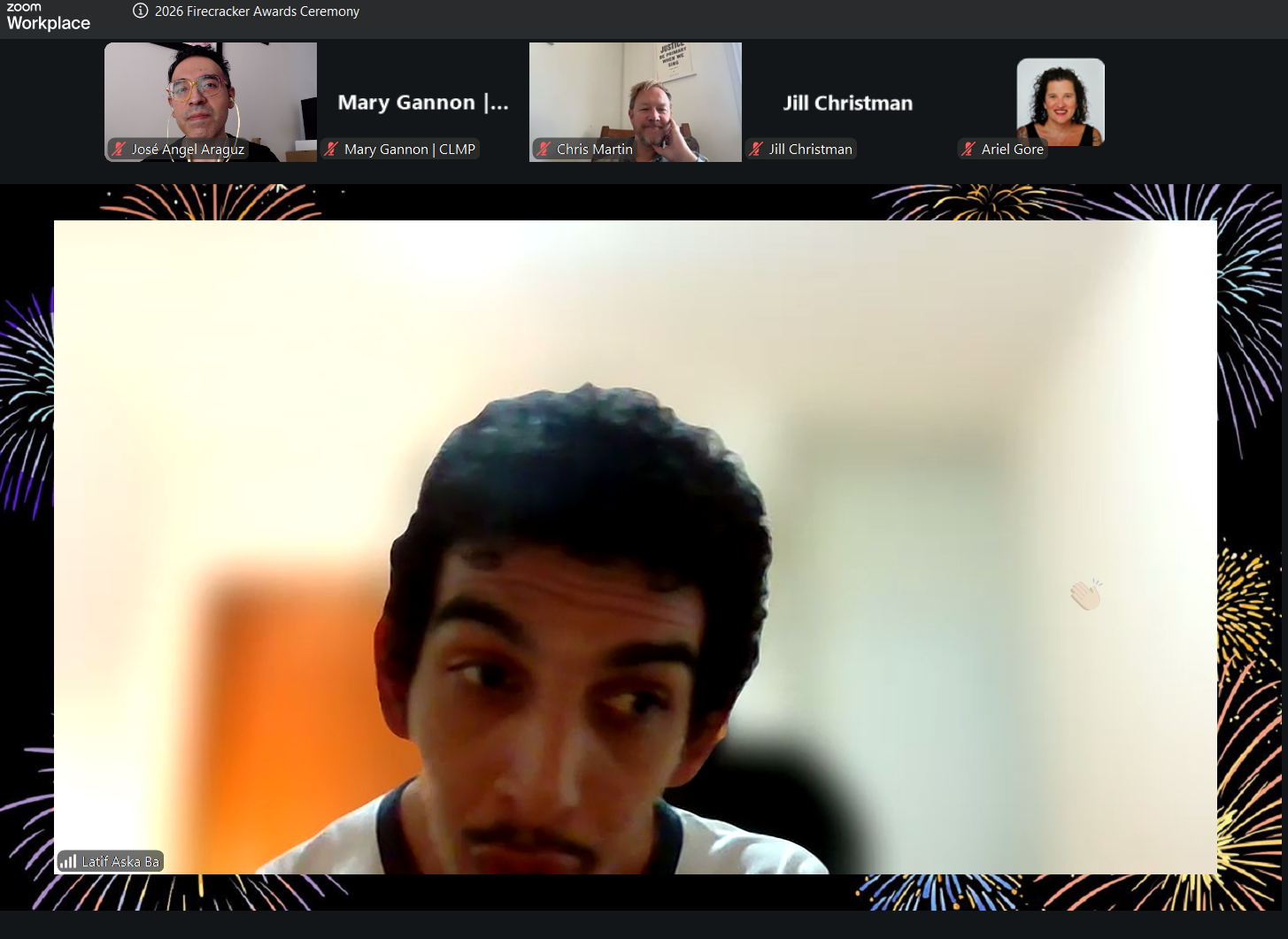
On June 25, I had the honor of joining the virtual ceremony for the 2026 Firecracker Awards. I served as one of this year’s poetry judges alongside Danny Caine and Esther Lin, and I was grateful for the opportunity to help announce the finalists and winner during the ceremony.
This year’s Firecracker Award in Poetry went to The Choreic Period: Poems by Latif Askia Ba, published by Milkweed Editions.
Here is the citation from the poetry judges:
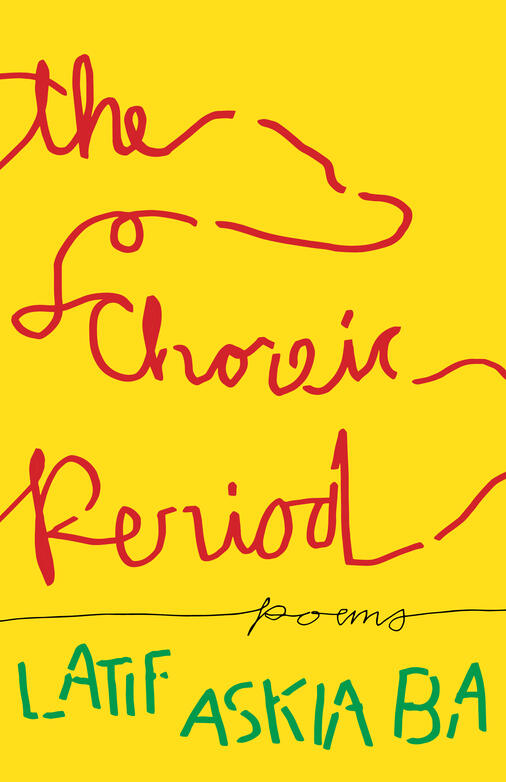
“The Choreic Period is a striking contribution to contemporary disability poetics, challenging ableist reading habits and expanding what poetic accessibility and difficulty can mean. We were moved by its pared-down nature, its illustration of the relationship between syntax and disability, and its innovative formal elements, including interruptive punctuation, staccato lineation, multilingual code-switching, and deliberate difficulty. Its force and voice made this conceptually sharp, powerfully embodied book a clear choice for the Firecracker Poetry Award.” —from the judges
Congratulations to Latif Askia Ba and Milkweed Editions, as well as to all five poetry finalists and this year’s winners and finalists across genres. The full list of 2026 Firecracker Award winners and ceremony highlights is available through CLMP.
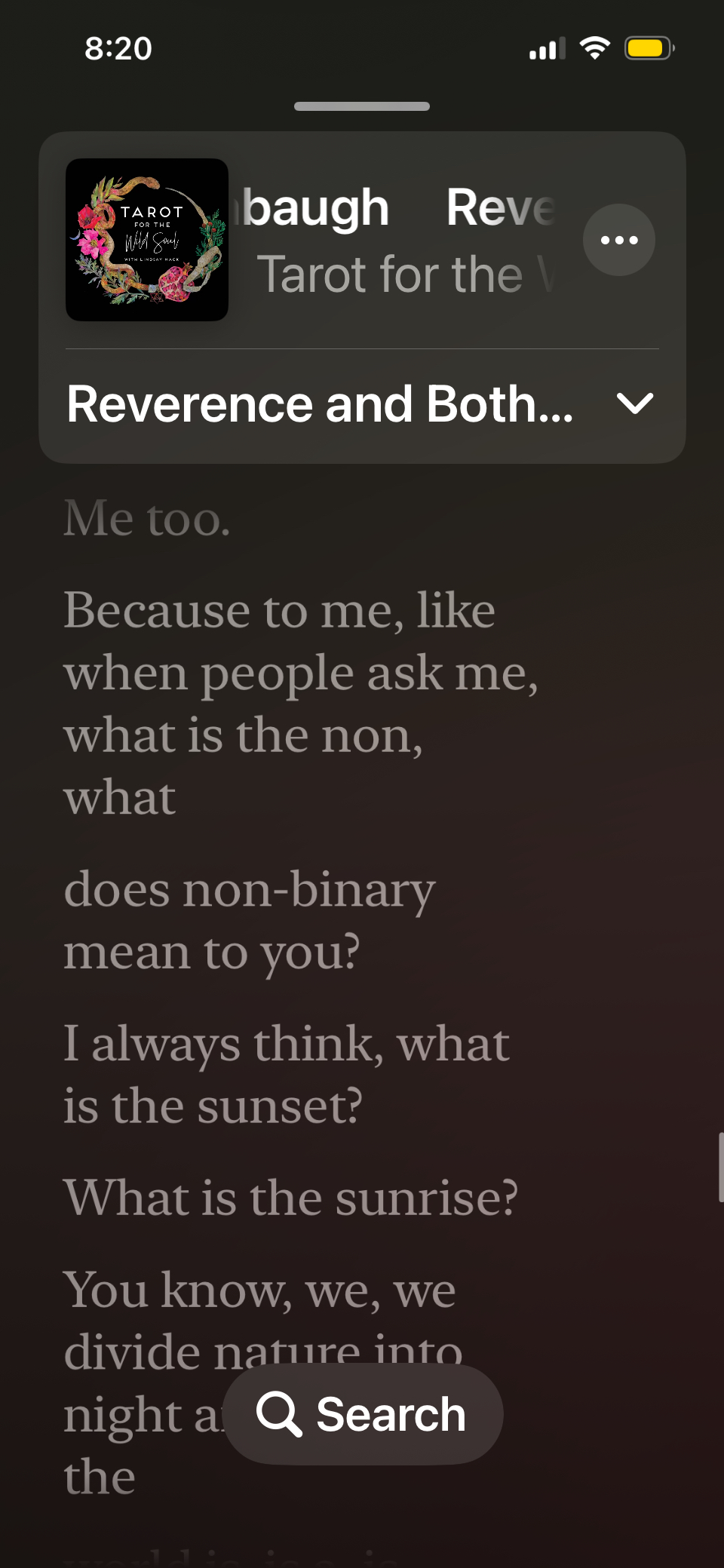
Elsewhere this week, I listened to episode 318 of Lindsay Mack’s Tarot for the Wild Soul, “Nature as Medicine with Willow Defabaugh.” During their conversation, Willow Defebaugh speaks about the relationship between queerness, nonbinary identity, and the natural world.
As Pride month approaches its close, I keep returning to Defebaugh’s description and how it paints nonbinary life not as a position between two fixed poles, but as part of a world that moves as a wheel.
The following found poem came from a passage in the episode transcript.
more colorful, more alive
after Willow Defebaugh
When people ask me,
What does nonbinary mean to you?
I think:
What is the sunset?
What is the sunrise?
We divide nature
into night and day,
but the world
is a wheel.
That is the beauty
of the world, truly.
When is the sky
more colorful,
more alive?
Found from words spoken by Willow Defebaugh in “Nature as Medicine with Willow Defabaugh,” an episode of Tarot for the Wild Soul hosted by Lindsay Mack. Selection, title, lineation, and light editing by José Angel Araguz. Verbal fillers and false starts have been removed.
These two encounters stay with me differently, but they touch at the level of form. Each asks what becomes possible when inherited divisions are no longer treated as natural, neutral, or complete.
The world is a wheel. Language moves with the bodies and the lives that speak it. At the places where our customary divisions give way, the sky might become more colorful, more alive.


 The Influence