* a meditation on brevity with paz, ritsos, & carruth

Writing – Octavio Paz

I draw these letters
as the day draws its images
and blows over them
and does not return


It’s suiting to begin this meditation on brevity with Paz who once said that he admired the short lyric for being the hardest kind of poem to write. Anyone who’s worked out a haiku or tanka in earnestness knows something of this difficulty. With haiku and tanka there are at least parameters, a spirit to leap after. Often, the short poem is a surprise, something arrived at when you intuit the right time to leave a poem alone.


Triplet – Yannis Ritsos

As he writes, without looking at the sea,
he feels his pencil trembling at the very tip –
it is the moment when the lighthouses light up.


I came across this gem from Ritsos in Stephen Dobyn’s illuminating book “Best Words, Best Order.” In it, Dobyns speaks of the nuanced work of the last line as a “metaphysical moment,” one that suggests “sympathetic affinities and a sensitivity to those affinities on the part of the poet.” The power of a short lyric can be felt when one is reading and feels something like “lighthouses light up” inside the mind.


haiku – Hayden Carruth

Hey Basho, you there!
I’m Carruth. Isn’t it great,
so distant like this?


Ultimately, what is at stake in the short lyric is what is at stake in any poem, the translating/transcribing of the human voice. In a longer poem, one can create an argument via imagery and metaphor, what’s being said accumulates like a wave to a crest. The short lyric is the echo of that argument, the sound of foam chisping on the shore. What is compelling about Carruth’s distance is not that Basho feels it, but the reader does.

* wavering *

* wavering *

Happy shoring!

Jose

* from hands to manos

* manos *

* manos *

This week’s post is a meditation on form via sharing some new publications.

First, the good folks over at Rattle have recently shared the content of their Summer 2014 issue online which includes my own poem “Abandoned Church.” Rattle is unique in that they ask for some insight into the work via the contributor’s bio, which allowed me to share a bit of my thinking behind the form of this and other kin poems:

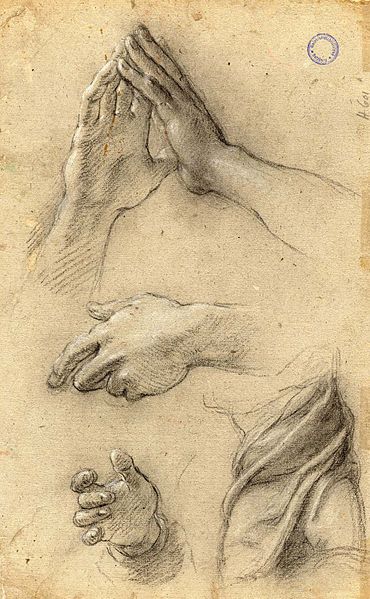
“These poems come from working at times in a five-line form, which I call ‘hands,’ maybe because each could be written on the palm of a hand. I consider them the poetic, unkempt nephews to Yasunari Kawabata’s ‘palm of the hand’ stories. These pieces are surprising me, pushing me to be concise and spooky, narrative and imagistic within a limited frame.”

Read the poem “Abandoned Church” here.

I’m also happy to announce the release of the new issue of Inflectionist Review which includes my poems “First Night” and “Blue in the Rain” – the latter of which is also in the “hands” form. Check out the issue here.

My two guides into the form have been the short lyrics of Yannis Ritsos as well as my reading and writing in the Japanese tanka form. Here’s some of that Ritsos mojo:

A Door – Yannis Ritsos

The carpentry shop,
the ironmonger,
the grocery store,
the farmer’s rubber boots
on the porch,
the low, cloudy sky,
soapsuds,
and, so unexpectedly,
a blue door
fallen flat among the ruins
with the key
still in place.

***

Working in and out of various forms, I’m always curious if people take note or not. Ultimately, what matters is writing a solid poem worth rereading, which is the ongoing good fight.

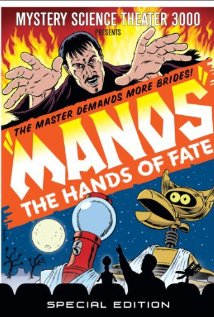
Of course, all this talk of “hands” has me thinking about these guys:

* the hands of fate *

* the hands of fate *

Happy fating!

Jose