In my recent microreview & interview of Emily Corwin’s tenderling (Stalking Horse Press), I noted how the poems showcase Corwin’s singular attention to the fluidity of language. Through anagrams and juxtaposition of elements from fairy tales and relationship narratives, tenderling pulses with the discovery of new stories being wrought from stories past.
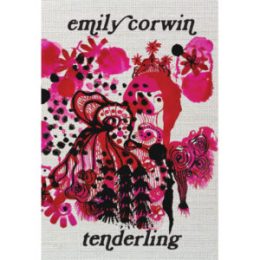 The poem “reverie” (below) is a good example of this mix of elements and discovery. The poem begins with the speaker’s admission of eating “the honeycomb whole and now there are bees / inside me.” The fabulist logic of the opening metaphor places the reader in the center of a poetic crucible. From there, vulnerability (“I try to / look human today”) and a sense of longing are brought together and mix until the poem itself becomes a “place” similar to the “place where / slept our bodies, young and peaceful.”
Within this context, reverie transforms from mere daydreaming to a state of evocative newness via language. The poem’s final word, “humming,” points back not only to the opening metaphor of the eaten honeycomb / bees inside, which evokes a physical humming, but also to the humming within words that lyric poetry is able to strike via meaning. Through conjecture guided by wonder, the speaker arrives by the end at a place beyond daydreaming.
reverie – Emily Corwin
I ate the honeycomb whole and now there are bees
inside me. a leaf drips out of my underwear; I try to
look human today. my panic—unrelenting, my ball
-gown gone missing, somewhere under the blossoms.
in the nights, I return to him often, to the place where
slept our bodies, young and peaceful, and I wonder if
he also returns, if we happen to meet, if he would kiss
me a little in the closets—touch like mercy, like a long
-awaited relief. we lay down our breadknives, we lay
ourselves down in quiet, feeling our way toward a
sweetness, toward my insides humming.
*
Emily Corwin’s collection, tenderling, is available for pre-order from Stalking Horse Press.
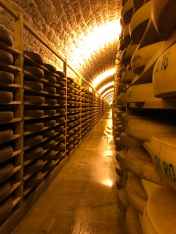 Hirshfield’s knack for listening is on full display in this week’s poem, “Sheep’s Cheese.” This short poem accumulates its narrative details slowly, doles them out line by line with the same care as is being described. It’s the kind of lyric nuance that can be missed out on if read too fast.
 The Influence