* David Ignatow in My Own House

Reading the following poem I realized that it would be interesting – to me, to you, to who? – to periodically share a snapshot of what my writing desk looks like.  With that in mind, here is what it looks like this week:
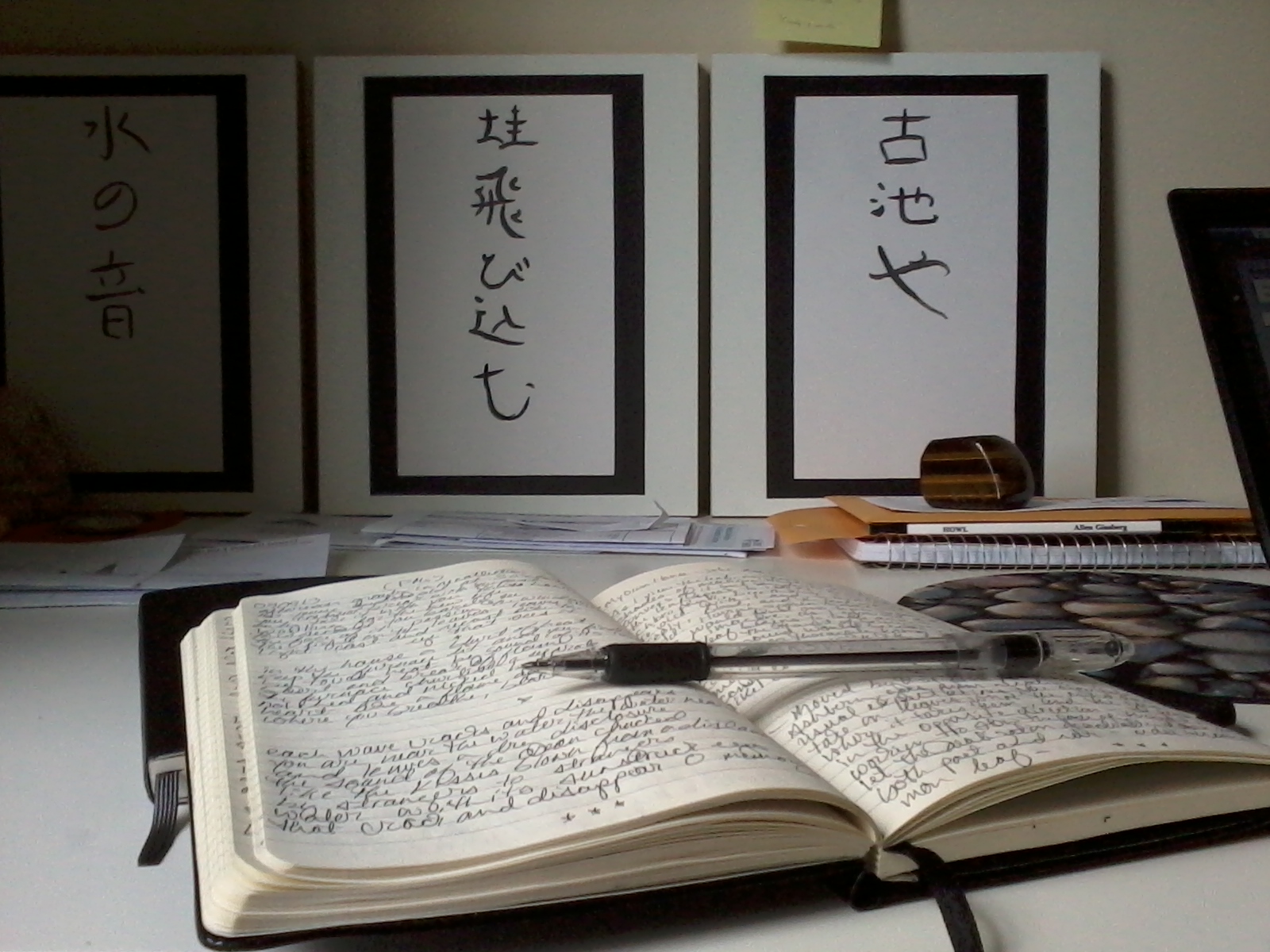
* hey, I can see my house from here *

* hey, I can see my house from here *

This view is from the surface level – what the page would see if it could do a sit-up.  I’ll try different angles next time.

(Points if you recognize the haiku in the kanji.)

The following poem by David Ignatow moves me in how it goes from negating the usual expectations of looking at leaves – the symbolic view of leaves, what the mind does, where it takes them, what it takes them to mean – and then goes in the opposite direction, the prose working to slow the pace of thought and let the realization gradually dawn on both poet and reader: how man becomes more leaf.

My Own House – David Ignatow

As I view the leaf, my theme is not the shades of meaning that the mind conveys of it but my desire to make the leaf speak to tell me, Chlorophyll, chlorophyll, breathlessly.  I would rejoice with it and, in turn, would reply, Blood, and the leaf would nod.  Having spoken to each other, we would find our topics inexhaustible and imagine, as I grow old and the leaf begins to fade and turn brown, the thought of being buried in the ground would become so familiar to me, so thoroughly known through conversation with the leaf, that my walk among the trees after completing this poem would be like entering my own house.

**

Happy housing!

Jose
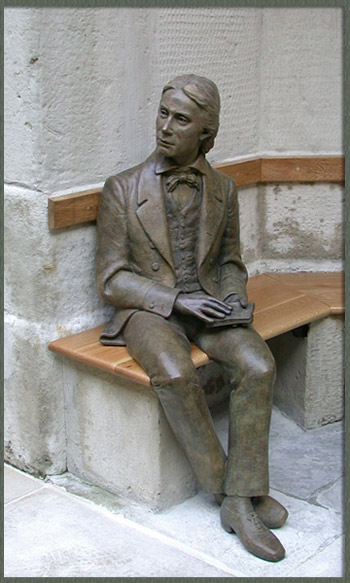
* throwing things on the floor with Jim Harrison & John Keats

In reading Jim Harrison’s novel The English Major last month, I came across the following and it brought tears – I have been much for tears these days – and mainly because I have been slowly going over poems I have memorized, seeing what stuck and what fell off, and was suddenly surprised to recognize the poem referenced below:

I was saddened by the idea that I might not finish the work before I died, a natural enough fear.  Keats wrote, “When I have fears that I may cease to be before my pen has glean’d my teeming brain…”  That was throwing the raw meat on the floor in a lovely way.

That phrasing throwing the raw meat on the floor – that’s it isn’t it – what it is a poet does no matter the how we use to do it.  We are not in the business of poetry if the raw meat isn’t on the floor.

Realizing I had let the poem slip after a few years, and then coming back to it, memorizing it again – more than an old friend, I felt like a piece of myself was returning, that something understood once was being reconciled in a big, new way.

There’s a lot of history in the poem too: Yeats borrowed the phrasing of high romance, and John Berryman references the end of the poem in the title of his book Love and Fame.  I myself am tempted to borrow and manipulate the phrasing for something called: The Fool-ripened Grain.

Here is the poem below – you can see for yourself how awful and sacrilegious my idea is.

* you let the meat fall where? *

* you let the meat fall where? *

When I have fears that I may cease to be – John Keats

When I have fears that I may cease to  be
Before my pen has gleaned my teeming brain,
Before high-piled books in charactery
Hold like rich garners the full ripened grain;

When I behold, upon the night’s starred face,
Huge cloudy symbols of a high romance
And think that I may never live to trace
Their shadows with the magic hand of chance;

And when I feel, fair creature of an hour,
That I shall never look upon thee more,
Never have relish in the faery power
Of unreflecting love – then on the shore

Of the wide world I stand alone, and think
Til love and fame to nothingness do sink.

***

Happy sinking!

Jose