* Fanny Howe & the friday influence

(poem from Robeson Street) – Fanny Howe

Pushing children in plaid & silver prams

us mothers were dumpy,

                                           hunched in the damp


and our redlipped infants

   sucked on their strange fingers

      eyes stung by the gunny-strong

           grass on the hills


I wanted to sit near sweet water, not salt

in the fuzz of extreme weather,

           but we’re not here to


Like women who love the Lord on hills

what for what for,  we cawed outside

   as in bare trees, too plain to see


***

I have spent the past few weeks smitten and humbled by the work of Fanny Howe.  This poem holds much of what I find fascinating in her work.

There is the touch of William Carlos Williams in the phrasing of the line “us mothers were dumpy” – some of that American language he prized so much.

Then there’s her way with the line, as in “but we’re not here to” – the way the phrasing cuts off the sentence at just the point where it has its meaning complete as well as visually plays out the concept of “we’re not here”.

In this poem about disappearance of sense of self, those last two lines swallow the people in the poem and turn them into birds – all of it done in careful phrasing.  I turn the last two lines here over and over in my head to watch the meanings gleam and hold.

***

birds, yo.

***

Happy gleaming!

J
* Charles Wright & the friday influence

The Last Word – Charles Wright

I love to watch the swallows at sundown,
                                 swarming after invisible things to eat.
Were we so lucky,
A full gullet, and never having to look at what it is,
Sunshine all over our backs.

There are no words between my fingers
Populating the lost world.
Something, it now seems, has snapped them up
Into its speechlessness,
                                                  into its thick aphasia.

It’s got to be the Unredeemable Bird, come out
From the weight of the unbearable.
It flaps like a torn raincoat,
                                                first this side, then that side.
Words are its knot of breath,
                                                   language is what it lives on.

***

This week on the Influence: Charles Wright.

To get a little astrological for a moment, every poet I enjoy that falls under the Virgo sign shares a common experience in the reading of their work, namely that you must read a lot of it, really dunk in your head, before it truly becomes accessible.

This isn’t a matter of difficulty or obscurity in the poems.

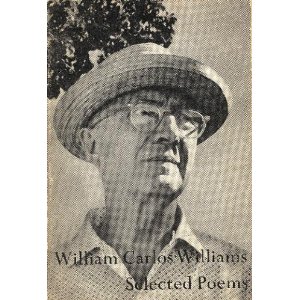
Take William Carlos Williams, whose “This is just to say” and “The Red Wheelbarrow” are famously accessible and amazing.

I had enjoyed his poems for years but it wasn’t until I sat down with a copy of his selected poems and read it aloud cover to cover that I felt that I truly felt what he was doing in his poems.  About ten pages in I started to see the working of a mind, a sensibility and conviction about the world that played out in poems full of images and clear phrasing.

The true Carlito’s Way!

I have had a similar experience with the work of Charles Wright.

Every book I read of his takes me down into another level of where his poetic self lives.  It is a world of metaphysics, Li Po and other classical Chinese poets, the South, and, amongst various other things, a genuine understanding of the tenuous and precious hold we have on reality.

Also, he claims that he is the only Southerner he knows incapable of telling a story.  A true Virgo admission.

He recently did a book entitled “Sestets” where he funnels his poetic sensibilities down into six line poems that bang and spark.

In my notebook where I wrote down the above poem last December, I wrote: the shorter, more focused his work gets, the more I tune my ears to it.  Here something sensual leads to something that opens and expands in the mind.  I still feel that way.  Poetry like the sounding of a church bell, telling you the time, the sound expanding into time.

***

Happy sounding!

J