* trash talk with javier etchevarren

I remember a friend of mine in college who toyed around with the idea of basing a short film on the role garbage plays in our day to day life. “In a way,” he said, “we expect a garbage can to save our souls.” We talked for hours on this concept, me bringing up how I have family living on the border, some of whom have lived in shacks on the edges of landfills.

Reading this week’s poem – “Garbage Dump” by Javier Etchevarren – I returned to these ideas on reality as well as the realities that come with these ideas. The stylistic choices Etchevarren makes really come together with the content. The lack of punctuation and capitalization really put an emphasis on the line that isn’t always effective when done by others, but he nails the nuance available in that move. Subtly, the meditation on the social goes beyond the metaphorical to imply an overall gravity to existence that turns the world upside down.

* the view from here *

* the view from here *

Garbage Dump – Javier Etchevarren *

dessert for the starving
where there are people there’s garbage
where there are people there’s hope
including the hope to live off garbage

putrefaction central
surplus of misery
the despicable man is the celebrity of throwaways
appliances gone senile, the latest styles in shreds, storm clouds
of plastic, maggot bonfire
to pass through life is to feed a garbage dump
laying out provisions
for an impoverished bacchanal

* translated by Don Bogen

***

Happy bacchanaling!

Jose

p.s Check out more of Don Bogen’s translations of Etchevarren featured on Poetry Daily here.

Etchevarren will five poems total in the upcoming anthology América invertida: an anthology of younger Uruguayan poets.
* (re)noting the hidden things via shin kyeong-nim

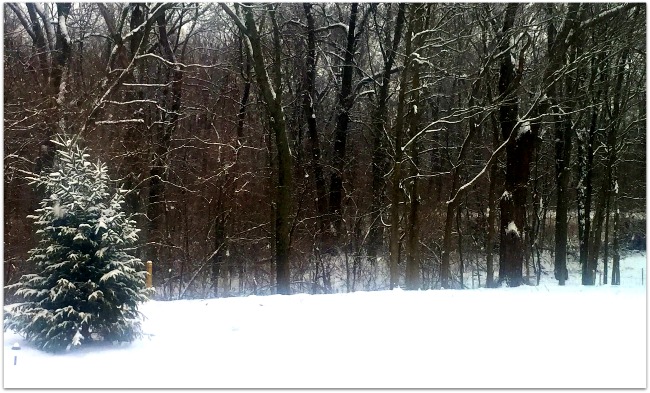
Not that anybody needs another reminder of what snow looks like, but here:

* cincisnowti *

* Cincisnowti *

There’s been plenty of the cold stuff these past few months.

Heading into March, I’m waiting for spring to arrive – yet I can’t help but type that and immediately note that I can’t exactly remember what it was like without snow. Not that “Oh, it’s been snowing so long, I can’t remember what it was like without it — ” but rather, there’s a rather elegiac habit of mind I encounter that has me always looking at the world with an emphasis on what isn’t there versus what is.

At times, this habit is powerful – in envisioning a way out of a problem, for example. But there are times that require a bit of restraint from thinking away from them.

This week’s poem by Korean poet Shin Kyeong-nim evokes a feeling  of what is missed in the turning/thinking away I experience. With each reading, the poem makes me see that life, as it gathers in the years behind us, becomes a series of turns, and that, while much is irretrievable, the experience is constant: what we will miss is in front of us long before we begin to be able to miss it.

The Baby – Shin Kyeong-nim

I.

Baby looks at the snow piling up outside the window;
signs it’s all lovely, all strange; waves a hand.
Like baby trees shaking baby leaves.
Baby knows all the hidden things:
why snow falls, and the lovely things the snowflakes whisper;
knows all – a perfectly contented still life.

II.

After a while, baby learns the word “Mum.”
This means he is forgetting the hidden things of the word “Mum.”
But he doesn’t realize.
Flowers, trees, stars.
With elation baby learns the words,
forgetting the hidden things in each.
And when he has forgotten all the hidden things,
baby is a full-fledged person.

III.

Thus when snow piles up like today,
he’ll fret from thoughts of a girl.
Walking the bank of the stream,
he will cry from nostalgia self-directed.

***
Happy self-directing!

Jose

p.s. Thank you to Daniel Paul Marshall for introducing me to this poem and poet.

* poem found in The Columbia Anthology of Modern Korean Poetry.