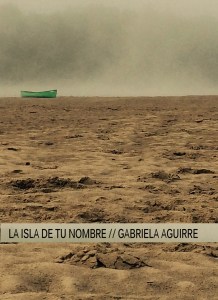
This week’s microreview features Gabriela Aguirre’s La isla de tu nombre and is presented first in English (with translations of the Spanish), followed by a full Spanish translation of the microreview. Special thanks to Veliz Books editor Laura Cesarco Eglin for her great help with translations of the poems and prose.
review by José Angel Araguz
review translation by José Angel Araguz with Laura Cesarco Eglin
Un pie sobre la mesa,
un par de manos,
un nudo hecho de sílabas y dedos.
Un pronombre nuevo para mí
porque nunca lo dije con amor,
contigo en la mitad del nombre:
pequeña mía.
Y una canción que suena en mis oídos
para que la bailemos en mi cabeza
cuando lo terrible.
Un árbol crece despacio
–y quiero que lo sepas.
A foot on the table,
a pair of hands,
a knot made of syllables and fingers.
A new pronoun for me
because I never said it with love,
with you in the middle of the name:
my darling.
And a song that rings in my ears
so we can dance to it in my head
when the terrible.
A tree grows slowly
–and I want you to know.
La isla de tu nombre (Veliz Books) by Gabriela Aguirre begins with this short, intimate lyric balanced between the tangible and intangible. The move from the “foot” and “hands” of the first two lines into “a knot made of syllables and fingers” moves the poem directly into this duality; the word “knot” also implies both sexual tension (knot as in the knot of the bodies) and other tensions (that of language, that between two people). This move is returned in the line “And a song that rings in my ears / so we can dance to it in my head” which brings the meditation into the body itself. This interiority leads to the final two lines, which compare the speaker’s inner world to the growth of the tree. Yet, unlike the tree, this speaker can reach out from this inner world to let the beloved “know” about it. The way a love relationship can make such knots, and the way poetry can help evoke them, is at the center of this manuscript.
The dualities, begun in the “island / name” of the collection’s title, serve as a key into the world of Aguirre’s poems. The distant and solitary implication of an island is reckoned with the personal nature of a name. This focus on language and how it charges the (in)tangible is further explored in “Rayar los libros, glosar lo escrito.”:
Rayar los libros, glosar lo escrito.
Me enseñaste a hacer anotaciones al margen
para no olvidar lo importante.
Nunca antes rayé los libros,
querida mía.
¿Cómo tendría cara para abrirlos después
y encontrarlos alterdos
por mis frases y mis interrogaciones?
No quiero encontrar tu caligrafía en mis libros,
tu paso por ellos y por mí.
Pero abro uno con anotaciones mías
y sé que detrás de mis trazos estás tú
deciéndome que hay que rayar lo escrito,
dejar marcas y preguntas.
Mark the books, gloss what’s written.
You taught me to take notes in the margin
so as not to forget what is important.
I have never marked books before,
my dear.
How could I face opening them later
and find them altered
by my sentences and my interrogations?
I don’t want to find your calligraphy in my books,
your passing through them and through me.
But I open one with notes by me
and I know that behind my strokes you are
telling me that it is necessary to mark what is written,
leave marks and questions.
Here, we find a speaker interrogating how the acts of reading and writing always point to something other and involve the world of memory. The imagery of this conceit is compelling; marginal notes done in one’s personal handwriting always stand in stark contrast to print words. A literal reaching after meaning and modifying a text occurs in this image. This image and its tension are pushed further within the context of a relationship. How much do we change each other while reaching after one another? What does intimacy mean in terms of handwriting? Regarding this latter question, the speaker finds the beloved behind her own “notes.” The poem ends on this action, on the speaker dwelling on what she’s been told by the beloved.
What drives these poems, ultimately, is this reporting and documenting of the heart. La isla de tu nombre engages the reader with short lyrics that share the scope of Sappho’s poetry and the intensity of Alejandra Pizarnik. In “Somos siete en esta mesa” the themes of the book are centered within the role of a person sitting at a dinner table with others:
Somos siete en esta mesa
luego de la carne y la ensalada,
el arroz y el pan con romero.
Mi copa de vino se calienta despacio
porque el fresco del jardín no alcanza,
porque la respiración vertical del bambú
no alcanza a detener los ruidos de la banda de reggae
que ensaya en el edificio de junto.
He sido asignada a partir la tarta,
a partirla como se parten las conversaciones,
el deseo del otro,
la tierra durante las catástrofes.
He sido elegida para escribir este recuerdo:
el de las frutas que brillan bajo la luz
mientras el cuchillo las atraviesa.
Me han dado un arma para partir una costra
que en el centro tiene el color oscuro del chocolate.
¿Cómo podía negarme?
Cómo negarme a la posibilidad de trazar un camino,
otro
otro
siempre distinto
nunca el mismo
ningún trozo igual.
Cómo negarme ante tal ofrecimiento,
cómo negarme a las pequeñas catástrofes
de la cocina:
ahora todos tienen un pedazo de la fruta que duele
después de haber sido cortada por mí.
There are seven of us at this table
after the meat and the salad,
the rice and bread with rosemary.
My glass of wine warms slowly
because the cool from the garden is not enough,
because the vertical breathing of the bamboo
is not enough to stop the noise of the reggae band
rehearsing in the building next door.
I have been assigned to cut the tart,
to cut into it as conversations are cut into,
the other’s desire
the earth during catastrophes.
I have been chosen to write this memory:
of the fruit that shines under the light
while the knife pierces them.
I have been given a weapon to break a crust
whose center is the dark color of chocolate.
How could I refuse?
How to refuse the possibility of drawing a path,
another
another
always different
never the same
no piece equal.
How to refuse such an offer,
how to refuse these small catastrophes
of the kitchen:
now everyone has a piece of the fruit that hurts
after being cut by me.
The deliberation in the second stanza over the act of cutting into a tart, of being “assigned” an active role, parallels the active role of the speaker throughout this book. The line “I have been chosen to write this memory,” is powerful in its clarity. The sensibility behind these poems is soberly aware of what it means to be isolated in one’s feelings, able only to offer others “a piece of the fruit that hurts.”
To return to the title’s metaphor, the island of another’s name carries with it the weight of our relationship with another person, as well as their absence. A person is not their name; a word is not the thing it signifies. The poems of La isla de tu nombre contend, however, that poetry is a way to cross the distance between language and the world.
La isla de tu nombre can be purchased from Veliz Books.
*
reseña por José Angel Araguz
traducción por José Angel Araguz con Laura Cesarco Eglin
Un pie sobre la mesa,
un par de manos,
un nudo hecho de sílabas y dedos.
Un pronombre nuevo para mí
porque nunca lo dije con amor,
contigo en la mitad del nombre:
pequeña mía.
Y una canción que suena en mis oídos
para que la bailemos en mi cabeza
cuando lo terrible.
Un árbol crece despacio
–y quiero que lo sepas.
La isla de tu nombre (Veliz Books) por Gabriela Aguirre comienza con esta lírica íntima y compacta entre lo tangible y lo intangible. El movimiento desde “pie” a “manos” en los dos primeros versos hasta “un nudo hecho de sílabas y dedos” mueve el poema directamente en esta dualidad; la palabra “nudo” también implica tensión sexual (nudo como en el nudo de los cuerpos) como otras tensiones (la del lenguaje, la de dos personas). Este movimiento vuelve en el verso “Y una canción que suena en mis oídos / para que la bailemos en mi cabeza” que coloca la meditación en el cuerpo mismo. Esta interioridad conduce a los dos últimos versos, que comparan el mundo interno del yo lírico con el crecimiento de un árbol. Sin embargo, a diferencia del árbol, este yo lírico puede llegar desde este mundo interior para permitir que la amada “sepa” sobre ella. La forma en que una relación de amor puede hacer tales nudos, y la forma en que la poesía puede ayudar a evocarlos, está en el centro de este libro.
Las dualidades iniciadas en la “isla / nombre” del título sirven como clave en el mundo de los poemas de Aguirre. La distante y solitaria implicación de una isla se mezcla líricamente con la naturaleza personal de un nombre. Este enfoque en el lenguaje y cómo imbuye lo (in)tangible se explora más en “Rayar los libros, glosar lo escrito.”:
Rayar los libros, glosar lo escrito.
Me enseñaste a hacer anotaciones al margen
para no olvidar lo importante.
Nunca antes rayé los libros,
querida mía.
¿Cómo tendría cara para abrirlos después
y encontrarlos alterdos
por mis frases y mis interrogaciones?
No quiero encontrar tu caligrafía en mis libros,
tu paso por ellos y por mí.
Pero abro uno con anotaciones mías
y sé que detrás de mis trazos estás tú
deciéndome que hay que rayar lo escrito,
dejar marcas y preguntas.
Aquí, encontramos a un yo lírico interrogando cómo los actos de lectura y escritura señalan siempre algo distinto e involucran al mundo de la memoria. El imaginario de esta idea es convincente; las notas marginales hechas en la letra de cada uno siempre están en marcado contraste con las palabras impresas. Un intento de entender el significado y de modificar un texto ocurre en esta imagen. Esta imagen y su tensión se realzan aún más dentro del contexto de una relación. ¿Cuánto nos cambiamos unos a otros mientras nos intentamos entender? ¿Qué significa la intimidad en términos de la letra de cada uno? En esta última pregunta, el yo lírico encuentra a la amada detrás de sus propias “trazos.” El poema termina en esta acción, con el yo lírico pensando sobre lo que la amada ha dicho.
Lo que impulsa estos poemas es este informe y esta documentación del corazón. La isla de tu nombre atrae al lector con poemas líricos que comparten el alcance de la poesía de Sappho y la intensidad de Alejandra Pizarnik. En “Somos siete en esta mesa” los temas del libro se centran en el oficio de una comensal:
Somos siete en esta mesa
luego de la carne y la ensalada,
el arroz y el pan con romero.
Mi copa de vino se calienta despacio
porque el fresco del jardín no alcanza,
porque la respiración vertical del bambú
no alcanza a detener los ruidos de la banda de reggae
que ensaya en el edificio de junto.
He sido asignada a partir la tarta,
a partirla como se parten las conversaciones,
el deseo del otro,
la tierra durante las catástrofes.
He sido elegida para escribir este recuerdo:
el de las frutas que brillan bajo la luz
mientras el cuchillo las atraviesa.
Me han dado un arma para partir una costra
que en el centro tiene el color oscuro del chocolate.
¿Cómo podía negarme?
Cómo negarme a la posibilidad de trazar un camino,
otro
otro
siempre distinto
nunca el mismo
ningún trozo igual.
Cómo negarme ante tal ofrecimiento,
cómo negarme a las pequeñas catástrofes
de la cocina:
ahora todos tienen un pedazo de la fruta que duele
después de haber sido cortada por mí.
La deliberación en la segunda estrofa sobre el acto de cortar una tarta, de ser “asignada” un oficio activo, es paralelo al oficio activo de el yo lírico a lo largo de este libro. El verso “He sido elegida para escribir este recuerdo”, es poderoso en su claridad. La sensibilidad detrás de estos poemas es sobriamente consciente de lo que significa estar aislada en los sentimientos, sólo para ofrecer a los demás “un pedazo de la fruta que duele”.
Para volver a la metáfora del título, la isla de un nombre lleva consigo el peso de nuestra relación con otra persona, así como su ausencia. Una persona no es su nombre; una palabra no es lo que significa. Los poemas de La isla de tu nombre sostienen, sin embargo, que la poesía es una forma de cruzar la distancia entre el lenguaje y el mundo.
La isla de tu nombre es publicado por Veliz Books.
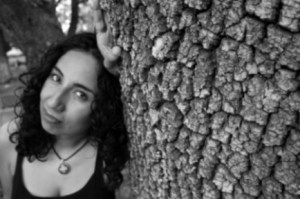 Gabriela Aguirre (Querétaro, México). En 2003 obtuvo el Premio Nacional de Poesía Joven Elías Nandino con el libro La frontera: un cuerpo, y en 2007 el Premio Nacional de Poesía Enriqueta Ochoa con el libro El lugar equivocado de las cosas. Ha sido becaria del FONCA, del Consejo Estatal para la Cultura y las Artes de Querétaro (en la categoría Jóvenes Creadores), y del Instituto Queretano de la Cultura y las Artes (en la categoría Creadores con Trayectoria). Fue becaria de la Fundación para las Letras Mexicanas en el área de Poesía de 2005 a 2007. Ha sido incluida en diversas antologías de poesía y textos suyos han sido publicados en varias revistas y periódicos nacionales y estatales. Algunos de sus poemas han sido llevados a escena en la obra de teatro “Homenaje a un ciego que abrió los ojos”, bajo la dirección de Rodrigo Canchola. Estudió la Licenciatura en Lenguas Modernas-Español en la Universidad Autónoma de Querétaro y la Maestría en Creación Literaria en Español en la Universidad de Texas en El Paso. Actualmente estudia un Doctorado en Artes en la Universidad de Guanajuato.

 Influence Question: What were the challenges in writing this novel and how did you work through them?
 The Influence