This week on the Influence: Sharon Olds!
Just read through Olds’ latest book, Stag’s Leap, a powerful collection of poems – for which she recently was awarded the T.S. Eliot Prize – centering on the story of her divorce.
The poems take on the separation with the nerve and lyrical litheness that are characteristic of Olds. (Also: at one point she parts the Red Sea – seriously: check that out!)
I chose the poem below because it embodies much of what I admire in her skill as a poet. There is the opening up of a moment, the digging into the details in words that put the subject – in this case, handling the newspaper – right in your hands, words like mineral-odored and greyish speckle. She does it all with a straightforward energy that takes you along for the ride, evoking every nuance of the emotion felt.
There is a great awe in her work – a sense of awe of the world, of being a part of it, and being able to put it into words. Few can go to this place of awe like she does.
As an American poet, I feel indebted to Sharon Olds for how she manages to stay grounded while still taking flight. I see her in line with Whitman as well as Elizabeth Bishop – all poets of finding and feeling exuberance where you don’t expect it.
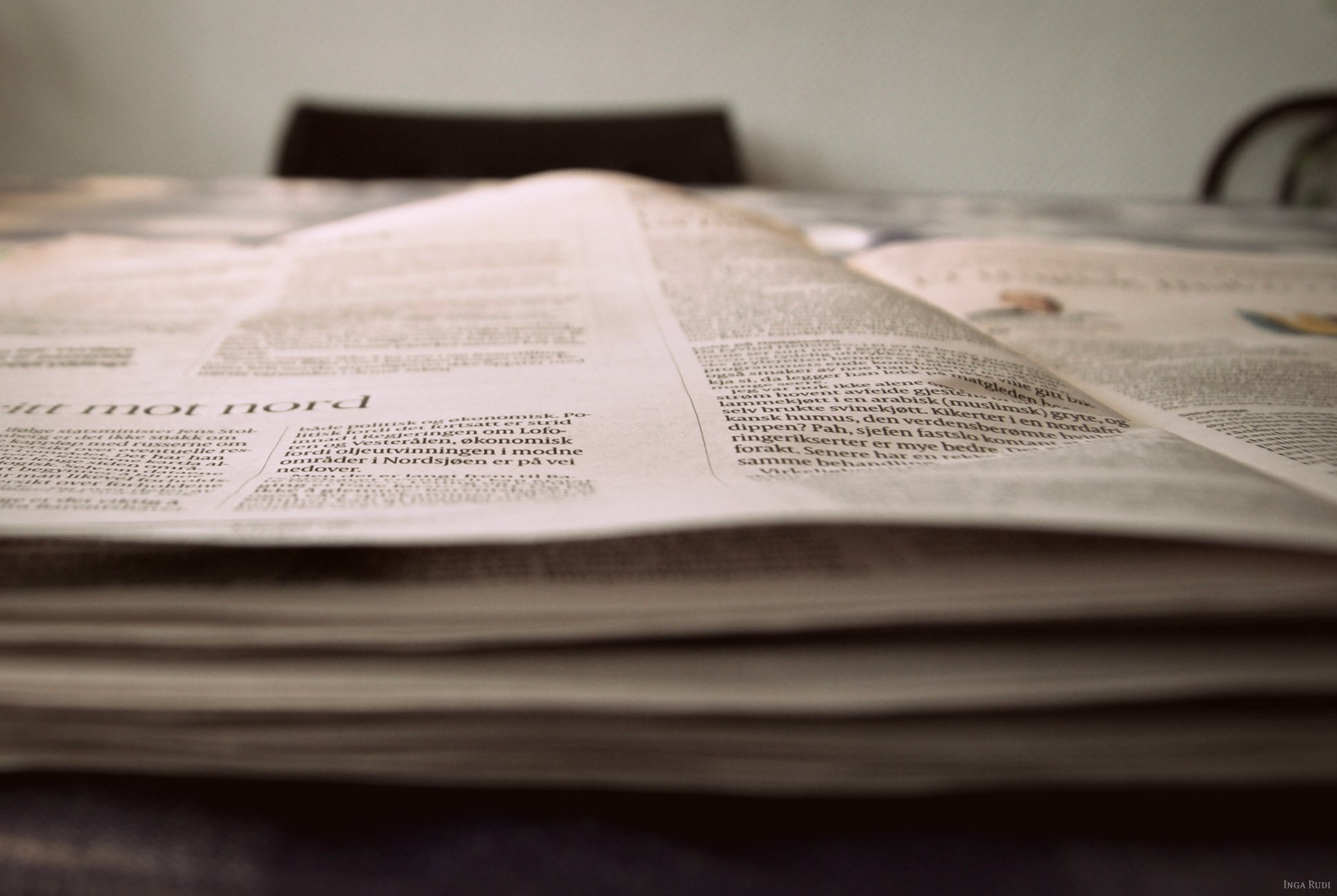
*periodico*
On Reading a Newspaper for the First Time as an Adult – Sharon Olds
By evening, I am down to the last,
almost weightless, mineral-odored
pages of the morning paper, and as I am
letting fall what I have read,
and creasing what’s left lengthwise, the crackly
rustle and the feathery grease remind me that
what I am doing is what my then husband
did, that sitting waltz with the paper,
undressing its layers, blowsing it,
opening and closing its delicate bellows,
folding till only a single column is un-
taken in, a bone of print then
gnawed from the top down, until
the layers of the paper-wasp nest lay around him by the
couch in a greyish speckle dishevel. I left him to it,
the closest I wanted to get to the news was to
start to sleep with him, slowly, while he was
reading, the clouds of printed words
gradually becoming bedsheets around us.
When he left me, I thought, If only I had read
the paper, and vowed, In two years,
I will have the Times delivered, so here
I am, leaning back on the couch, in the smell of ink’s
oil, its molecules like chipped bits of
ammonites suspended in shale,
lead’s dust silvering me.
I have a finger, now, in the pie –
count me as a reader of the earth’s gossip.
I weep to feel how I love to be like
my guy. I taste what he tastes each morning
without moving my lips.
***
Happy tasting!
Jose
* photo found here
 The Influence