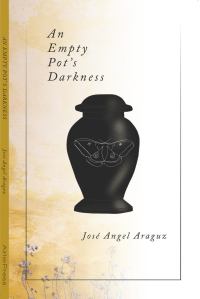
 This will be the first of a short series of posts discussing some of the thinking and inspirations behind my latest poetry collection, An Empty Pot’s Darkness (Airlie Press), which is available on SPD as of this week!
Back when I started experimenting with the octave form, I drew inspiration from a series of poems by Edward Arlington Robinson also entitled “octaves”:
XI – Edward Arlington Robinson
STILL through the dusk of dead, blank-legended,
And unremunerative years we search
To get where life begins, and still we groan
Because we do not find the living spark
Where no spark ever was; and thus we die,
Still searching, like poor old astronomers
Who totter off to bed and go to sleep,
To dream of untriangulated stars.
I wrote about this particular octave once in a previous post, and noted how much I admired how Robinson gets away with the highly syllabic words “unermunerative” and “untriangulated.” As my own experiments at the time had me working around intuitive syllabic phrasing, I took it as a challenge to include highly syllabic words throughout the sequences of An Empty Pot’s Darkness.
The octave below is from the sequence “for Christine Maloy” which pays elegiac tribute to a young poet from my hometown Corpus Christi who was living with lupus, a serious autoimmune condition, until she died one winter due to flu. Her death was discussed in the local news in a way that glossed over how vulnerable people who are immunocompromised actually are to things like the flu which are summarily dismissed or made light of in society. In writing about her passing and our friendship, I found myself at turns angry and lost to these attitudes and how they overlook the real human lives affected by them.
In this sequence dedicated to my friend I try to work out poems that are examples of how formal strategies can be subverted and brought into conversation with personal and political stakes, all in the effort to represent the human life we carry in memory.
excerpt from “for Christine Maloy” sequence – José Angel Araguz
On Facebook, people still seek you out.
This last face, pixelated,
thumbnail hitchhiking to now,
gives a grin, lends small glints to your eyes,
constellates them to sharp points of light.
Is this the shape of your myth?
A held look, a look away
I cannot triangulate.
*
Copies of An Empty Pot’s Darkness can be purchased from SPD and Airlie Press.
 The Influence