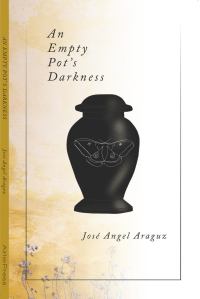
 This post is the third and last of a short series of posts discussing some of the thinking and inspirations behind my latest poetry collection, An Empty Pot’s Darkness (Airlie Press), which is available on SPD (check out the first post here and the second here).
For this final post, I’m sharing a sequence that did not make it into the book. It’s a sequence strictly written around the life of E. A. Robinson, with some braiding of my own narrative in there. I share them, flaws and all, in the spirit of craft lessons as well as a kind of fan fiction among poets.
On the craft side, one can see the moves I was trying out. The word “untriangulated” comes into play, for example. There are distinct syllabic patterns throughout these as well. As for fan fiction, I do borrow from Robinson’s own mythic Tilbury town and mention a number of his characters. Even if you haven’t read his poems, however, there is at least a sense of a lonely dude being written about.
This last bit might be at the heart of both these posts and my book. Facing and acknowledging the loneliness that the death of others leaves us in. And also the loneliness of mortality, of living on. In conversation with a friend, I surprised myself by calling this my most vulnerable book, mainly due to how stripped the poems are, eight lines per page, no title even. Whatever flaws in the lyrics below, what I hope comes through is the effort to push beyond sentimentality into clear sentiment and human gesture. Ultimately, in lyric poetry, and especially when it comes to elegiac material, human gesture is what we’re after.
Octaves for E. A. Robinson
His medicine was stronger than any
supplied to him. It waited for him to sit
alone, and drew from him its strength the way
the sun and moon divide the sky, pulling
the light between. The days of sun would burn.
The days of moon returned to count the hours,
the body for him especially a thing
irreparable: grit turned on itself.
*
He stood with them in the moonlight as though
walking on air – that’s how it comes to me
at least, this poet of images like rare and vague
Bible curses slipped through codes and tongues,
and only registered by some to have
a cursing power. Many read his words
and puzzled, but never called it puzzle: the air
in which they read, the moonlight he stood in.
*
No readings, talks or lectures: no voice, then,
one would think, reading on the poet.
Time was always set aside for words,
for words and drink. He drank the words, the words
drank him. His writing like water passing
from one glass to another, the same volume
kept, the same clear substance moving.
A restlessness you could almost see.
*
I walk the city where you stumbled, stumble
myself a few times. I do not have
your untriangulated stars only
a vague idea where they are. The lights
I walk under are different from the ones
that lit your way. You stumbled in the dark.
I am blinded on my way between
the page and working for the page, the stars.
*
They dropped names into a hat
and picked yours out. The winner
was from Arlington, so there
your middle name. The words came
slowly. Whatever the sun
did to the sand, whatever
filled the air that day: laughter,
broken waves: each has named you.
*
You gave them drink, Win,
gave them Tilbury,
the house on the hill,
the mill and no one
there anymore, gave
Flood and Stark, Bright tore
down the slaughterhouse,
you did not give, Win.
*
Had I your nerve South Texas
would be riddled out, riddled
with faces over bottles,
riddled with birds, wingspans wide
as palm trees. I’d follow down
each crack on the face the Sphinx
sits there holding, be part of
the wearing wind howling through.
*
Black diphtheria: two words
to end a life your mother’s
body left for her sons to
care after to carry out
past the porch where the preacher
prayed at a distance down to
where two brothers dug and you
clung to life you’re supposed to
*
you loved your brother’s wife like
Lancelot loved Guinevere
you fell into your stories
drank Tilbury dry drank Flood
would’ve drunk the moon could you
see straight into yourself as
the bullet through the head which
has not landed since it shot
*
just a person in the crowd
or in Hood’s sketch a man too
busy reading to look up
every curve and shade around
the pages made them seem set
for flight but not yet one more
turn of phrase what sentence then
for the silence you’re drawn in?
*
Copies of An Empty Pot’s Darkness can be purchased from SPD and Airlie Press.
 The Influence