dispatch 123022

Whole lotta life keeps happening. It’s the main reason I’ve been quiet here. Like today, my partner has been out with a migraine for the greater part of the day, now evening, and I’ve been in the silence that comes with caregiving.

Well, the not-so-silent because my cat, Semilla, is here with me.

Semilla, a black cat, staring out into the camera.

I’d like to share some recent highlights and publications before the year is through:

  • I was excited to contribute a short write-up for Poets & Writer’s series “Writers Recommend.” I riff a bit about inspiration as well as shoutout the work of Karla Cornejo Villavicencio and Cristela Alonzo.
  • On the Rotura (Black Lawrence Press) front, I am deeply honored to have the book reviewed recently. Thank you to Staci Halt who wrote this insightful review for The Los Angeles Review!
  • Thank you also to Angela María Spring for including Rotura in their “10 New Poetry Collections by Latinx and Caribbean Writers” over at Electric Lit! Means a great deal to be included among such a powerful set of books.
  • And looking ahead, I am excited to share in this space that my debut creative nonfiction collection, Ruin and Want, was chosen as the winning selection during Sundress Publications’ 2022 Prose Open Reading Period! This lyric memoir was a revelatory journey to write, both personally as well as craft-wise. I’m excited to have it find a home at such a great place!

If you’re reading this, thank you for being here. It means a lot to share this space. I’ll be doing some new things next year on here. I also promise to get back to reviewing and sharing in this space in the coming year as it remains something that matters to me greatly.

In the meantime, take care of yourselves out there!

Abrazos,

José 
one more from Steven Sanchez

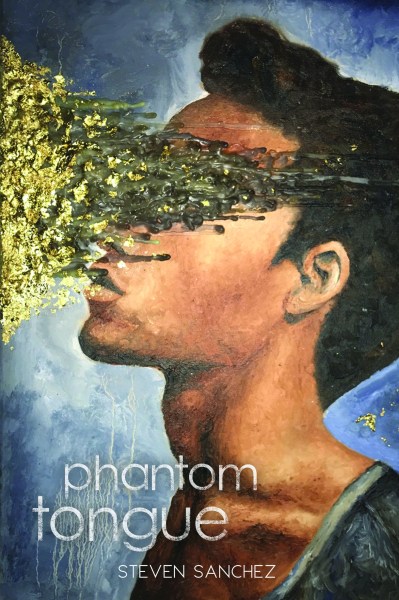
phantomtongue7In my recent microreview & interview of Phantom Tongue (Sundress Publications) by Steven Sanchez, I spoke about Sanchez’s gift for poetic empathy. In the same way that a poem is never alive until somebody reads it, so is empathy unable to be present unless another does the work of listening to someone’s trouble and making room for it. This making room for empathy – for acknowledgment and listening – is something that poetry lends itself to naturally. What Sanchez does  is present poems that help us think, rather than think for us.

In the poem below, “Past Tense,” also from Phantom Tongue, we see the nuance with which Sanchez does this work. Now, depending on who you talk to, one of the clichés of Latinx poetry is the abuelita/grandma poem. When I first hear this type of poem called out, I had the natural reaction to go out and write ten abuelita poems, just to show’em. I also began to pay extra attention when I ran across one, seeing if I would be given an example of the grave “sin” I’d been warned against. While Sanchez’s poem does take as its subject a childhood relationship with a grandmother, he avoids cliché through lyricism that invites empathy.

Stanza by stanza, we get an inventory of direct memories, from “a bottle of chocolate / syrup next to her recliner” to her taking insulin and watching novelas. What is compelling is how each detail is shifted just enough so that there is an emotional charge that builds throughout the poem. From the grandma winking as she takes her insulin, to the detail of having novelas translated so that “every betrayal was in English,” the poem moves in a way that nudges the reader to do the work of picking up on the deeper meanings of each scene. And where other poems use difficulty and ambiguity as the field to be crossed toward deeper meanings, this poem has a hard-won clarity in each phrase. What is asked of the reader, then, is to listen and acknowledge as the speaker listens and acknowledges the nuances of his memories. In this way, the speaker’s admission at the end of “learning to speak” is aptly phrased; in both English and Spanish, the language being learned is that of witness and memory.

Past Tense – Steven Sanchez

My grandma kept a bottle of chocolate
syrup next to her recliner. Each time
I spent the night, she bought a sleeve
of vanilla ice cream cups from the store.

She’d grab one, take her insulin, and wink.
I’d ask her to translate her novelas
whenever someone cried, meaning
every betrayal was in English.

At 10:30, we’d brush our teeth, rinse
our mouths, and she’d sing in Spanish
until I closed my eyes, imagining
small pigeons flying from her tongue,

carrying rolled R’s like small parcels
I’ve never been able to unwrap.
Sometimes, I dream she’s still here
sleeping next to me and I whisper

an apology for releasing her canary
when I was little. She never clipped
his wings, thought he might need them.
Now, I’m learning to speak, to tell

the difference between the preterit
and imperfect, escapó and escapaba,
between ella cantó and memory.

*

To find out more about Steven Sanchez’s work, check out his site.
Copies of Phantom Tongue can be purchased from Sundress Publications.