In reading Jim Harrison’s novel The English Major last month, I came across the following and it brought tears – I have been much for tears these days – and mainly because I have been slowly going over poems I have memorized, seeing what stuck and what fell off, and was suddenly surprised to recognize the poem referenced below:
I was saddened by the idea that I might not finish the work before I died, a natural enough fear. Keats wrote, “When I have fears that I may cease to be before my pen has glean’d my teeming brain…” That was throwing the raw meat on the floor in a lovely way.
That phrasing throwing the raw meat on the floor – that’s it isn’t it – what it is a poet does no matter the how we use to do it. We are not in the business of poetry if the raw meat isn’t on the floor.
Realizing I had let the poem slip after a few years, and then coming back to it, memorizing it again – more than an old friend, I felt like a piece of myself was returning, that something understood once was being reconciled in a big, new way.
There’s a lot of history in the poem too: Yeats borrowed the phrasing of high romance, and John Berryman references the end of the poem in the title of his book Love and Fame. I myself am tempted to borrow and manipulate the phrasing for something called: The Fool-ripened Grain.
Here is the poem below – you can see for yourself how awful and sacrilegious my idea is.
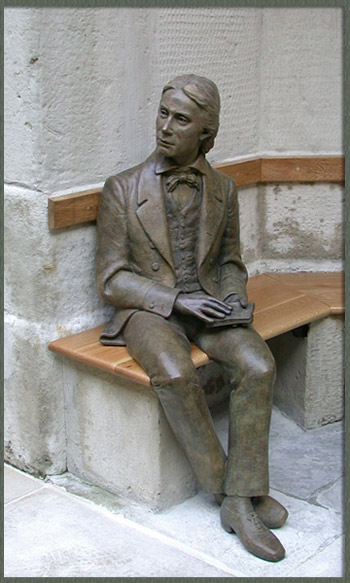
* you let the meat fall where? *
When I have fears that I may cease to be – John Keats
When I have fears that I may cease to be
Before my pen has gleaned my teeming brain,
Before high-piled books in charactery
Hold like rich garners the full ripened grain;
When I behold, upon the night’s starred face,
Huge cloudy symbols of a high romance
And think that I may never live to trace
Their shadows with the magic hand of chance;
And when I feel, fair creature of an hour,
That I shall never look upon thee more,
Never have relish in the faery power
Of unreflecting love – then on the shore
Of the wide world I stand alone, and think
Til love and fame to nothingness do sink.
***
Happy sinking!
Jose

 The Influence