* lining up with charlotte mew

So, at one point during CantoMundo, this happened:
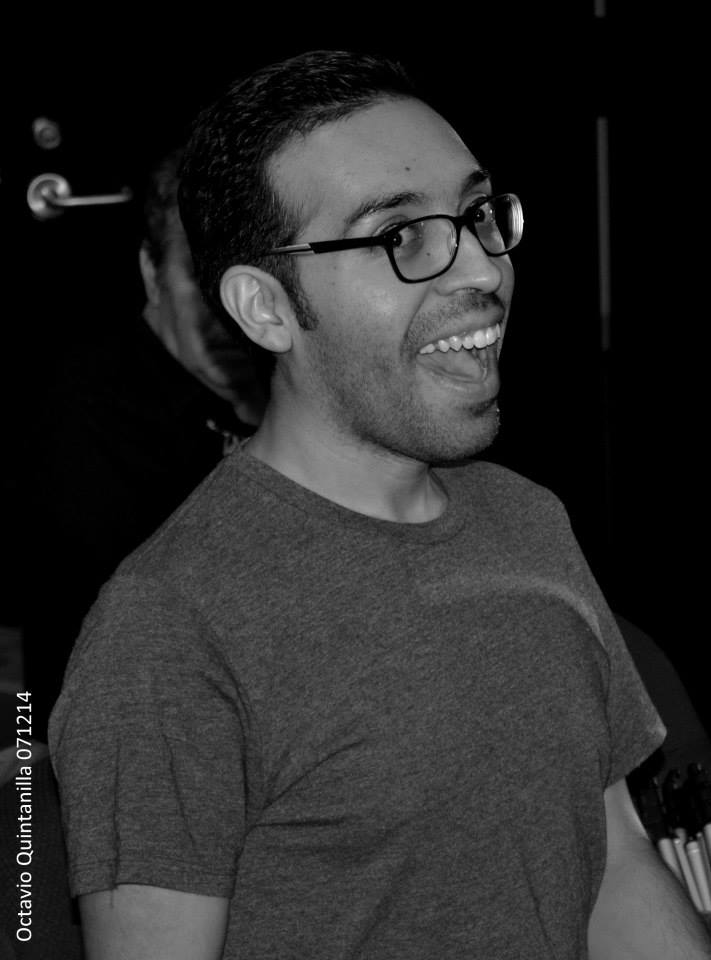
* this guy might be too happy *

* this guy might be too happy *

This image pretty much sums up my feelings this week in regards to the release of my new chapbook, Corpus Christi Octaves, and all the support people have shown both here on the blog as well as on Facebook and Twitter. To all of you who have sent warm wishes in one form or another, thank you for making this week pretty big for me.

Like that SMILE pictured above big 🙂

Working on a project like the octaves, so focused on creating tension within specific formal parameters, makes me quick to spot other eight-liners out there. This week’s poem “Sea Love” by Charlotte Mew holds its own lessons on compactness, diction, and fluidity of line.

Thomas Hardy considered Mew an incredible artist and, along with Housman, placed her in high esteem for her way with diction and feel for people. The music here is exceptional. The third line drags out in a wonderful, rocky contrast to the other contained lines. The sea like the lover cannot be reined in. The heart breaks on the “wind” at the end.
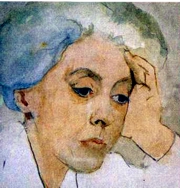
* make it mew *

* make it mew *

Sea Love – Charlotte Mew

Tide be runnin’ the great world over:

‘Twas only last Junemonth I mind that we

Was thinkin’ the toss and the call in the breast of the lover

So everlastin’ as the sea.

Here’s the same little fishes that sputter and swim,

Wi’ the moon’s old glim on the grey, wet sand;

An’ him no more to me nor me to him

Than the wind goin’ over my hand.

***

Happy going!

Jose

p.s. I’ve revamped both the Chapbooks tab & Audio tab – the latter with a link of my reading from Corpus Christi Octaves at The Poetry Loft! Special thanks to Sam Roderick Roxas-Chua for the opportunity! Check out the reading here.

* discoveries in the disparate & kenneth p. gurney

I remember reading that the semicolon is the most poetic of punctuation marks because of the way it holds two or more disparate things together, things that, under scrutiny, would not be thought of as usually being connected.

Which is what poems do: just replace “it” in the sentence above with “a poem” and finish the sentence: you’ll have a pretty succinct definition of the art.

This week’s poem “Selfish,” by friend and fellow poet Kenneth P. Gurney, charmed me in its ability to bring together so many disparate things – cookies (yum), tea (yum), Civil War figures (hmm), a clock (yum?), etc. – all within the context of a casual moment in a relationship.

What seals the charm for me is how the narrative leads us through various moments of knowing and not knowing, and ends with the speaker at a loss themselves for what the person they’re with finds “so funny.” We are left to wonder alongside the poet, which is how some of my favorite poems end.

* yum *

* yum *

Selfish – Kenneth P. Gurney

We bought Italian wedding cookies,
even though no one we knew
was getting married,
and some fragrant tea
the shop owner admitted he didn’t know
because the container
arrived without a label
and he couldn’t place the flavor.
You, out of politeness I think, asked,
Who was Patrick Cleburne?
And I told stories of the Irishman who served
in the Forty-First Regiment of Foot in the British army,
who emigrated to the United States
to settle in Helena, Arkansas,
then became one of the Confederacy’s
best fighting generals.
And the whole time I spoke,
I watched your eyes shift focus
from my lips, to my eyes,
to the divots on my right ear,
to the napkin that removed
white wedding cookie powder
from your fingers, to the tea,
to a hangnail on your right ring finger,
to the shop owner’s bird clock
that sounded sand hill cranes at eleven.
Before I got to Cleburne’s demise at Franklin
you laughed about something
that resided only in your head
and would not share what was so funny.


***

Happy not sharing!

Jose

* published in Decanto