Rumi and the art of wandering

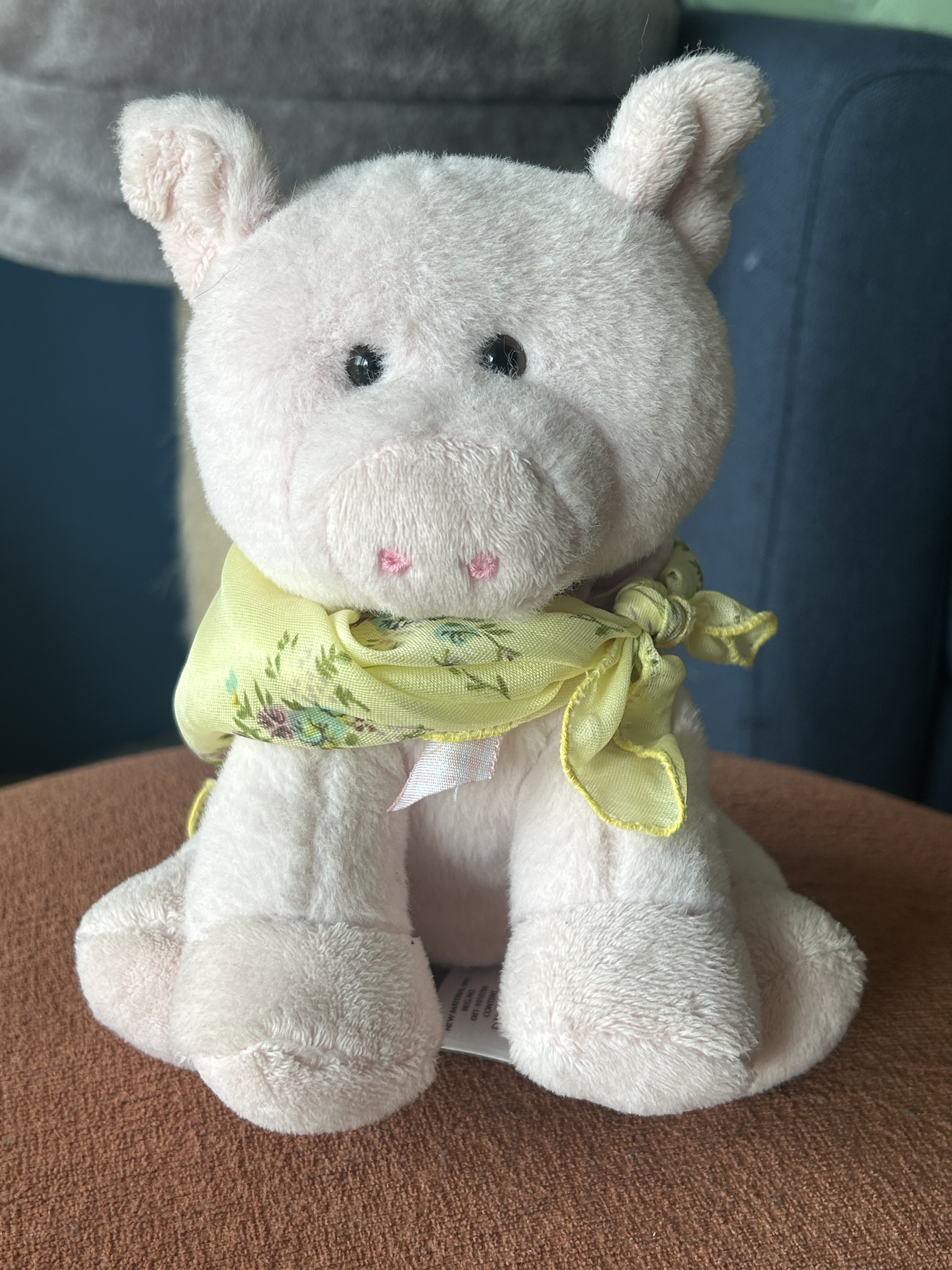
A friend once told me that when he hears the word rumination, he thinks of pigs.

Not in a bad way, more in the way pigs root for truffles. He imagined them with their snouts to the earth, urgent but patient, plodding yet focused. That image totally redefined the word for me.

Before then, I had thought of rumination as something still. Heavy. Almost stagnant. But my friend’s truffle-hunting pig reframed it: rumination as animation. A kind of messy pursuit. A movement that’s spiraling, not stuck.

Later, when my partner gifted me a plush pig, I named him Rumi, short for rumination. That it’s also a poet’s name felt like an additional win.
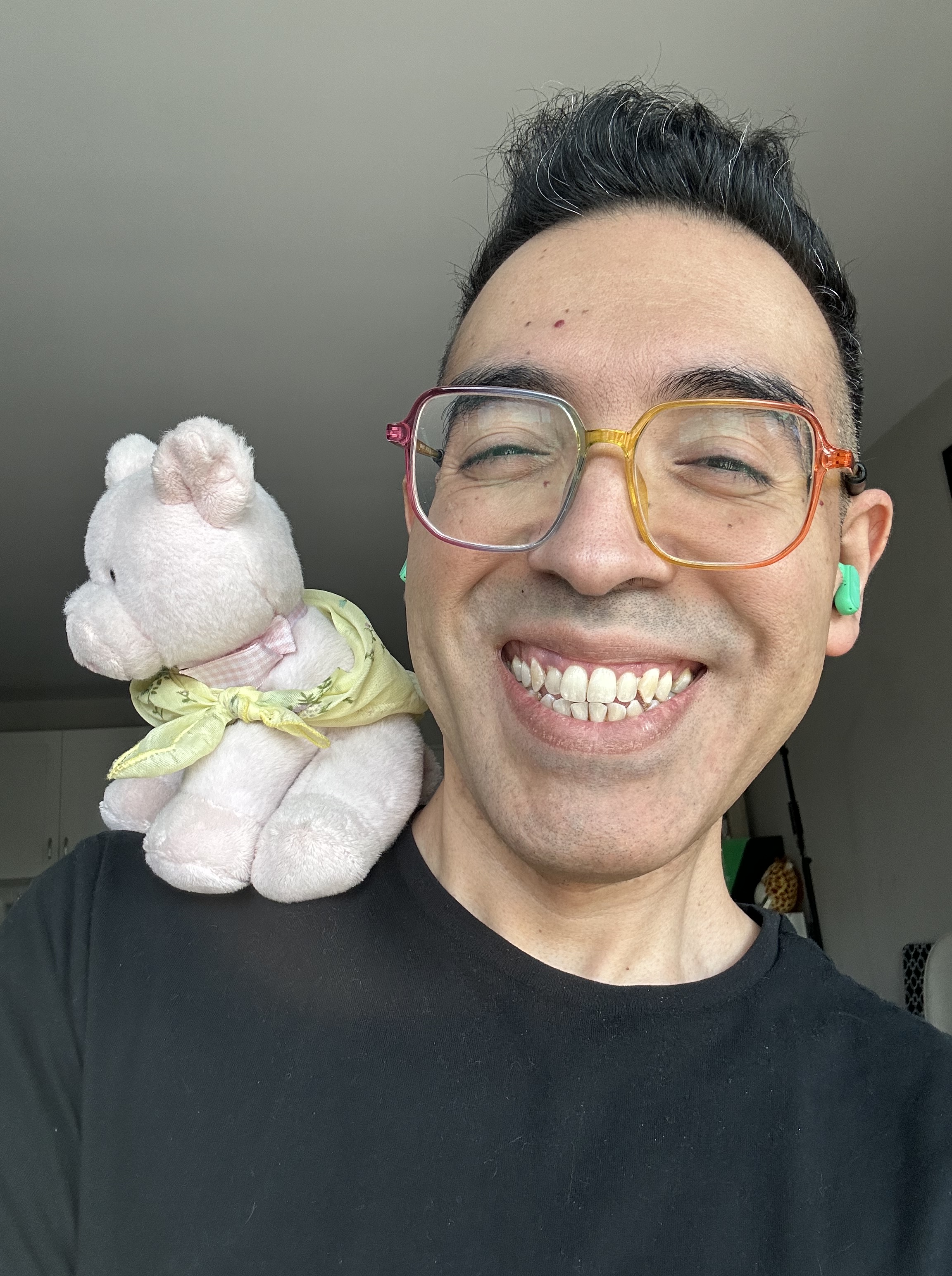
I’ve been thinking about this a lot as I prepare to teach a one-day class this Sunday called Rumination as Route: Crafting Non-linear Personal Narratives. It’s a space for writers who don’t always think in straight lines, and who maybe circle a memory again and again, trying to make sense of it.

In this class, we’ll explore different ways of ruminating, of putting intention behind our focus while letting in a little of that truffle-hunting scramble. There’s value in the digression, the double-back, the way our stories don’t go from A to B but somewhere wilder and more true.

If that sounds like your writing brain too, I hope you’ll join us.

[Here’s a short video related to this post, btw.]
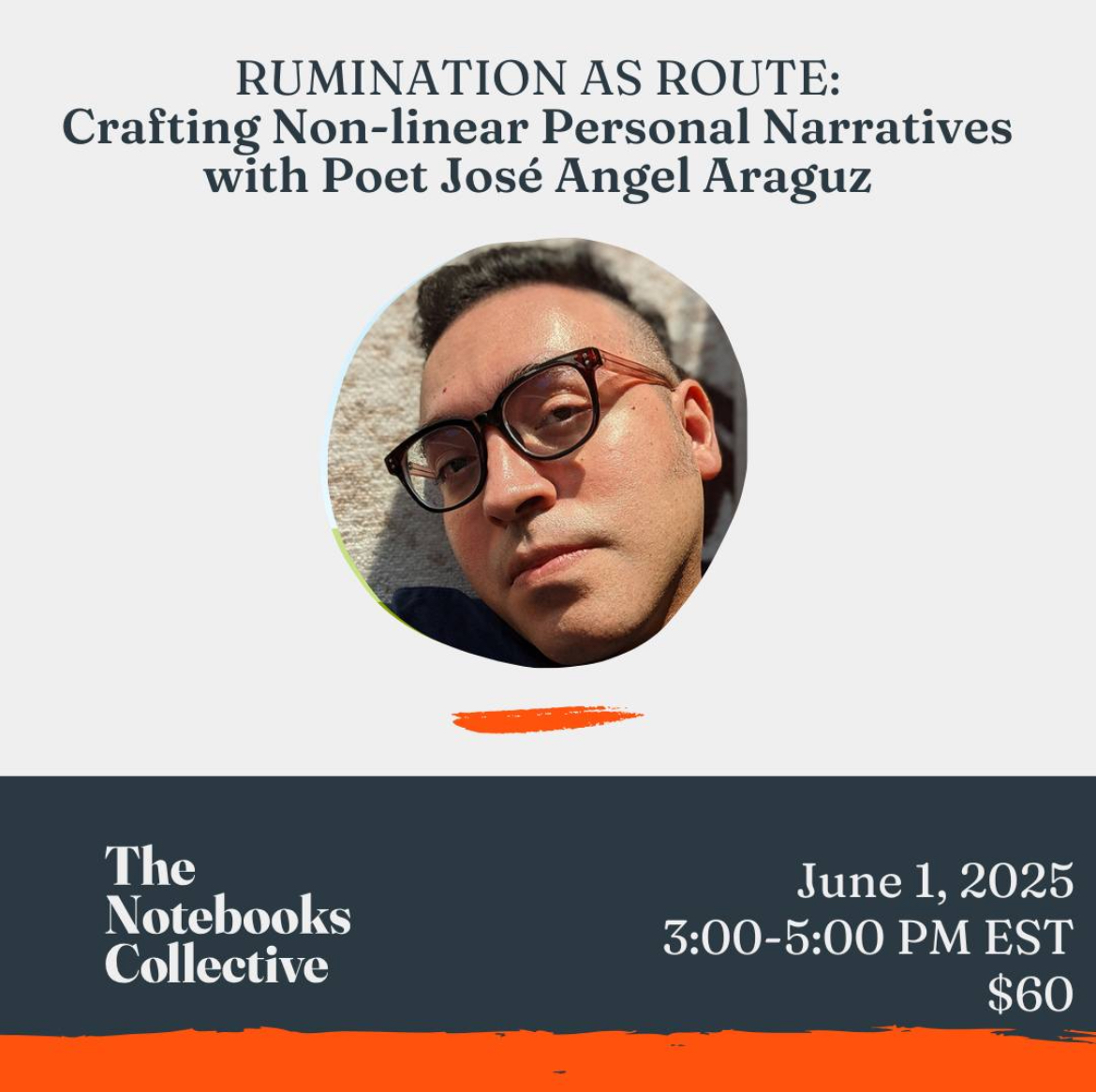

Rumination as Route: Crafting Non-Linear Personal Narratives

Date & Time: Sunday June 1, 2025 @3-5pm EST
Where: Online (Zoom)
Cost: $60
Register here: https://thenotebookscollective.com/event/rumination-as-route/

Hope to see you there!

= José =
* Rilke, winter & the friday influence

I am almost done with The Complete French Poems of Rainer Maria Rilke.  Fascinating stuff.  Rilke wrote something like 400 poems in French towards the end of his life.  Basically a whole Collected Works in another language.  He approached his poems in French in the spirit of starting over in a way that he couldn’t in his native German.

What does it mean to start over?  Focusing on details.

Case in point, here’s one poem from his series The Roses:

II. *

I see you, rose, half-open book

filled with so many pages

of that detailed happiness

we will never read.  Magus-book,

opened by the wind and read

with our eyes closed…,

butterflies fly out of you, stunned

for having had the same ideas.

***

Those last four lines contain within them so much sensation – so much surprise – you read them and go back into yourself, recognizing an experience there in the words.

Rilke’s French poems are where he goes for it and basically becomes a modern version of Rumi – he sings within his praise for the world.

winter, yo

winter, yo

Continuing with last week’s theme of winter, here is Rilke’s take on it.

In the same spirit of starting over, Rilke also left some of his French poems imperfect.  The poem below is such an example.

The last line almost takes me out of the poem.  It is an unfinished thought.  But, read after so many lines of yearning and remembering, the line leaves us lost in as much thought as the speaker.

***

Winter – Rainer Maria Rilke *

I love those former winters that still weren’t meant for sports.

We feared them a little, they were so hard and sharp;

we confronted them with a bit of courage,

to return into our house, white, sparkling wise-men.

And the fire, that great fire consoling us against them,

was a strong and living fire, a real fire.

We wrote badly, our fingers were all stiff,

but what joy to dream and entertain whatever

helps escaping memories delay a while…

They came so close, we saw them better

than in summer…, we proposed colors to them.

Inside, all was painting,

while outside all became engraving.

And the trees, who worked at home, in lamplight…

***

Happy working!

jose

* as translated by A. Poulin in The Complete French Poems of Rainer Maria Rilke.