Revision as Listening: upcoming workshop


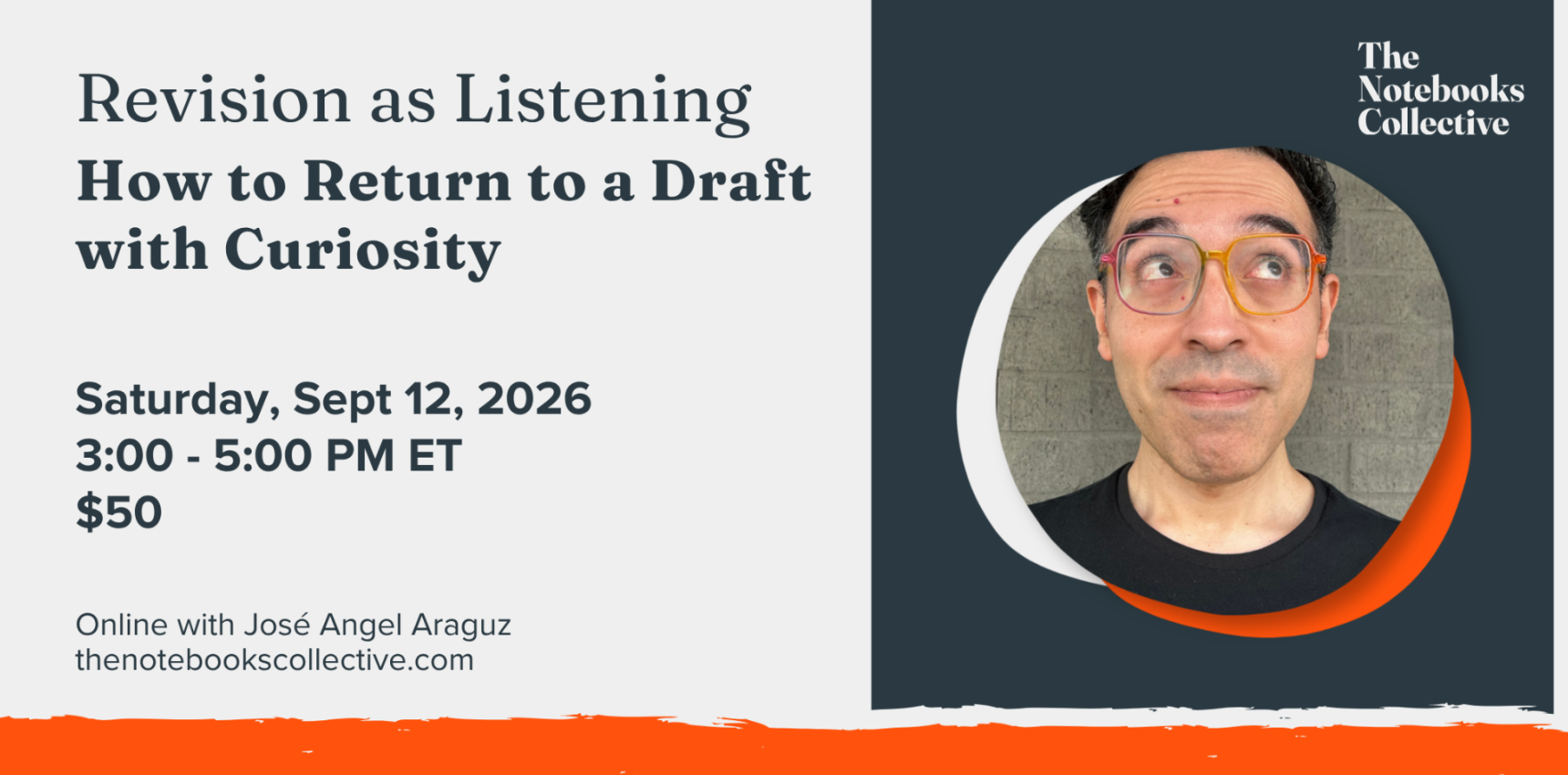
On Saturday, September 12, from 3–5 PM ET, I’ll be teaching a virtual workshop with The Notebooks Collective called Revision as Listening: How to Return to a Draft with Curiosity.

Revision is often described as correction, and it can often feel that way too. From this correction-focused perspective, returning to a draft can feel like returning to a room where someone is waiting to tell us what we did wrong.

But there is another kind of revision fear as well: the fear of returning to a draft and finding only silence. The piece may not feel broken exactly, but it may not yet feel finished. It may seem to be asking for something more (another image, another turn, another structure, another pressure) and we may not know yet what that “more” is.

For this workshop, I’m interested in how approaching revision as listening can help us find a way forward between these two pressures: the pressure to correct what is already there and the pressure to discover what may still be missing.

What changes when we return to a draft with curiosity instead of judgment? What if we begin by asking what is already alive in the piece? What does the draft seem to know that we did not know when we began writing it? What might it be asking for next?

As an educator and editor, I’ve learned that writers often know more about their drafts than they realize. I’m interested in helping writers notice what is already there: the recurring image, the strange sentence, the unanswered question, the shift in voice, the place where the draft suddenly wakes up.

As a writer, I need this reminder too. In my own recent project, papeles / papers, I’ve been trying to listen more intentionally to what a draft reveals through revision. This listening has been a way of deepening my relationship to what the page is trying to hold.

For the workshop, participants should bring one draft, fragment, or unfinished piece they are willing to revisit during class. Shorter pieces will be easiest to work with (approximately 1–5 pages is ideal) but any genre or stage of draft is welcome.

Our goal is to leave with practical strategies and a clearer sense of what your draft may be asking for. Together, we’ll develop a gentler way to keep going.

Registration is available through The Notebooks Collective.
After the Shape of Attention

This past Saturday, I had the pleasure of teaching The Shape of Attention: Exploring Form in Poetry and Prose through The Notebooks Collective.

I went into the workshop thinking about form as a way of paying attention. Over the course of two hours, we considered how a piece’s shape changes what becomes possible on the page. A form can create pressure. It can give permission. It can move the mind from one image or thought to another. It can interrupt habits we may not even realize we’re bringing to the page.

The group was lively and open. I was grateful for the seriousness and curiosity participants brought to the prompts. There was thoughtful discussion and some real exploratory writing happening in the room.

As part of the workshop, we looked at two poems that helped us think through different possibilities of form.

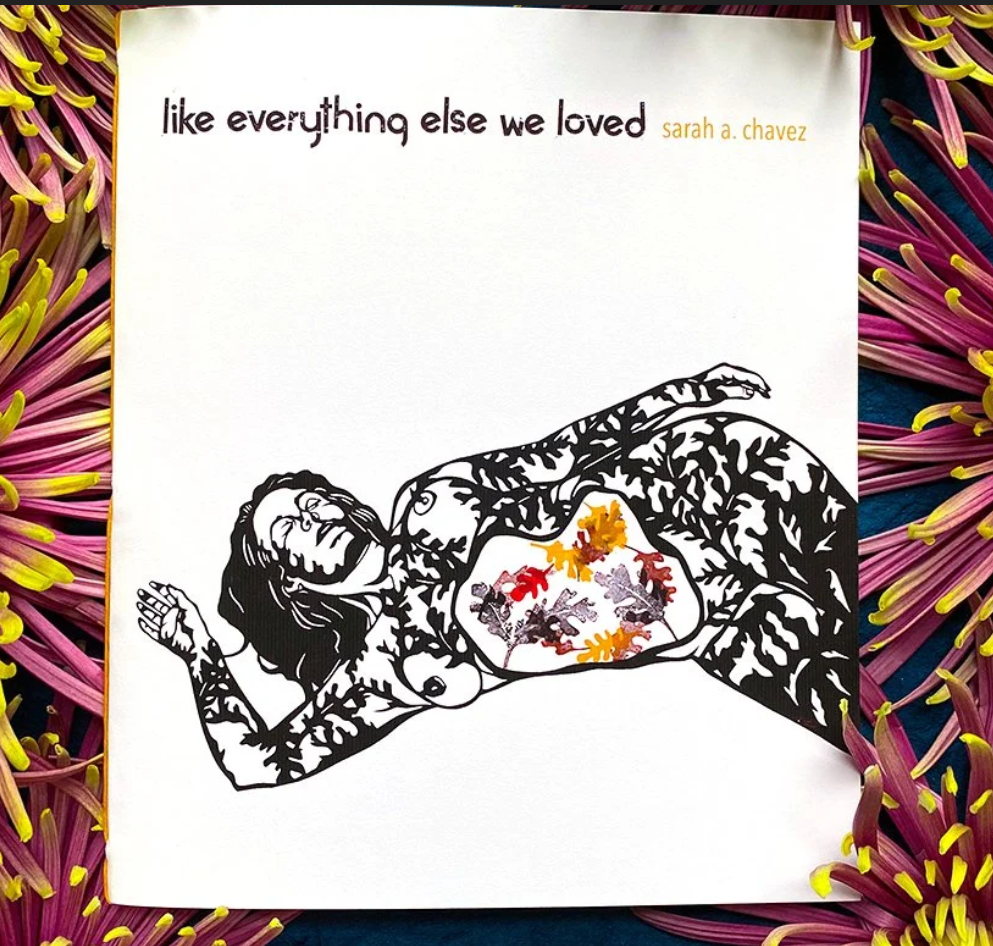
First, we discussed Sarah A. Chavez’s poem “Dear Carole, My favorite times,” in terms of address and its effect on attention. With this poem, we considered how address creates a listener. Speaking toward someone changes the direction of the poem’s attention, and can shape tone, intimacy, memory, risk, and movement.

Before we discussed the poem, I shared an image of the chapbook it appears in, like everything else we loved (Porkbelly Press). I chose that image because of a small personal history: I teach a literary publishing class, and a few years ago, one of my students worked closely with Chavez’s chapbook for an assignment and connected with it deeply. I ended up gifting my copy to them. It meant a lot to pass the book forward in that way, and the photo reminds me how meaningful that book was in the classroom and beyond it.

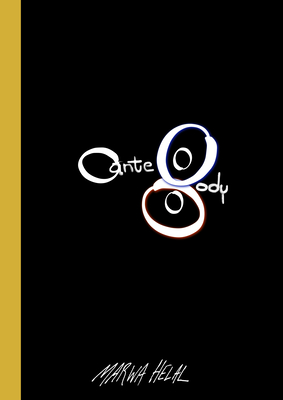
We also discussed Marwa Helal’s “POEM TO BE READ FROM RIGHT TO LEFT” in terms of form as interruption. The note accompanying the poem describes it as written in a form Helal created called The Arabic, a form that includes an Arabic letter, an Arabic footnote, and an Arabic numeral, preferably written right to left.

In class, I made clear that the point was not to imitate Helal’s culturally and linguistically specific form. Instead, we used the poem as an example of how form can interrupt the habits of reading itself. The poem asks the reader to become aware of direction, language, assumption, and the physical act of moving through a text. It refuses the ease of a default path.

Together, these poems helped us think about two different kinds of shaping. Chavez’s poem shows how address can gather memory and feeling toward a particular presence. Helal’s poem shows how form can disrupt and make visible the expectations a reader brings to the page.

Those ideas guided the workshop’s larger questions:

What does this shape allow?
What does it pressure?
What does it make visible?
What does it interrupt?
What kind of attention does this form make possible?

I’m grateful to The Notebooks Collective for hosting the workshop and to everyone who attended for their insights and willingness to experiment. I’ll be sharing details later of another TNC virtual workshop I’ll be doing in September focused on revision.

José