One of the things I’m looking forward to exploring in my upcoming workshop Rumination as Route is a practice I call ruminative reading: a way of engaging with texts that invites lingering, layering, and the kind of close attention that reveals deeper textures over time.
I’ll be sharing how I approach reading as a writer, and how I tease out unexpected meaning through methods that mirror the digressive and associative structures I write in. This kind of reading isn’t about decoding a text once and for all, it’s about returning to it, turning it over, letting it shift in your hands and your memory.
My ideas around ruminative reading were shaped by my time writing creative reviews for The Bind, a review site devoted to books by women and nonbinary authors. Though currently on hiatus, The Bind remains a rich and inspiring archive, a space where reviews take many forms: lesson plans, maps, quizzes, writing prompts. It honors writing at important intersections, and I encourage you to spend time on the site if you haven’t already.
As I prepare for this upcoming class on non-linear personal narratives, I’ve been thinking about how ruminative reading gave rise to the way I teach and write. Below are three reviews I wrote that embody this spirit, each one a small experiment in letting thought wander, spiral, and return.
Review of Jordan Rice’s Constellarium (Orison Books, April 2016)
For this review, I was drawn to the title’s connection to stars and from there wound up creating an astrological natal chart for the book, taking its publication date as its birthdate. Here’s some further info on the approach:
My interpretation focuses on the aspects of the chart that matter most in a book. In discussing this book as its own separate entity and being astrologically, I explore the reading-as-aesthetic-act process to which poetry uniquely lends itself. To paraphrase Borges, a book is not an aesthetic act; the writing of one, however, is, and so is the reading of one. If astrology is talking about the stars in terms of “influence” on our lives, Constellarium becomes a space where the push and pull of said influences are shown and evoked.
Review of Lara Mimosa Montes’s The Somnambulist (Horse Less Press, 2016)
For this review, I was moved by the collection’s formal approach, specifically the ways Montes works with lyric fragments, maps, manipulated texts, and a photograph to create an immersive poetic experience. Here’s how I built off the idea of an open table in a game of eight-ball, one of the central metaphors of the book:
… I have arranged my thoughts on and reactions to The Somnambulist across the following fifteen moments from the text. Consider these thoughts arranged like a game of eight-ball after the break shot where nothing has been pocketed. The pool analogy stems from the narrative of the uncle, whose role as a hustler parallels the role of a poet for the speaker in the book. My aim is to have my thoughts parallel the excerpts in a like manner, with the review being another open table where what matters is not any grand point being made or “pocketed.” Instead, the back-and-forth between reader and text is the focus, the reading experience as a game without scores, whose play and movement are trajectories into poetry.
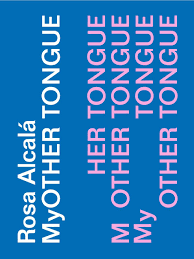
Review of Rosa Alcalá’s MyOther Tongue (Futurepoem, 2017)
After falling behind on writing this review due to L I F E, I found myself approaching this review as an archive of different reading experiences, an ideas inspired by Alcalá’s own engagement with archives in this collection. Here’s an insight into my review process:
One last archival note: Part of my process for book reviews is to use an index card as a book marker, and to keep a list of page numbers and notes on this card, a kind of map of my reading. There are 2.5 lists on the card for this book. One reading had me focused on “the idea of language + meaning + memory.” Another reading had me thinking “archive = self / traces.” Another reading had me thinking of margins: “ideas of the marginal = archive + misreading + remembering.” I look back at these notes and know, faintly, that I had something smart and polite to say about the book across them.
But that’s gone. All I’m left with is this index card, a set of words and page numbers, and the feeling of other lives I have lived. Which is really the only thing to not be late for: living.
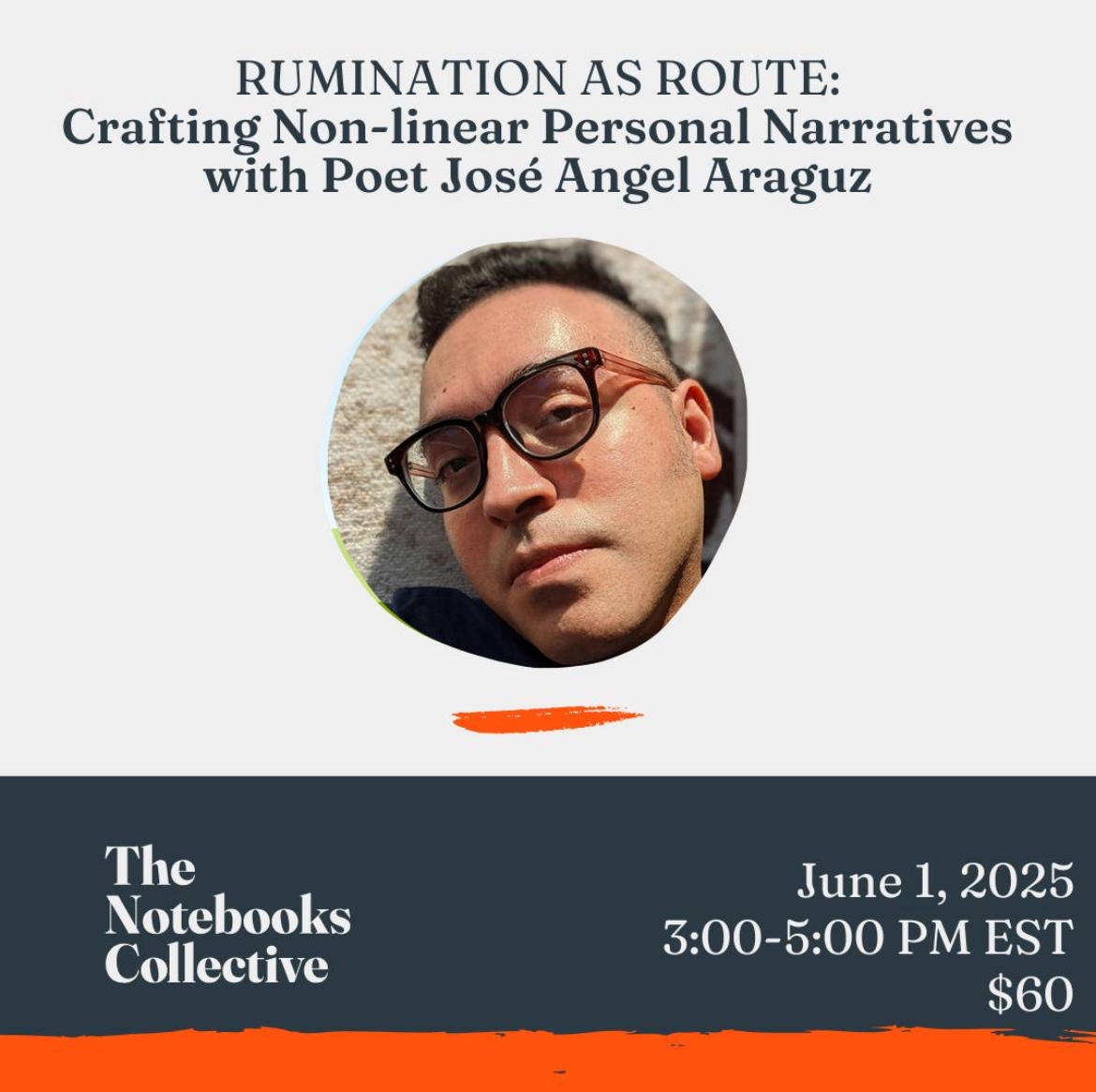
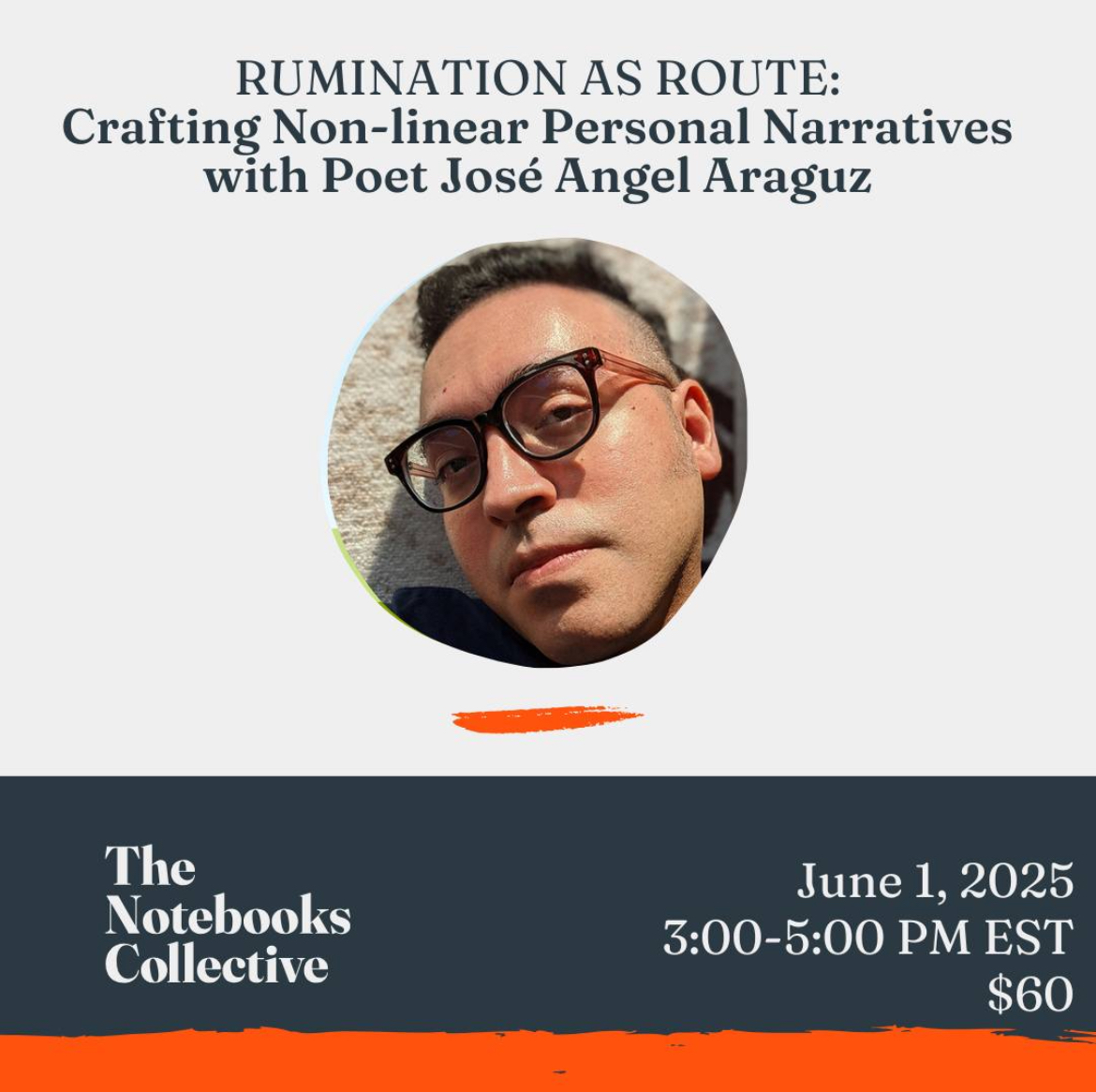
Rumination as Route: Crafting Non-Linear Personal Narratives
Date & Time: Sunday June 1, 2025 @3-5pm EST
Where: Online (Zoom)
Cost: $60
Register here: https://thenotebookscollective.com/event/rumination-as-route/
Hope to see you there!
= José =





 The Influence