Been busy with life and emotional happenings, but am hoping to get back into the swing of Influence-related things. Thank you to everybody who read my latest post and would-have-been speech! I greatly appreciate it.
I continue to be grateful to have been a finalist. One of the boons has been getting to be featured in articles and interviews, such as this one by David Bates of Oregon ArtsWatch titled, “It’s not my poetry that matters, it’s poetry that matters.” Bates did a great job of funneling down my in-person digressions and written loquaciousness into readable / followable quotes. One thing I’m glad he captured was my sense of advocacy and community that drives a lot of my teaching, writing, and editorial work:
“Without a platform for one’s work, without representation and visibility of one’s culture and identity, and without a feeling that there is a space for you somewhere in the world, writers can be sent down a discouraging path, questioning the worth not only of one’s words but of one’s existence. Things aren’t perfect, but good work is being done, and good work is being honored.”
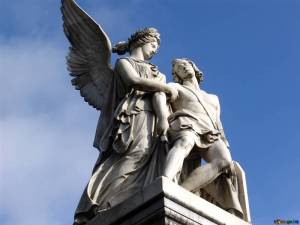 Another recent happening has been my prose poem sequence Gods and Goddesses being published as part of Oxidant Engine’s Boxset Series. Those familiar with my prose poems in Reasons (not) to Dance (FutureCycle Press) and The Book of Flight (Essay Press) will find this sequence kindred to those poems.
This Boxset Series is awesome and includes work by Rachel Mindell, Alexa Doran, Marlin M. Jenkins, Robert Okaji, Dorothy Chan, and John Sibley Williams among other stellar writers. Purchase a copy here.
Below are two excerpts from my prose poem sequence. Enjoy!
*
Gods and Goddesses – José Angel Araguz
She told the class to imagine themselves as gods and goddesses, and to draw that. A few laughed, then grew silent, leaving the strokes of a pencil to grow louder, faster, a hand in the back of the room furious across a sheet, where teeth could be found, and the beginning lines around a mouth. Everyone waited, wanting to hear what it had to say.
First – José Angel Araguz
– and then the sun looked down upon the earth, took in how countless and unending life here seemed, saw in it something of the universe, at least what he knew of it, boundless and crowded, only what he saw was a thing that held nothing as bright as he was, nothing that aspired to take his place, nothing even to take a place beside him, and he continued in his thoughts, taking note of everything in regards to what he could not see, trying to block out his reflection which is all he saw – on the water, on the leaves – his thoughts multiplying and emptying him until he looked at the ground and saw shapes, dark, no light in them, a whole world that was not a world but a passing feeling that moved as he moved. The first shadows looked back at the sun –
 In my recent
  The Influence