After the Shape of Attention

This past Saturday, I had the pleasure of teaching The Shape of Attention: Exploring Form in Poetry and Prose through The Notebooks Collective.

I went into the workshop thinking about form as a way of paying attention. Over the course of two hours, we considered how a piece’s shape changes what becomes possible on the page. A form can create pressure. It can give permission. It can move the mind from one image or thought to another. It can interrupt habits we may not even realize we’re bringing to the page.

The group was lively and open. I was grateful for the seriousness and curiosity participants brought to the prompts. There was thoughtful discussion and some real exploratory writing happening in the room.

As part of the workshop, we looked at two poems that helped us think through different possibilities of form.

First, we discussed Sarah A. Chavez’s poem “Dear Carole, My favorite times,” in terms of address and its effect on attention. With this poem, we considered how address creates a listener. Speaking toward someone changes the direction of the poem’s attention, and can shape tone, intimacy, memory, risk, and movement.
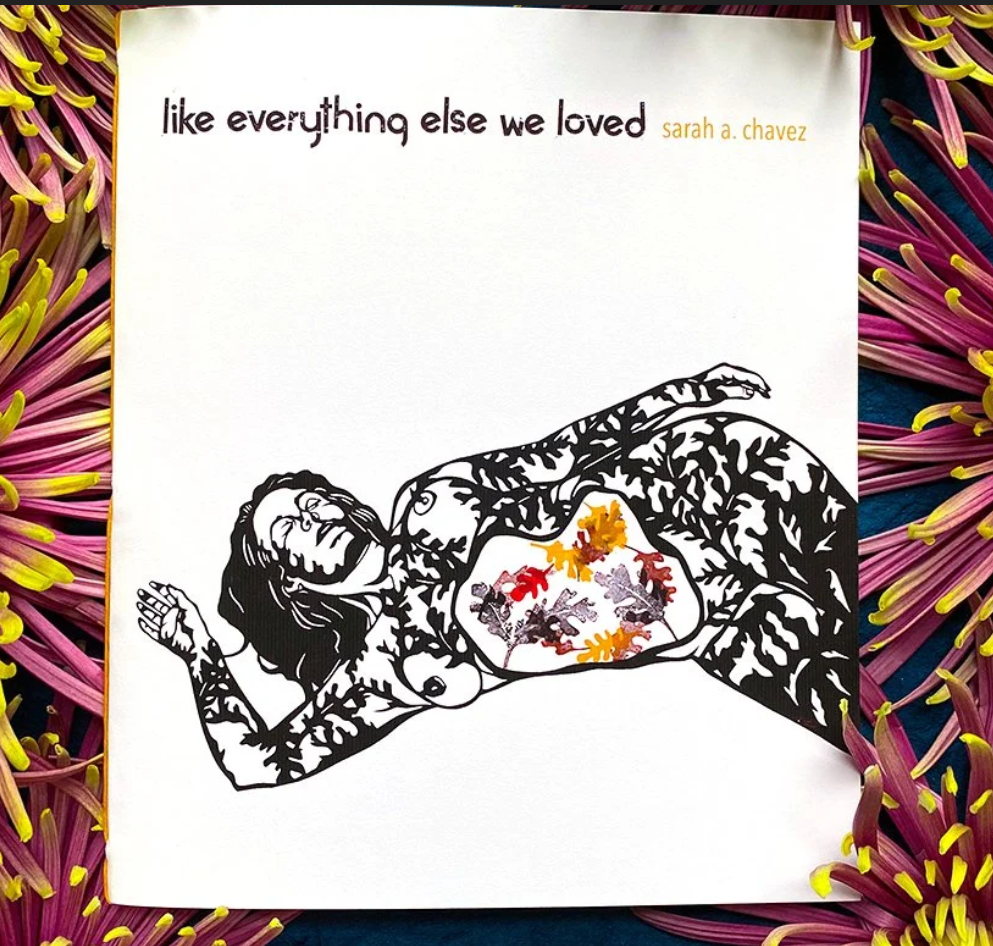
Before we discussed the poem, I shared an image of the chapbook it appears in, like everything else we loved (Porkbelly Press). I chose that image because of a small personal history: I teach a literary publishing class, and a few years ago, one of my students worked closely with Chavez’s chapbook for an assignment and connected with it deeply. I ended up gifting my copy to them. It meant a lot to pass the book forward in that way, and the photo reminds me how meaningful that book was in the classroom and beyond it.

We also discussed Marwa Helal’s “POEM TO BE READ FROM RIGHT TO LEFT” in terms of form as interruption. The note accompanying the poem describes it as written in a form Helal created called The Arabic, a form that includes an Arabic letter, an Arabic footnote, and an Arabic numeral, preferably written right to left.
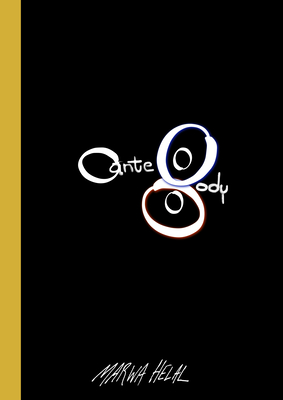
In class, I made clear that the point was not to imitate Helal’s culturally and linguistically specific form. Instead, we used the poem as an example of how form can interrupt the habits of reading itself. The poem asks the reader to become aware of direction, language, assumption, and the physical act of moving through a text. It refuses the ease of a default path.

Together, these poems helped us think about two different kinds of shaping. Chavez’s poem shows how address can gather memory and feeling toward a particular presence. Helal’s poem shows how form can disrupt and make visible the expectations a reader brings to the page.

Those ideas guided the workshop’s larger questions:

What does this shape allow?
What does it pressure?
What does it make visible?
What does it interrupt?
What kind of attention does this form make possible?

I’m grateful to The Notebooks Collective for hosting the workshop and to everyone who attended for their insights and willingness to experiment. I’ll be sharing details later of another TNC virtual workshop I’ll be doing in September focused on revision.

José

microreview: like everything else we loved by sarah a. chavez

review by José Angel Araguz

A copy of the micro chapbook like everything else we loved by Sarah A. Chavez framed by flowers.

Early on in like everything else we loved by Sarah A. Chavez, a micro chapbook published by Porkbelly Press, the reader is presented a scene in which the speaker describes a hole where the city has uprooted a tree as follows:

Like losing you, the loss of the tree
was quick. One day, diagnosis, next
dust from the wood chipper coated
the large hole in the grass
where the stump was pulled out.
Such a big hole. So big I could
sit in it, so I did, and ran my hand
along the edges of root
left connectionless beneath
the grassy surface. I put my tongue
to the limbs’ ashes, the saw dust
sticking to my shirt and pants.

This image of the speaker not only observing but dwelling on the dismantling and death of another, specifically of a tree, is legit enough. But the image of the speaker in the hole, physically present in the absence of the tree, serves as a metaphor for this project, underscoring grief as exploration marked and forged by persistent excavation of the self and of memory.

In this collection, Chavez adds to her series of “Dear Carole” poems that have become their own body of work within her larger body of work (which can be found across her full-length collections Hands That Break & Scar (Sundress Publications, 2017) and All Day, Talking (dancing girl press, 2014)). The poems of like everything else we loved are elegiac epistolary poems, poems that celebrate and hold space for the grief and love the speaker in them feels for Carole, and doing so through the direct address of a letter. Yet, it’s the poetic sensibility on display in these poems — a sensibility able to honor a lost loved one in a way that is intimate as well as accessible — that marks the accomplishment and gift they are to the elegiac and epistolary traditions.

The poem from which the image above comes from, for example, is entitled “Dear Carole, Dermatologists Call the Body a ‘Trunk’,” a title that in its word choice and phrasing invites us into the realm of gossip and daily life. There’s an urgency to this address, a sense of having found something out that only one other person will understand, accompanied by the need to share it. One feels you are overhearing two kindred spirits alive together through the fact of the poem.

While the epistolary form necessarily marks it as a one-sided conversation, the voice in this and other poems in the series takes its time meditating and speaking to Carole in empathetic, blunt, and candid ways. The result is a voice whose honesty is animate and grows before the reader. In this way, poetry creates a space of connection, of relating, of inside jokes and acknowledged flaws, and ultimately of mattering.

The image of the speaker in the hole is almost like they would press themselves into the Earth similarly as the writer presses the words onto the page. I think I keep coming back to this image because of how honest it feels. It’s the kind of thing you’d share with someone only if they mattered to you. In sharing with Carole in these poems, the speaker evokes for us the richness and depth of mattering.

*

like everything else we loved can be purchased from Porkbelly Press.
To check out more of Sarah A. Chavez’s work, check out her site.
Lastly, here’s a dynamic essay where Chavez breaks down her thoughts on “Working Class Poetry.”