This week’s poem – “Branch Library” by Edward Hirsch – takes me back to being a kid getting dropped off at the Greenwood Library in Corpus Christi, Texas (an experience I recently wrote a short essay about). Those early experiences of wandering stacks are with me in some small part to this day as I walk around a library or bookstore.
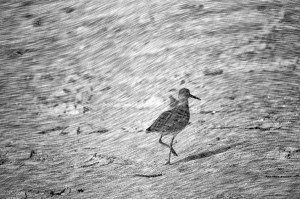 Along with this personal connection, Hirsch’s poem moves me for the way it braids together a variety of wordplay. From the play on “branch” as both the specific locale of the title to the poem’s riffing on bird language, there is a purposeful cleverness at work. What this levity does for the poem is give it an imaginative momentum that keeps over-seriousness and sentimentality from taking over by bringing them together directly. The earnest love of books and language meets the bird imagery and metaphor to evoke the exhilaration of the speaker’s younger self.
Through this braiding and inventiveness, Hirsch’s poem takes the reader along for the search for a younger self, a search that is a wonder in itself.
Branch Library – Edward Hirsch
I wish I could find that skinny, long-beaked boy
who perched in the branches of the old branch library.
He spent the Sabbath flying between the wobbly stacks
and the flimsy wooden tables on the second floor,
pecking at nuts, nesting in broken spines, scratching
notes under his own corner patch of sky.
I’d give anything to find that birdy boy again
bursting out into the dusky blue afternoon
with his satchel of scrawls and scribbles,
radiating heat, singing with joy.
 This week’s poem – “The Journey” by Mary Oliver – is a poem that I associate it with this kind of intuition and listening. The poem is grounded in a narrative that is richly ambiguous; the choice of the second person “you” address brings a reader close to the stakes of the poem while the language is kept in a register that is accessible and fluid. Yet, rather than fall into any cliches about “journeys,” the poem creates a creeping urgency through its physicality. A house “trembles”; something “tugs” at the ankles; and by the end, the you is striding forward with a newfound conviction, if not confidence.
 The Influence