This week I’m sharing the second installment archiving my Instagram poetry project entitled @poetryamano (poetry by hand). This account focuses on sharing poems written by hand, either in longhand or more experimental forms such as erasures/blackout poems and found poems.
I’d like to give a quick thank you to Kenyatta JP García for giving @poetryamano a shout out here.
Below are the highlights from February 2017. Be sure to check out the first installment.
Stay tuned next week for more of the usual Influence happenings. For now, enjoy these forays into variations on the short lyric!
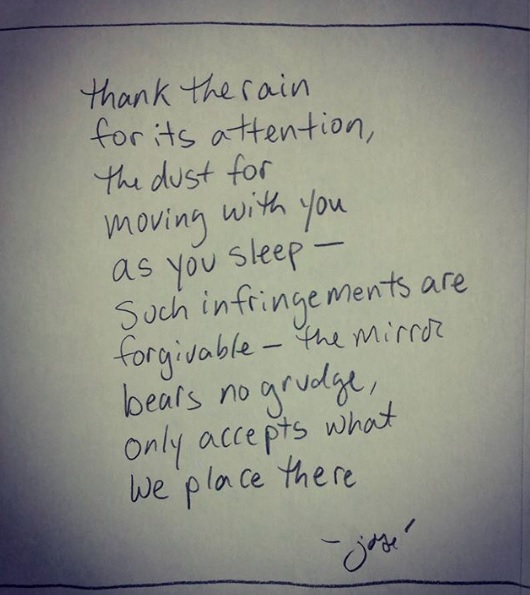
In February, I had been coming back to rain and mirrors in my free writes. I always worry about retreading, but then some words and images are like worry stones, no?
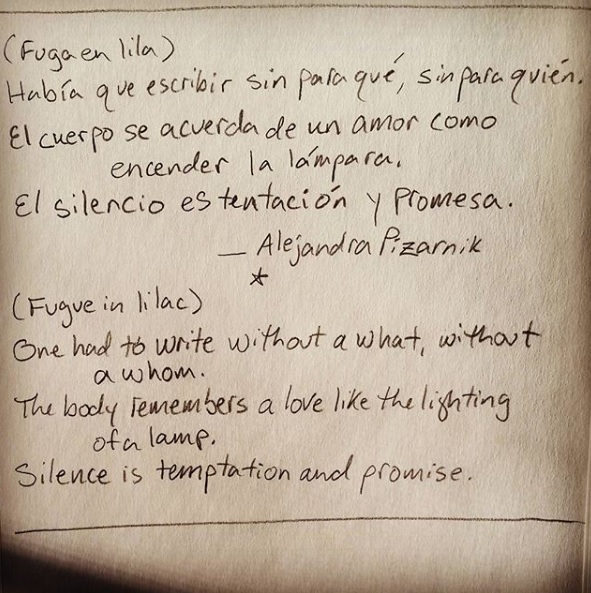
Translation: Alejandra Pizarnik’s poems are full of a tense intimacy, like each word could say everything, so we gotta be careful with them. The hardest line to translate here was the first, specifically the phrasing of “sin para qué, sin para quién,” which translates as “without a reason, and for no one,” sense-wise. But I like the whimsy of “what/whom” and feel it’s in keeping with Pizarnik’s overall punk vibe.

True story. I was working on a poem when I came across a draft that had the quoted text above in the middle of some rough writing. The quote stuck with me for a few hours, yet I couldn’t remember the source. So I decided to go the haibun-like route of including this story of the quote while letting the quote shine in its own space. I like the result, despite the poem showing how flawed my own memory is – and again, that could be the point, no, that words last?

Those fragments on the side are from a hematite ring that broke a month ago. Found out recently that these rings break for two reasons, the brittleness of the metal, and when they have absorbed too much negativity. Words work in the same way, able to hold what they can, until they can’t.
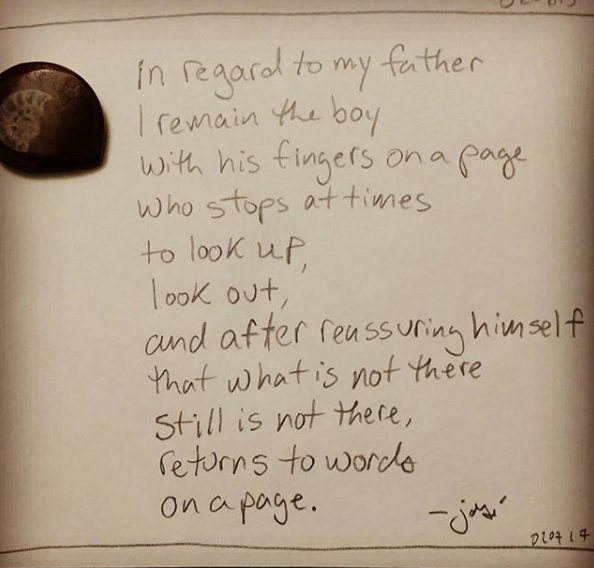
Talismans: The absence of my father growing up comes in and out of my poems. It’s an influence like weather, which changes. He died when I was six, but left my life earlier. In response to my worries about writing too many poems about this absence, someone called it a talisman of sorts, something I carry in the presence of these words.
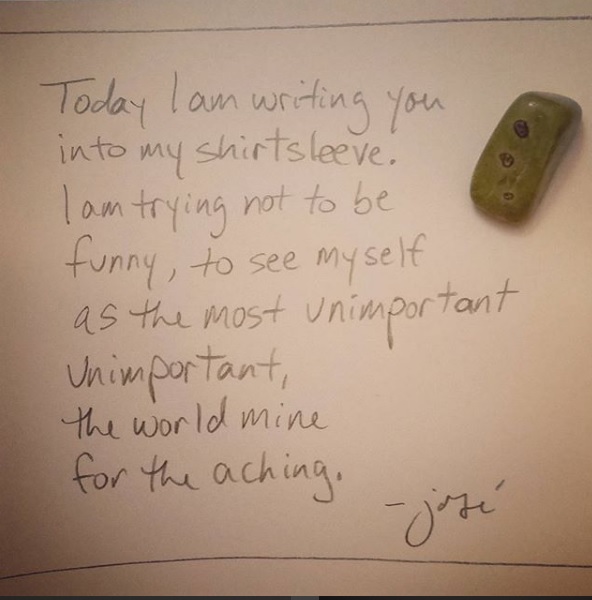
Throwback to the original version of a line that made its way into my book, Everything We Think We Hear (Floricanto Press). It got revised into: “Stay with me, love, the world is ours for the aching” which is recalled by the speaker of the newer poem as lines he used to say trying to be slick. True story.

When you write poems in more than one language, you realize quickly how what you are really doing when you write is translating something yet spoken inside you into a shape and expression. Here, I like how the filter places a bit of light in the space between the two versions of the poem, light like a fingerprint itself.

February brought my first attempts at erasures/blackout poems for the poetryamano project. My first attempts, like here, were done on my phone, using photo studio to mark out words. This one reads: “the real world / dwells in the / absorption of passion, / And / mirrors it” – From The English Renaissance of Art by Oscar Wilde.
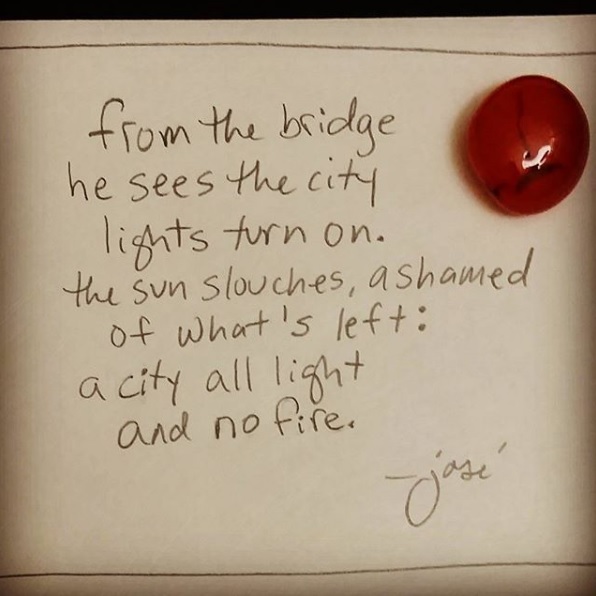
This last one of the month comes from a time when I’d walk around all poet-lonely, then go home and write poems about walking around being poet-lonely. We all went through that, right?
*
Happy amano-ing!
José
 This week’s poem, “When We Are Too Tired to Fall in Love” by Oka Bernard Osahon, is a great example of a poem that makes the world around a relationship come alive for the reader. Line by line, the speaker of this poem engages the narrative of their relationship through imagery. Lines like “I felt the cold retraction / Beneath the glare of tossed hair as you carried the pages of your face away,” which moves from the visual “glare” to the tactile “pages” in its efforts to render a passing moment, run on an engine of imagery. Yet, the use of “pages” also implies change, and creates a sense of urgency.
 The Influence