This week’s poem, “The thing about colors,” is a fine example of how poets often have to be unsettled in language. For instance, there is the performance of language in the public realm, where we do our best to honor one another in regards to pronoun preference, ability, and sexuality as well as cultural and racial backgrounds. Then there is the way language is rooted in the private realm, the personal effort and experiences that shape the way we come to understand such language and how we embody and live what it means.
 In my own life, I welcome a phrase like “person of color” for what it offers in the public realm, how it offers me, as a Latinx, a place in a larger, societal conversation. As a tool for unpacking and coping with insults and imbalances, such terminology provides a way to speak up with and make big picture connections where otherwise I would be too hurt to do so. And yet, in the private realm, I am obligated to unpack such phrases further because the distance they provide as tools leave a space where things like hurt and emotions remain to be addressed.
To put it another way, words that help in one realm don’t necessarily help in the other. But as poets, we are curious as to why that is. They are words after all. We will never have enough words to describe every hurt, nor will the world wait for us to find the right ones. We can only manage with the words we have, and add to those when necessary, when vision and heart allow.
Tonji had this to say in regards to the poem:
As a non native speaker of English language, ‘The thing about colors’ is my attempt at voicing my confusion and revealing my sociolinguistic interest on the expression ‘people of color’, especially when we are all cognisant of the denial of the obvious that comes with it; a statement of ambiguity attributing the black person a sense of being special or out of place as the case may be, the tendency of humans to rechristen everything but themselves.
What I admire about Tonji’s poem is how it points to the work still left to be done beyond political terms. When the speaker describes a moment with an immigration officer who lingers, trying to place “the colour of my accent,” and then goes on to describe the “color riot” caused by skin-bleaching, it is an admirable and necessary interrogation of the space between the public and private realms. Poetry aids such interrogation by making clear the mutability of language, a mutability that we as people can only continue to learn from.
The thing about colors – Trust Tonji
that I don’t understand
in this language
is why only black men
are said to be of color
when everyone has it
painted across their skin
the thing about colors
is the way they paint
themselves into what
lives under tongues
in borders, names
everything that looks
different from your norm
and yes,
this is not America
my skin’s brown like his
still this immigration officer
is slightly tilting his head
listening for the difference
in the colour of my accent
the thing about colors
on your brown body when
you stopped bleaching is
it beginning to heal itself
returning you back to the
color of your beautiful self
saving you the shame
of looking like color riot
the thing about colors
is that everyone has it
but if you’re too afraid
to share identity with us
you can keep painting
your imaginations black
black . . . black . . .

Trust Tonji is too confused to choose, he doesn’t have a particular favourite. He writes from Porto Novo, Republic of Benin. His poetry has appeared in Prachya Review, Synchronized Chaos, The Kalahari Review, Praxis Magazine, The Electronic Pamphlet and elsewhere.
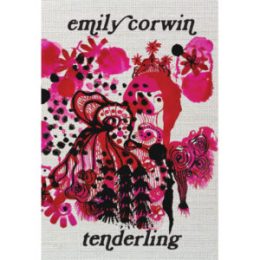 The poem “reverie” (below) is a good example of this mix of elements and discovery. The poem begins with the speaker’s admission of eating “the honeycomb whole and now there are bees / inside me.” The fabulist logic of the opening metaphor places the reader in the center of a poetic crucible. From there, vulnerability (“I try to / look human today”) and a sense of longing are brought together and mix until the poem itself becomes a “place” similar to the “place where / slept our bodies, young and peaceful.”
 The Influence