Meet my new friend, the viscacha. He’s got a look that is simultaneously wise, weary, and worked-over. While I can’t claim to be wise, I am definitely feeling weary and worked over by the world. Introduced this friend to my students this week and one responded with: “What does he hear that we don’t that he needs ears so big?”
As I continue to ponder that, I thought I would share some recent happenings:
My poems “Youth” and “To Silence” were recently published in the latest issue of Pangyrus along with a short statement on their origins and meaning in a new manuscript.
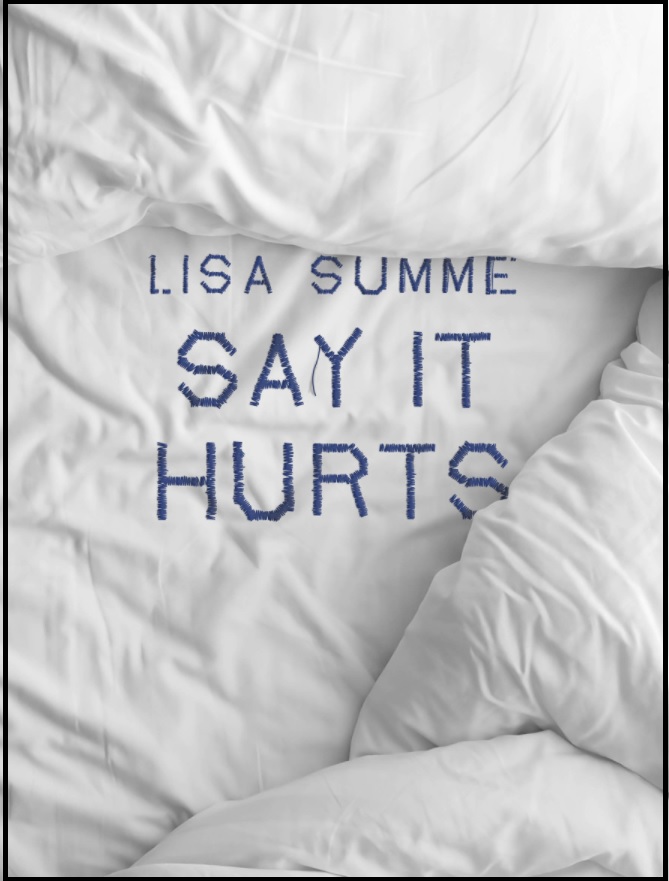
This week I’m excited to share two poems from Lisa Summe’s upcoming collection, Say It Hurts (YesYes Books). This collection is due out on January 15th and is currently available for pre-order.
Here’s a brief description of the forthcoming collection:
Say It Hurts grapples with queerness, love, grief, masculinity, coming of age, and coming out in the context of cultural violence rooted in misogyny and familial violence rooted in catholicism. In these poems joy and loss hold hands—at sleepovers and haircuts, at symphonies and haunted mazes, among fathers, on dating apps, during car sex, in matching tattoos, on Pinterest boards, at funerals. Lisa Summe’s debut collection queers the love poem by demanding that the whole story be told—what it means to love, to grieve, and to heal by saying it out loud.
About Say It Hurts
One thing I’m continually impressed by in Lisa Summe’s work is the range of lyric voice she’s able to tap into. From direct intensity to nuanced, meditative insight, there’s always an emotional pulse to her work.
“Always a Man” (below) is an example of direct intensity. The lyric voice charges forth, interrogating the pervasive effects of toxic masculinity in women’s public and private lives. One effect is evoked through the speaker’s stating “I am not the kind of woman,” then using this “not” as a counterpoint to heteronormative examples of “kinds” of women. This reckoning is then forged by the verbal sexual assault women face. Through an example of a hypothetical couple hearing about “sexual assault on the news,” the poem gets to the question: “how many times in a year / do you think you get catcalled.” When this question garners a response “incalculable / like the number of times in a year I stub my toe,” we are as readers hit by a harsh reality. This harsh reality becomes all the more harsh as it occurs within the speaker’s own experience, that the poem has moved from hypothetical example to her referencing “my coworker or sister or best friend.” The poem continues listing various instances of women being catcalled, illuminating the opening line’s counterpoint through indirection. What develops in the first half of the poem is the harsh reality of straight and straight-presenting women in heteronormative society. The poem takes a turn with the line “but there is always a man” which takes us back to the title, its implied binary, and the interrogation via the poem of said binary. The speaker goes from detailing the effects of catcalls to sharing her experience of outright threats of violence. The poem ends on a note that makes clear how insidious misogonynistic subjugation is in women’s lives, queer or straight.
In “Your Pinterest Board Called Wedding” (also below), nuanced, meditative insight is created through the speaker’s reflection as she goes through an inventory of the title’s Pinterest board of an ex. Through this inventory, we get a variety of images and details whose emotional poignancy works through juxtaposition. For example, early on the speaker notes “so / you want an oval engagement ring” and follows that up with “my grief / circling around: coming back as bird.” This braiding of metaphor and image creates a palpable pathos, one that stands in direct contrast with the title. Where the mention of social media and the equally “social” weddings imply connection and celebration, the speaker grieves a loss of connection. There remains, however, a faint tone of celebration, the speaker in awe of the beloved even at a physical and societal distance, but this tone is modulated by grief and realization. The formal use of colons throughout this poem help in this modulation of tone, setting the pace while also letting the reading experience be one of rumination, speaker and reader side by side in awe and regret.
Enjoy the poems below. Also, White Whale Bookstore will be hosting a virtual reading & launch for Say It Hurts on January 23 featuring Summe as well as Sara Watson, Jari Bradley, Micaela Corn, and Diannely Antigua. Check out this link for info on registration and more about the event.
Always a Man*
I am not the kind of woman whose boyfriend asks in the midst of all of the sexual assault on the news how many times in a year do you think you get catcalled I do not have a boyfriend first of all but even if I did my answer would not be that of my coworker or sister or best friend incalculable like the number of times in a year I stub my toe I am not the kind of woman who looks like a woman not the kind of woman a man whistles at near the gas station or calls honey at the bank or tells to smile because I’ve got a pretty smile at the farmer’s market the Jiffy Lube the coffee shop the bar down the street my own porch because the upstairs neighbor the mailman I am not the kind of woman my exes are women who got hit on right in front me while I held their hands at the gym or at the movies or at the fucking Olive Garden I am not the kind of woman who has to use her energy to politely decline these advances or gets called bitch or gets a bloody lip or gets it anyway but there is always a man while I walk home from work in a button down & bow tie in broad daylight there is always a man on the corner by the CVS a man wearing a hardhat on the corner of Bayard St. there is always a man who wants to put me in my place I see what you really are under there he says you’re a girl
*previously published in Bone Bouquet
Your Pinterest Board Called Wedding
I swear that’s your actual finger: so you want an oval engagement ring: my grief circling around: coming back as a bird: as a wing: fragile as the inner ear: my alabaster heart: you: lace everything: sleeves of your dress: lingerie: twitch of my thigh: now you will marry a man: I don’t know his name: twitch in my eye: when we were together: we made words: let’s get married: our idea of save the dates: Scrabble tiles: getting married: back of your dress wide open: your finch tattoo bursting through: my grief flying out the window of you: what you like about the finch: it always returns home
Lisa Summe is the author of Say It Hurts (YesYes Books, 2021). She earned a BA and MA in literature at the University of Cincinnati, and an MFA in poetry from Virginia Tech. Her poems have appeared or are forthcoming in Bat City Review, Cincinnati Review, Muzzle, Salt Hill, Waxwing, and elsewhere. You can find her running, playing baseball, or eating vegan pastries in Pittsburgh, PA, on Twitter and IG @lisasumme, and at lisasumme.com.



 The Influence