review by José Angel Araguz
As the pandemic continues being an ongoing, consistent crisis killing 4,000 people a week in this country* — this despite the current administration’s plan to call an end to it as a health emergency — it feels more urgent than ever to honor and bring attention to work that lives up to poetry’s possibilities as archive of our present moment and lived experience.
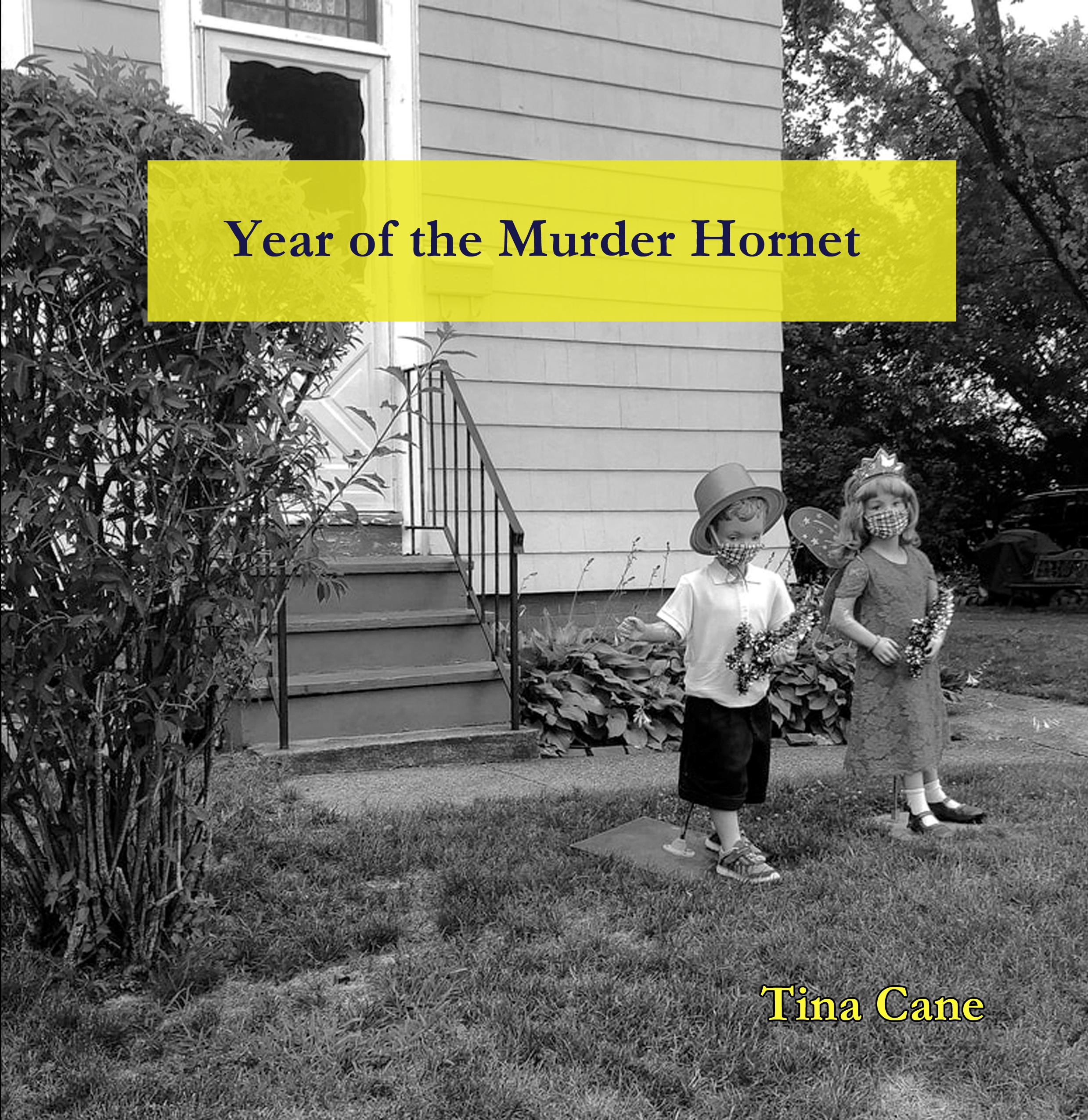
Enter Tina Cane’s Year of the Murder Hornet (Veliz Books, 2022). This poetry collection is a dynamic enterprise. Cane’s distinct vision in this project is executed through poems and formal choices that reflect a disjointed, urgent reality.
The poem “Shelter in Place,” for example, begins:
Schools are shuttered everything is cancelled and my body has become
an extension of my house this shift is strange but not entirely unfamiliar
Here, Cane’s engagement with the pandemic as subject matter moves it from the headlines and statistics that framed our lives at the start of the pandemic and brings it into the house and the body. This choice to ground the poem in the “strange” aspects of the moment conveys how it is “not entirely unfamiliar.” The pandemic has us reassessing and rethinking our lives, from our societal understanding of the systemic oppression felt across class, race, sexuality, and ability to the way we live our day to day lives. “as the architects of our days,” the poem posits at the end, “[our] nature will continue to amaze us in ways we don’t expect.” This closing underscores the sense of autonomy troubled by the uncertainty we continue to live under.
Throughout my reading of Year of the Murder Hornet I kept marveling over Cane’s ability to linger over the spaces in between things. Specifically, the choice to include additional white space within the lines of each poem emphasizes both how stalled shifts in the pandemic can make us feel as well as how necessary it is to take our time. By take our time I mean in terms of reading the situation — whether it be assessing what the reality behind phrases like “the new normal” actually is like, to preparing (mentally, physically) for the changes brought on by decisions at our jobs or by the government which we have no say in.
The poems “Essay on Gentrification” and “Minority Report” also work in this vein and are good examples of how this collection takes its time interrogating the nuances of life during a pandemic, nuances that are often lost in debates and political discourse.
This collection also includes the sequence “What We Talk About When We Talk About Paths: A Narrative in Captions,” a deviation from the formal choices in the poems discussed so far (an excerpt can be read here). In the physical collection, this poem lives in the middle of the page, a rectangle path of words that catalogues captions from social media and brings them into a poetic space. This sequence is striking for the way it allows this list of captions to establish presence, a presence similar to what is achieved in our use of social media.
In the end, presence is what matters: that we are still here present, that we acknowledge, mourn, and celebrate those no longer physically present. This sense of mortality charges the edges of each poem in this collection as much as it influences the decisions of those in power. The gift that Tina Cane has given us in Year of the Murder Hornet is a sense of who we were, while the poems themselves remind us of who we are and could be.
*
Copies of Year of the Murder Hornet can be purchased from Veliz Books.
*For those looking for trustworthy, transparent information on the pandemic, I encourage y’all to check out the People’s CDC website.
 The Influence