Oyes en medio del otoño
detonaciones amarillas?
(In the middle of autumn
do you hear yellow explosions?)
— Pablo Neruda, The Book of Questions
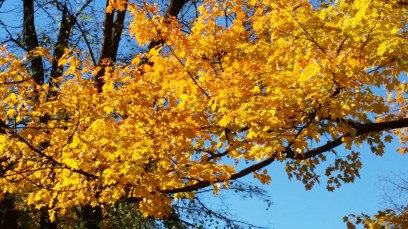
Neruda’s lines above evoke a pleasing moment of synesthesia, blurring the sight of yellow leaves with the sound of explosions. As the season changes, I can’t help but see such blurred moments more and more in life.
This week’s poem, “The Heat of Autumn” by Jane Hirshfield, works its materials on a similar level as Neruda’s question above. Housed under the concept of “heat,” the narrative of the poem draws its details together in a way that imbues meaning, connecting things in an active way.
The third line, for example, refers to the “apples” of one season becoming the “cider” of another. In doing so, the first of the poem’s many little dramas is enacted. By the end, enough details and imbued meanings have piled upon each other (like leaves), that the “heat” of the title becomes a sensation on both a physical and emotional level.
*
The Heat of Autumn – Jane Hirshfield
The heat of autumn
is different from the heat of summer.
One ripens apples, the other turns them to cider.
One is a dock you walk out on,
the other the spine of a thin swimming horse
and the river each day a full measure colder.
A man with cancer leaves his wife for his lover.
Before he goes she straightens his belts in the closet,
rearranges the socks and sweaters inside the dresser
by color. That’s autumn heat:
her hand placing silver buckles with silver,
gold buckles with gold, setting each
on the hook it belongs on in a closet soon to be empty,
and calling it pleasure.
(from Hirshfield’s collection After, 2006)
*
Happy autumning!
José
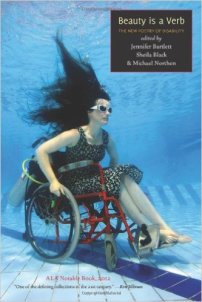 One of the highlights of teaching composition this summer has been engaging with excerpts from the anthology Beauty is a Verb: The New Poetry of Disability. There is a wealth of great poetry in this anthology, which includes the work of Ona Gritz, Hal Sirowitz, and the writer of this week’s poem, Jim Ferris.

 The Influence