If you were a scientist, if you were an explorer who had been to the moon. . . What you said would have the force of that accumulated background of information; and any mumbles, mistakes, dithering, could be forgiven . . . But a poet – whatever you are saying, and however you are saying it, the only authority you have builds from the immediate performance, or it does not build. The moon you are describing is the one you are creating. From the very beginning of your utterance you are creating your own authority.
(William Stafford)
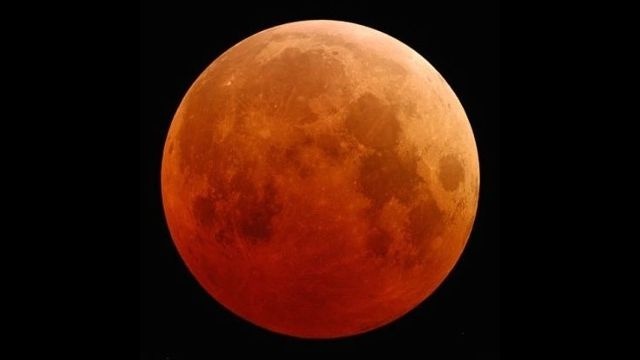
 Last Friday, I had the pleasure of talking at Foy H. Moody High School (Go Trojans!), the high school I graduated from in Corpus Christi, Texas. My talk was structured around the above quote from William Stafford and the idea of writing as performance. Along with reading poems about the moon, I provided students with index cards where they could try their hand at describing/creating the moon. Here’s one that a student, Ashley, was kind enough to allow me to share here:
It makes me want to swallow
my tears, it makes me believe
I can forget my fears.
It gives me hope.
One of the things that moves me about this young poet’s lyric is how it reaches out to a similar sentiment as the Izumi Shikibu tanka I shared last week. Both lyrics set the solitary figure of the moon against the solitude of the self and work out of that tension a feeling of hope. Truly inspiring!
As part of my visit, I donated copies of Corpus Christi Octaves, Reasons (not) to Dance, and Everything We Think We Hear to the library. As I made my way through readings from Reasons and Everything, I found the moon popping up over and over again in the poems, serendipitously chiming along with the framework of my talk. It was one of those happy accidents that happen while teaching that, in a way, show your intuition paying off.
When a student asked why I thought the moon came up in the poems so much, I surprised myself again by sharing that it might have something to do with having shared a room as a child with my mother. She would work late nights, and often I would stay awake in bed staring out the window. And most nights the moon was there; when not, then the stars.
Looking back on this moment, I can’t help thinking about the following poem by Jack Gilbert, where he gives his own moon-reasoning:
Secrets of Poetry – Jack Gilbert
People complain about too many moons in my poetry.
Even my friends ask why I keep putting in the moon.
And I wish I had an answer like when Archie Moore
was asked by a reporter in the dressing room
after the fight, “Why did you keep looking in
his eyes, Archie? The whole fight you were
looking in his eyes.” And old Archie Moore said,
“Because the eyes are the windows to the soul, man.”

* mirrors to the sol *
Another “wish I could back and share” thought: It completely slipped my mind that in the Octaves I have the following poem where I riff and hold conversation with the Stafford quote. I share it here in the spirit of belatedness:
The moon you are describing is the one you are creating
– William Stafford
How many moons between us, friend?
I meet you under circumstances
bad and good: bad, because you’re not here,
good, because I get to listen
and hear the moon you’d have me see.
Moon of my own efforts: where to start?
My questions? What are questions? Tonight,
the moon is in the shape of one.
*
Special thanks to Simon Rios and Melissa Yanez of Moody for helping set up the talks! Thanks also to Ashley, Marcos, and all the other students who participated in the talk about the moon!
Happy lunaring!
José
 The Influence