* Rosa Alcalá’s Undocumentaries

Confessional Poem – Rosa Alcalá

The girl next door had something to teach me
about what to air: On the line
somebody’s business gets told
then recounted; it’s best to thread a tale
for the neighbors, an orchestration
of sorts. But I am far from modest
in my telling of lies. There are three references
I put forward: each a past lover
who liked a different kind of underling
to his genius. You wouldn’t know it
from the delicates I roll
into the yard. It’s all the same peek-a-boo lace
and stunted imagination. Of course,
all of this is scanty truth. Who hangs anything out to dry
anymore, when invention has halved the work?
* undocumentaries *

* undocumentaries *

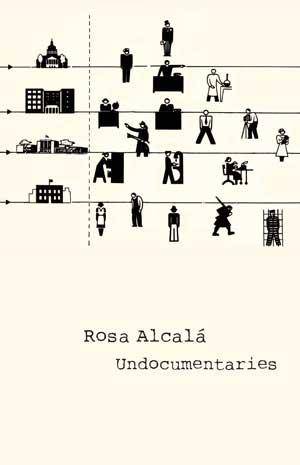
Over the past year, I’ve enjoyed writing reviews for The Volta Blog. My latest review is of Rosa Alcalá’s Undocumentaries. The poem above is one example of how Alcalá digs out the complications to be found behind conventional metaphors. In my review, I break down the above poem, making connections with Sylvia Plath and the tasks (and consequences) a poet sets and works out for themselves.

Due to length considerations, I had to cut a bit of the original ending to the essay. Here’s a cut paragraph that I feel is essential in conveying my own personal connection with the collection:

“What goes unsaid in an essay like this – an essay which boils down to I read the poems, I thought about the poems – is worth considering given the Alcala’s idea of the “Undocumentary.” I read these poems for the first time in my thirty-second year of life. I am back in academia out of some sense of purpose or perhaps a need of one. I haven’t shared a house with my family for over fifteen years – in fact, it has been almost four years since I saw them. So much time apart and yet they keep coming up in my own poems. When Alcala writes about distance, I know what she means: it is the distance between family, a distance both physical and emotional, a distance of language and understanding. It is a distance one tries to cover through words because that is the only thing that is real to poets: real in its unreality.”

Check out the full review here.

Happy unrealiting!

Jose
* (re)noting the hidden things via shin kyeong-nim

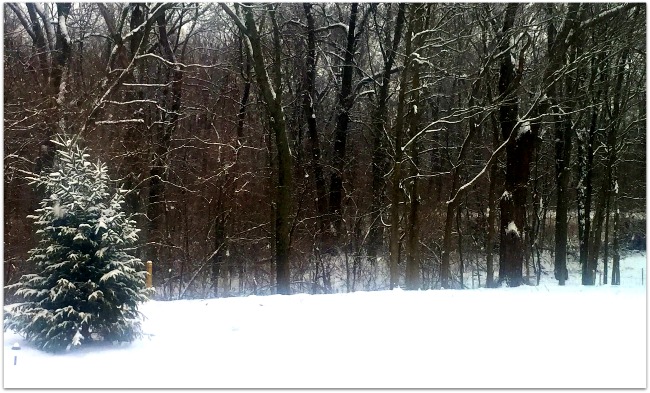
Not that anybody needs another reminder of what snow looks like, but here:

* cincisnowti *

* Cincisnowti *

There’s been plenty of the cold stuff these past few months.

Heading into March, I’m waiting for spring to arrive – yet I can’t help but type that and immediately note that I can’t exactly remember what it was like without snow. Not that “Oh, it’s been snowing so long, I can’t remember what it was like without it — ” but rather, there’s a rather elegiac habit of mind I encounter that has me always looking at the world with an emphasis on what isn’t there versus what is.

At times, this habit is powerful – in envisioning a way out of a problem, for example. But there are times that require a bit of restraint from thinking away from them.

This week’s poem by Korean poet Shin Kyeong-nim evokes a feeling  of what is missed in the turning/thinking away I experience. With each reading, the poem makes me see that life, as it gathers in the years behind us, becomes a series of turns, and that, while much is irretrievable, the experience is constant: what we will miss is in front of us long before we begin to be able to miss it.

The Baby – Shin Kyeong-nim

I.

Baby looks at the snow piling up outside the window;
signs it’s all lovely, all strange; waves a hand.
Like baby trees shaking baby leaves.
Baby knows all the hidden things:
why snow falls, and the lovely things the snowflakes whisper;
knows all – a perfectly contented still life.

II.

After a while, baby learns the word “Mum.”
This means he is forgetting the hidden things of the word “Mum.”
But he doesn’t realize.
Flowers, trees, stars.
With elation baby learns the words,
forgetting the hidden things in each.
And when he has forgotten all the hidden things,
baby is a full-fledged person.

III.

Thus when snow piles up like today,
he’ll fret from thoughts of a girl.
Walking the bank of the stream,
he will cry from nostalgia self-directed.

***
Happy self-directing!

Jose

p.s. Thank you to Daniel Paul Marshall for introducing me to this poem and poet.

* poem found in The Columbia Anthology of Modern Korean Poetry.