This week, I’d like to share some news from writers in my communities as well as a few opportunities in the world. Also this week: a new installment in my Debate series of erasures (for more info on the series, check out the original post). Enjoy!
Community News
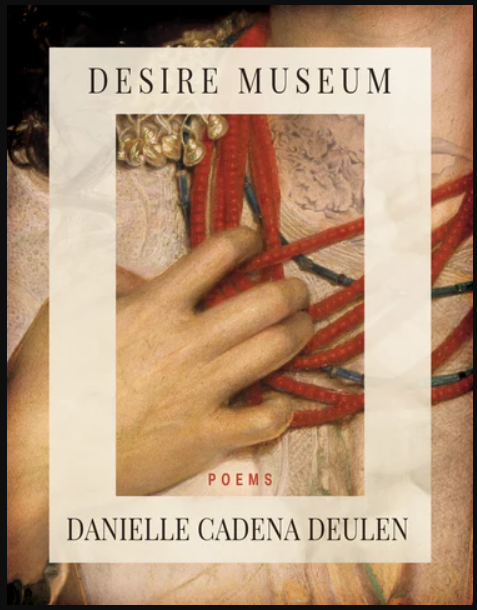
First up, happy to share that poet and essayist Danielle Cadena Deulen’s third poetry collection, Desire Museum, was recently awarded a 2024 Lambda Literary Award! If you’re interested in hearing them read the final poem from Desire Museum, you can find it on YouTube HERE.
I reviewed Deulen’s second collection for The Volta Blog a ways back and also shared some of their work here on the Influence.

I’m also happy to share that poet and translator Dana Delibovi’s project, SWEET HUNTER: The Complete Poems of St. Teresa of Ávila, A New Translation and Commentary is available for pre-order. The book is scheduled to be released on October 15, 2024—St. Teresa’s feast day from Monkfish Publishing. Learn more about the project on the book’s site.
I had the privilege of getting to spend time with the collection and wrote the following blurb:
If, as Joseph Brodsky once declared, the translator of poetry is a rival to the original poet, then Sweet Hunter: The Complete Poems of St. Teresa of Ávila finds poet, critic, and translator Dana Delibovi answering the challenge with full commitment. The rivalry here, however, is not one of competing techniques. Rather, poem by poem, Delibovi renders Ávila’s vision with a clarity faithful to the original but which works in tones and nuances that speak to our contemporary moment. This tension across language and time presents parallel efforts and passions. Delibovi’s notes which accompany each poem add further depth and provide a running commentary where Delibovi’s own voice mixes with that of previous translators, ultimately creating a lively meditation filled with insightful details from Ávila’s life and practice. This layered approach is apt in engaging with the work of a mystic, work shaped by urgency and faith as much as craft. What Delibovi has gifted us is much more than a selection of poems: it’s a wholly distinct poetic journey.
—José Angel Araguz, author of Rotura and Ruin & Want
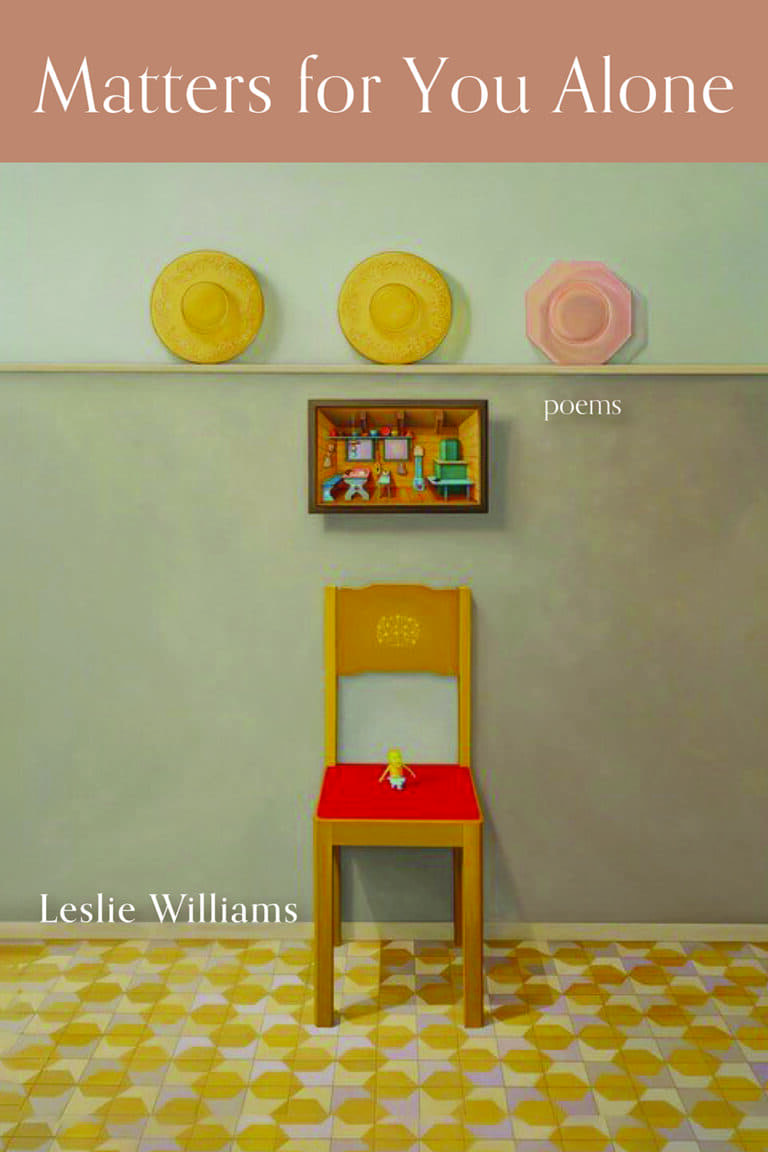
Lastly, I’m happy to announce a new book of poems, Matters for You Alone, by Leslie Williams recently published by Slant Books.
From the publisher: “Matters for You Alone is a spiritual exploration of friendship: its shapes and duties, stresses and blames—and its absolute necessity. The book takes its title from Jean-Pierre de Caussade’s classic, Abandonment to Divine Providence, as it strives to interpret everyday encounters and events—the domestic, the mundane—in light of the eternal.”
Check out “Friend Shift” featured in the collection.
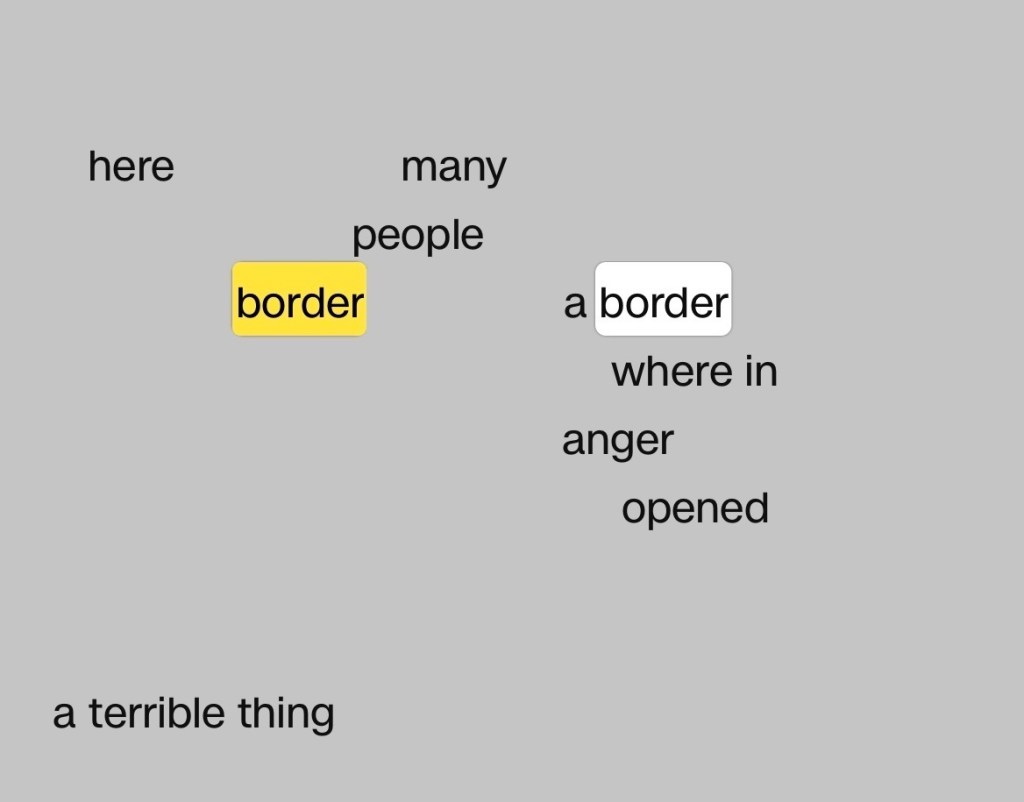
Finally, here are the latest additions in the Debate series (for more info on the series, check out the original post).
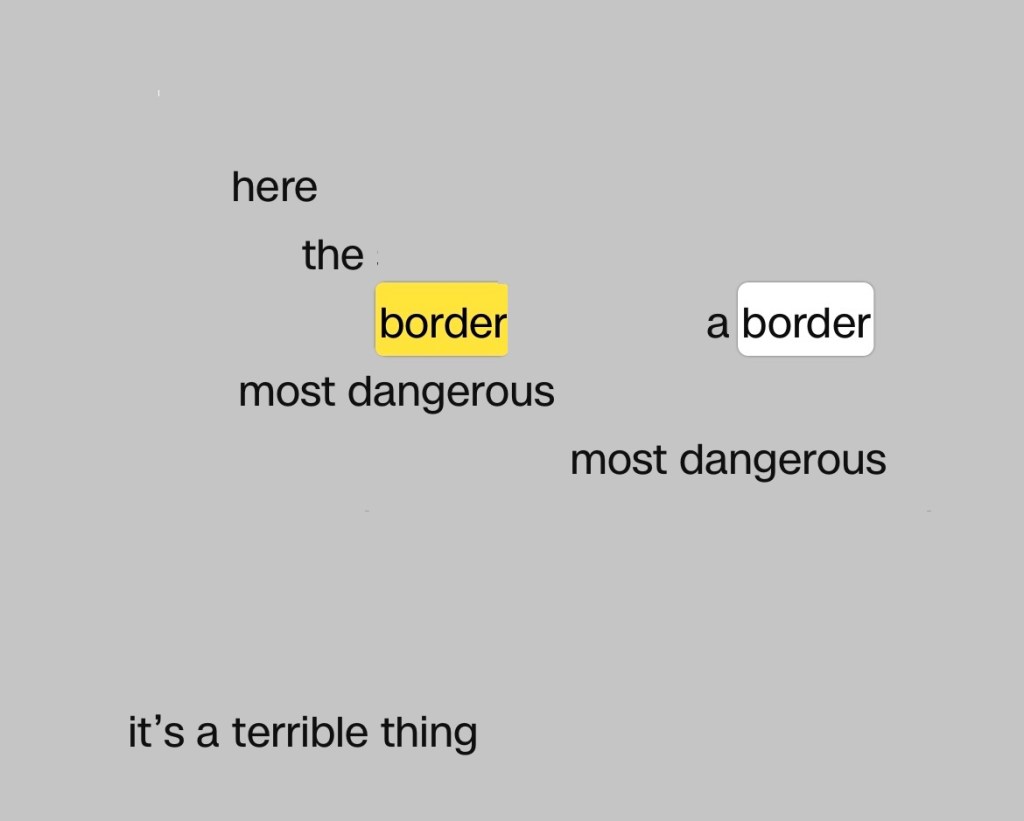
Debate Series: takes 3.1 & 3.2

An erasure poem that reads: we changed the border with border police now the border patrols me. 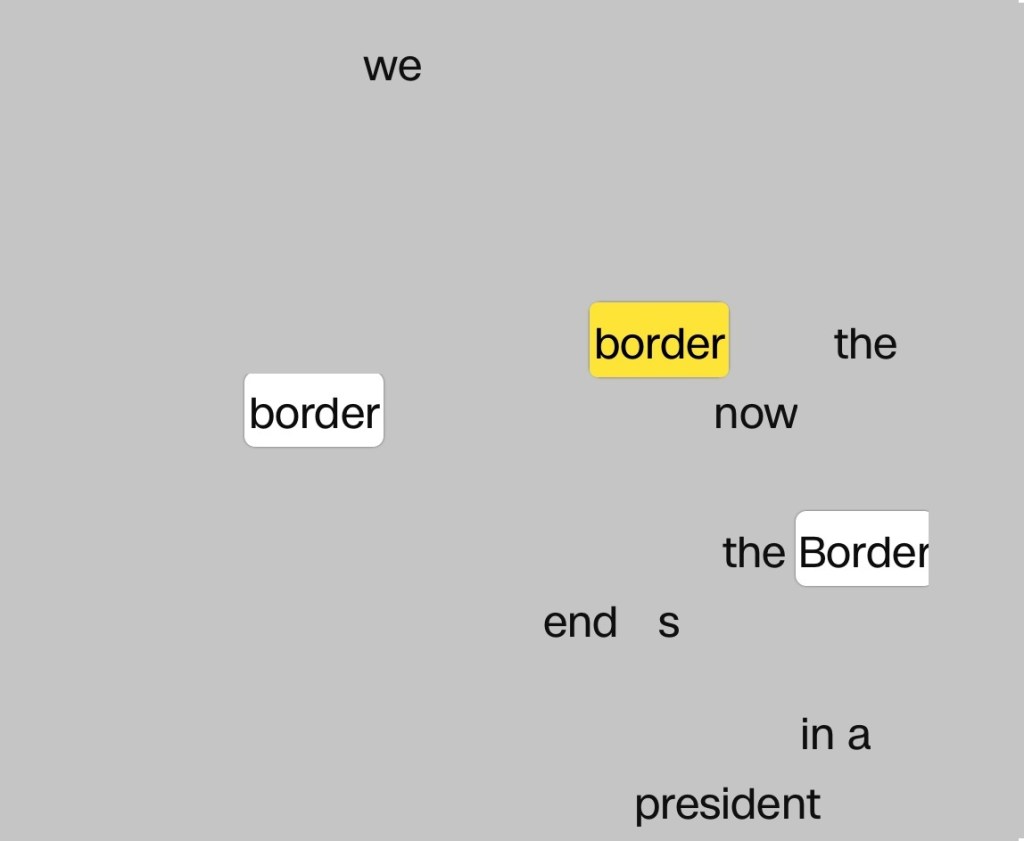
An erasure poem that reads: we border the border now the border ends in a president.
Abrazos,
= José =


 The Influence