* what I don’t know – with Hayden Carruth & Joseph Massey

Swept – Hayden Carruth

When we say I
miss you what
we mean is I’m
filled with

dread.  At night
alone going
to bed is
like lying down

in a wave.  Total
absence of light.
Swept away to
gone.

*sweptup*

*sweptup*

This week I am sharing poems by Hayden Carruth and Joseph Massey.

The thread between them is how nuanced the lines are – both in terms of line breaks as well as pacing – in order to work their magic.  Read Carruth’s poem too fast and you miss the power of like lying down // in a wave – how the stanza break opens up after lying down and places you in a wave as you read.

A similar thing happened for me in the following poem by Massey in the second stanza.  The phrasing of I know/them, not/knowing their/names is tricky.  It took me a few readings to really cotton to what was happening there at the level of language.  More than an admission of not knowing the names of the things in spring, it elevates that not knowing into a knowing all its own.

I feel it in terms of this: what I don’t know could fill libraries – and does!

Hear – Joseph Massey

The field
throbs.  Early
spring splits
a few things

open; I know
them, not
knowing their
names

— my only
company.
Here at the
margins

it’s all said
illegibly.

**

Happy illegibling!

Jose
* throwing things on the floor with Jim Harrison & John Keats

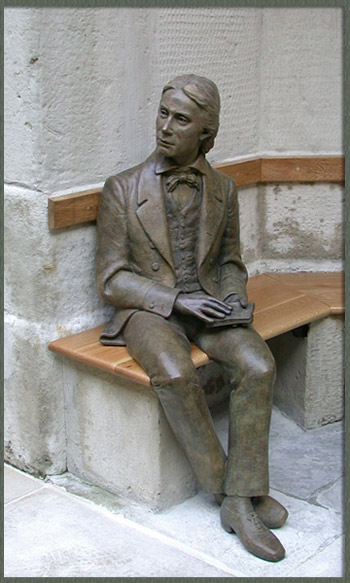
In reading Jim Harrison’s novel The English Major last month, I came across the following and it brought tears – I have been much for tears these days – and mainly because I have been slowly going over poems I have memorized, seeing what stuck and what fell off, and was suddenly surprised to recognize the poem referenced below:

I was saddened by the idea that I might not finish the work before I died, a natural enough fear.  Keats wrote, “When I have fears that I may cease to be before my pen has glean’d my teeming brain…”  That was throwing the raw meat on the floor in a lovely way.

That phrasing throwing the raw meat on the floor – that’s it isn’t it – what it is a poet does no matter the how we use to do it.  We are not in the business of poetry if the raw meat isn’t on the floor.

Realizing I had let the poem slip after a few years, and then coming back to it, memorizing it again – more than an old friend, I felt like a piece of myself was returning, that something understood once was being reconciled in a big, new way.

There’s a lot of history in the poem too: Yeats borrowed the phrasing of high romance, and John Berryman references the end of the poem in the title of his book Love and Fame.  I myself am tempted to borrow and manipulate the phrasing for something called: The Fool-ripened Grain.

Here is the poem below – you can see for yourself how awful and sacrilegious my idea is.

* you let the meat fall where? *

* you let the meat fall where? *

When I have fears that I may cease to be – John Keats

When I have fears that I may cease to  be
Before my pen has gleaned my teeming brain,
Before high-piled books in charactery
Hold like rich garners the full ripened grain;

When I behold, upon the night’s starred face,
Huge cloudy symbols of a high romance
And think that I may never live to trace
Their shadows with the magic hand of chance;

And when I feel, fair creature of an hour,
That I shall never look upon thee more,
Never have relish in the faery power
Of unreflecting love – then on the shore

Of the wide world I stand alone, and think
Til love and fame to nothingness do sink.

***

Happy sinking!

Jose