* finding work with Rhina P. Espaillat

Last week I had the honor of participating in CantoMundo, a three-day retreat that develops, sustains, and supports a diverse community of Latina/o poets.

Being an introvert, I was a bit apprehensive of jumping into such a social gathering, my main concern being: What if they don’t like me? (I’m surprised by how much one remains in the sandbox no matter how old one gets).

* scared poet is scared *

* scared poet is scared *

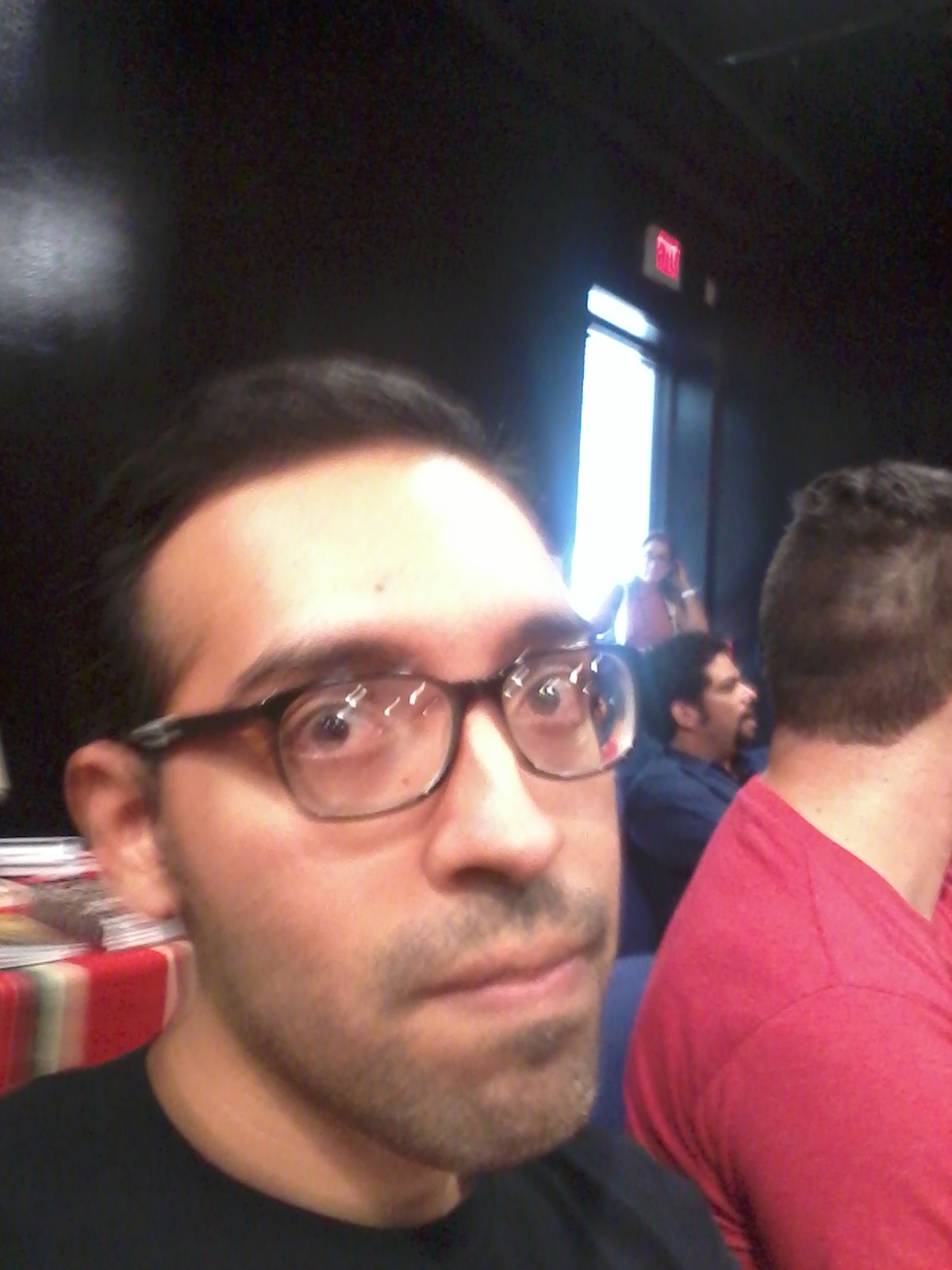
Fortunately, the whole crew, including keynote speaker Sherwin Bitsui and Master Poets Lorna Dee Cervantes and Rafael Campo, were warm and welcoming. By the second night, this happened:
* scared poet is (a little less) scared *

* scared poet is (a little less) scared *

During Rafael Campo’s workshop, I was delighted to be introduced to the work of Rhina P. Espaillat.

The poem below belongs to the tradition of Robert Hayden’s “Those Winter Sundays,” a poem honoring the hard work of family. Espaillat’s masterful attention to the tension to be generated between narrative and measure really help drive home the heart of the poem.

The last two lines especially captivated me.

Both lines are five beats each, but note how much work the commas do: in the second to last line, three beats are held in place by a comma, then two more follow also held back, then the line break takes us into the next line where the first beat is reined in by another comma – all of this building tension (3-2/1-4 beat breakdown, respectively) allows the last phrase of the poem to really be sunk into while reading, the four beats driving home in rhythm what the words drive home in meaning.

**

“Find Work” – Rhina P. Espaillat


I tie my Hat — I crease my Shawl —
Life’s little duties do — precisely
As the very least
Were infinite — to me —


— Emily Dickinson, #443


My mother’s mother, widowed very young
of her first love, and of that love’s first fruit,
moved through her father’s farm , her country tongue
and country heart anaesthetized and mute
with labor. So her kind was taught to do —
“Find work,” she would reply to every grief —
and her one dictum, whether false or true,
tolled heavy with her passionate belief.
Widowed again, with children, in her prime,
she spoke so little it was hard to bear
so much composure, such a truce with time
spent in the lifelong practice of despair.
But I recall her floors, scrubbed white as bone,
her dishes, and how painfully they shone.

***

Happy finding!

Jose
 

borges: a lyrical alignment

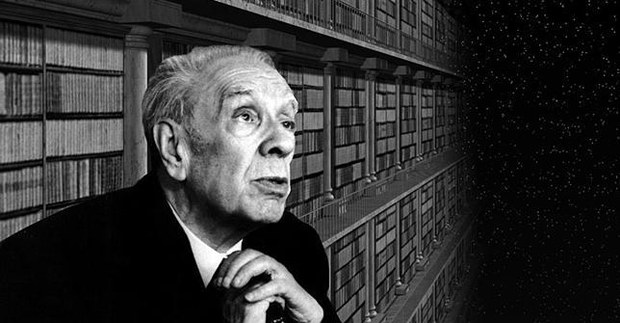
This past week, I found myself reading the essay “Verbiage for Poems” by Jorge Luis Borges (found in On Writing, Penguin Classics), and coming across a marvelous paragraph – emphasis on the ‘marvel,’ something of strange weather patterns moving across the sky in the middle of an ordinary afternoon about this paragraph.

In my enthusiasm, I found myself reading the words aloud to myself as I would a poem, which naturally led to my writing them out in my notebook. I pushed my fascination further by rewriting the prose into lines (loose iambics).

I present the fruits of my efforts below, calling it a lyrical alignment, something of what chiropractors do to backs – but hopefully less painful 🙂

There is a tradition of this kind of thing, a branch of ‘found’ poetry (Jose Garcia Villa immediately comes to mind as an early ‘aligner’). I enjoy reworking prose in this manner both for the way it keeps my ear sharp as well as for how it allows me to sink into the diction and phrasing of a writer.

I hope to share more of these as they come up in my reading and note-taking. For now, enjoy how Borges redefines the way you look at nouns.

* a rainbowhurricanehailstorm of a writer *

* a rainbowhurricanehailstorm of a writer *

“The world of appearances…” – Jorge Luis Borges

The world of appearances is a jumble
of shifting perceptions. The vision of a rustic
sky, that persistent aroma sweeping the fields,
the bitter taste of tobacco burning one’s
throat, the long wind lashing the road,
the submissive rectitude of the cane
around which we wrap our fingers, all fit together
in our consciousness, almost all at once.
Language is an efficient ordering of the world’s
enigmatic abundance. Or, in other words,
we invent nouns to fit reality.
We touch a sphere, see a small heap
of dawn-colored light, our mouths enjoy
a tingling sensation, and we lie to ourselves
that those three disparate things are only
one thing called an orange. The moon itself
is a fiction. Outside of astronomical
conventions, which should not concern us here,
there is no similarity whatsoever
between the yellow sphere now rising clearly
over the wall of the Recoleta cemetery
and the pink slice I saw in the sky above
the Plaza de Mayo many nights ago.
All nouns are abbreviations. Instead of saying
cold, sharp, burning, unbreakable,
shining, pointy, we utter “dagger”; for
the receding of the sun and oncoming darkness,
we say “twilight.”

***

Happy twilighting!

Jose

p.s. Please check out my poem “De Soto National Memorial Park” in the latest issue of the Rappahannock Review here.