Scars – William Stafford
They tell how it was, and how time
came along, and how it happened
again and again. They tell
the slant life takes when it turns
and slashes your face as a friend.
Any wound is real. In church
a woman lets the sun find
her cheek, and we see the lesson:
there are years in that book; there are sorrows
a choir can’t reach when they sing.
Rows of children lift their faces of promise,
places where the scars will be.
*
Reaching out to William Stafford’s work today in light of the inauguration. Fear still finds its way into conversations between me and Ani. I find myself thinking back on other elections, other times when the “slant” life took unsettled me. Whatever happens, I am grateful again for my readers – of the blog, of the work, of poetry in general. Through these words of ours we learn from each other.
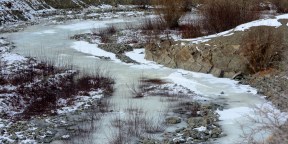 The poem above floors me by the subtle way it develops its metaphors, culminating in the image “there are years in that book.” I think of Stafford as one of the great “readers” of the books in scars and moments. Such careful reading breeds careful saying. The poem below is a good example. If read too fast, one might miss what is being said. You might think that the way with all poems. Pues, so it goes. It has taken me years of loving this poem to begin to hear the river elsewhere coursing the river frozen here. Here’s to continuing forward with our saying and listening.
*
Ask Me – William Stafford
Some time when the river is ice ask me
mistakes I have made. Ask me whether
what I have done is my life. Others
have come in their slow way into
my thought, and some have tried to help
or to hurt: ask me what difference
their strongest love or hate has made.
I will listen to what you say.
You and I can turn and look
at the silent river and wait. We know
the current is there, hidden; and there
are comings and goings from miles away
that hold the stillness exactly before us.
What the river says, that is what I say.
*
Happy saying!
José