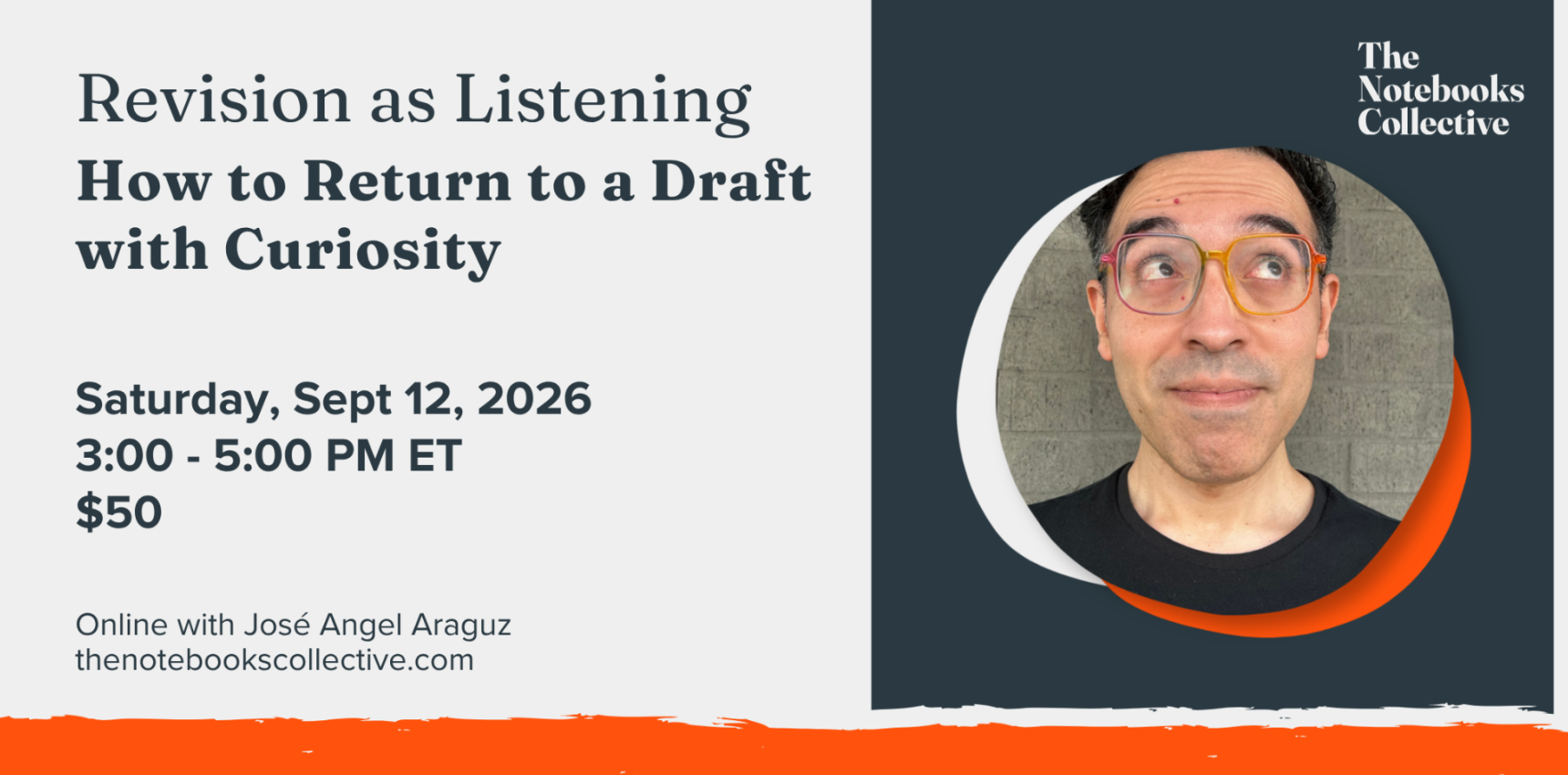
This upcoming Saturday, September 12, from 3–5 PM ET, I’ll be teaching a virtual workshop with The Notebooks Collective called Revision as Listening: How to Return to a Draft with Curiosity.
As I’ve been preparing for the workshop, I’ve been thinking about an idea I’ve used in my teaching for years, that sometimes a piece of art teaches us how to read it. At first, we may notice color, scale, movement. We linger and a figure or shape stands out, becomes a vibe. The longer we sit with a piece, the more our attention changes. We begin to notice relationships across elements as well as repetitions and the tensions arising from juxtaposition. What seemed abstract begins to feel full of direction. What seemed playful begins to feel deeply structured. That kind of looking has shaped the way I think about revision.
In my classes, I’ve often used the work of Federico Herrero to talk about attention. Herrero is a Costa Rican artist whose paintings bring together vivid color, irregular shapes, landscape, abstraction, and the visual language of lived environments. One piece I’ve returned to is “Caravan,” a large 2018 oil and acrylic painting on canvas.
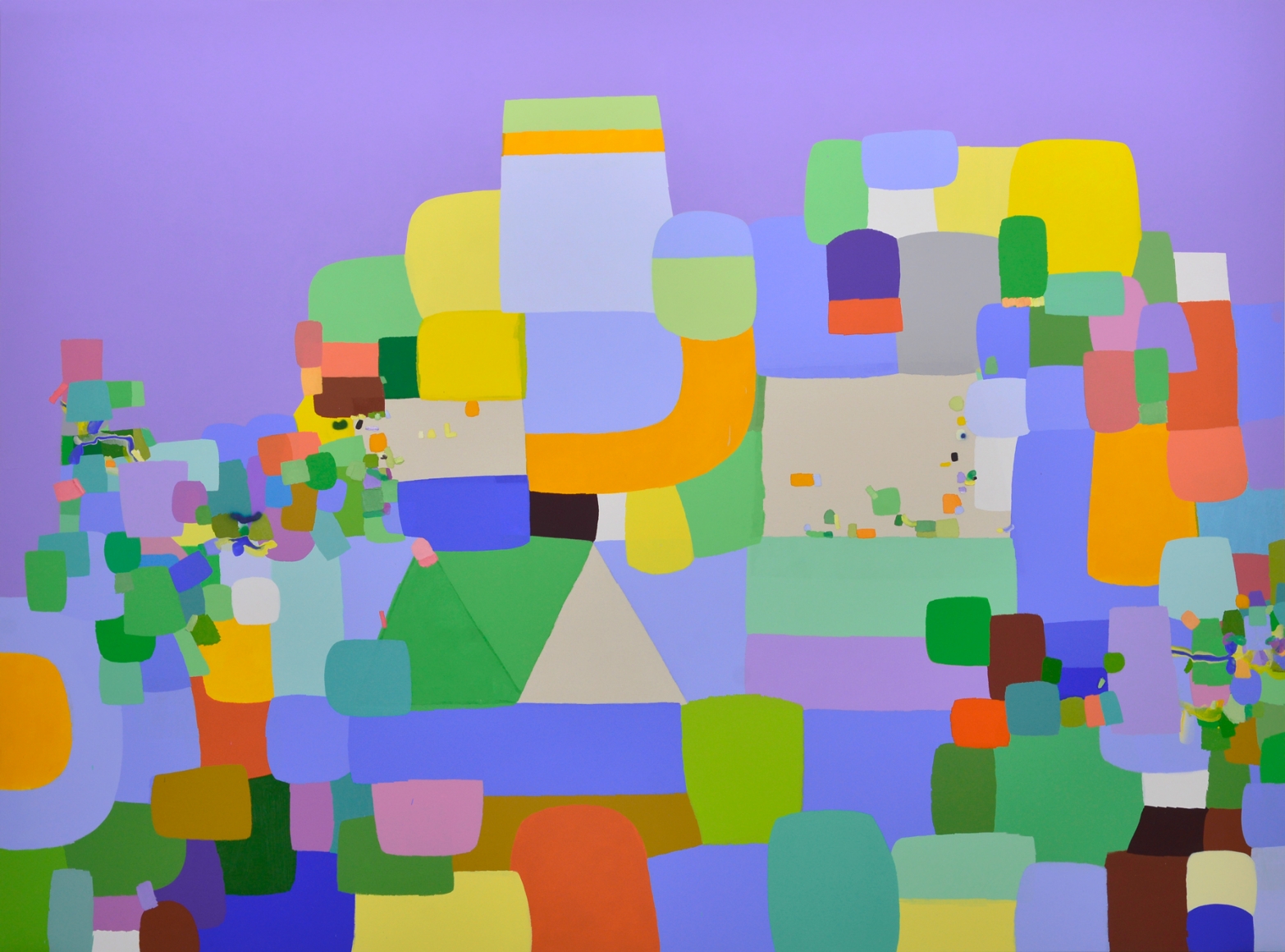
In “Caravan,” blocks and patches of color gather across the canvas in ways that feel dynamic and alive. There are shapes that suggest buildings and bodies, signs and landscape. Color suddenly feels like movement. Some areas feel dense and social, others more open. The eye keeps having to decide where to go, then revise that decision. The painting does not give itself over all at once.
That is part of what I love about bringing this kind of work into a classroom. It asks us to slow down and notice how we notice. The more time I spend with “Caravan,” the more I see how attention and looking are active relationships. The painting changes because I change in front of it. Or, more accurately, I become better able to see what was already there.
This connects to revision because when we return to a draft, it can be tempting to arrive with an agenda. But sometimes the draft needs us to sit with it first and let the page teach us how to read it. Revision becomes a practice of renewed attention.
These are some of the ideas we’ll work with in Revision as Listening. The workshop is open to poets, prose writers, hybrid writers, and anyone with writing they want to revisit. Participants should bring one draft, fragment, or unfinished piece they are willing to return to during class. Shorter pieces will be easiest to work with (approximately 1–5 pages is ideal) but any genre or stage of draft is welcome.
Registration is available through The Notebooks Collective.
—
Image info: Federico Herrero, “Caravan,” 2018. Oil and acrylic on canvas. Image shared for reflection on attention, looking, and revision. More on Herrero’s work is available through James Cohan and Artnet.
 The Influence