* stepping into the river with mark strand

When I read poetry, I want to feel myself suddenly larger … in touch with—or at least close to—what I deem magical, astonishing. I want to experience a kind of wonderment. And when you report back to your own daily world after experiencing the strangeness of a world sort of recombined and reordered in the depths of a poet’s soul, the world looks fresher somehow. Your daily world has been taken out of context. It has the voice of the poet written all over it, for one thing, but it also seems suddenly more alive… —Mark Strand, The Art of Poetry No. 77, 1998

* mark strand *

* mark strand 1934 – 2014 *

What moves me most about the above quote is how clearly it states the power of a poem to color one’s view of the world. You can’t step in the same river twice, Heraclitus said (and Borges quoted religiously 🙂 ). Poetry, then, is a way to document what the second steps into the river – and the third, fourth, etc. – feel like. You leave a good poem different, not for any act of manipulation, but simply an act of listening and attention, words that apply to reading and prayer.

I was happy to share the following poem with my students this week. I told them one of the things I love about it is how Strand gets away with repeating “someone” and “something,” big no-no’s that I look for when I revise my own work. Usually “something” is not pointing to an ethereal wonderment, but at a lack of specificity. In Strand’s poem, the words become the very air of a party, and then the air of the universe.

From the Long Sad Party – Mark Strand

Someone was saying
something about shadows covering the field, about
how things pass, how one sleeps towards morning
and the morning goes.

Someone was saying
how the wind dies down but comes back,
how shells are the coffins of wind
but the weather continues.

It was a long night
and someone said something about the moon shedding its white
on the cold field, that there was nothing ahead
but more of the same.

Someone mentioned
a city she had been in before the war, a room with two candles
against a wall, someone dancing, someone watching.
We began to believe

the night would not end.
Someone was saying the music was over and no one had noticed.
Then someone said something about the planets, about the stars,
how small they were, how far away.

***

Happy planeting!

Jose
* clepsydrally musing & borges

Found myself recently turning back to a sonnet by Jorge Luis Borges for an epigraph for a new poem. Below is the original poem in Spanish, followed by my own modest translation.

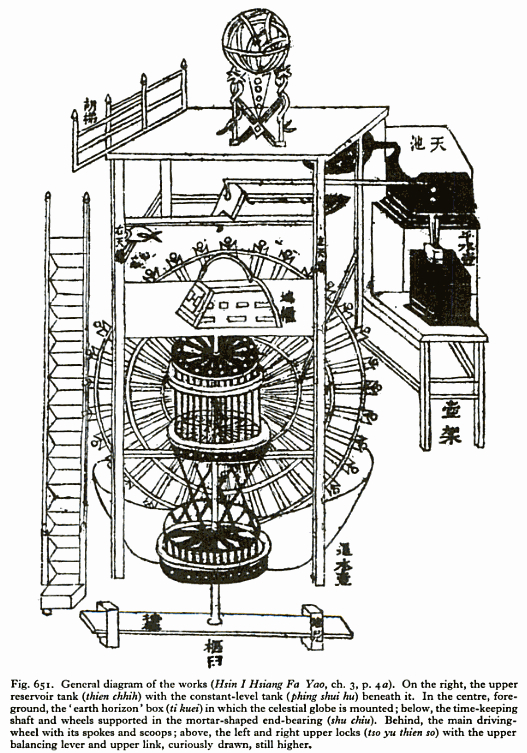
Two things stood out to me in translating. First, the word clepsydra which, after much maneuvering and reading through information, turns out to refer to a long history of water clocks. The clepsydra of the poem is both clock and music box, and so the gotas/drops work both on a physical level as well as on an aural one (music notes as water drops). So fascinating and strange a word it is, I decided to keep it in the poem, if only to have folks go and do some searching themselves. If you do, you’ll see stuff like this:

* water clock tower *

* water clock tower *

The other thing that stood out to me revisiting this sonnet is the long question in the second half of the poem. It is traditional for sonnets to have a turn, and here Borges takes up six lines for an epic, wide turn of argument, amping up the rhetoric and emotional power as he goes.

Caja de Música – Jorge Luis Borges

Música del Japón. Avaramente
De la clepsidra se desprenden gotas
De lenta miel o de invisible oro
Que en el tiempo repiten una trama
Eterna y frágil, misteriosa y clara.
Temo que cada una sea la última.
Son un ayer que vuelve. ¿De qué templo,
De qué leve jardín en la montaña,
De qué vigilias ante un mar que ignoro,
De qué pudor de la melancolía,
De qué perdida y rescatada tarde,
Llegan a mí, su porvenir remoto?
No lo sabré. No importa. En esa música
Yo soy. Yo quiero ser. Yo me desangro.

 ***

Music Box – Jorge Luis Borges

Music from Japan. Reluctantly,
the drops from the clepsydra fall
in a slow honey, made of an invisible gold
whose pattern over time repeats
eternal, fragile, mysterious and clear.
I fear that each drop will be the last.
They are a yesterday returning. From what temple,
from what meager garden on the mountain,
from what vigils before a sea I’ve never seen,
from what modest melancholy, from what lost
and recollected afternoon do they come to me,
their remote future? I do not know.
It does not matter. In that music
I am. I want to be. I bleed away.

***

Happy desangrandose!

Jose

p.s. Check out a far more competent and eloquent translation by Tony Barnstone here.