* cinquain tributes

Image

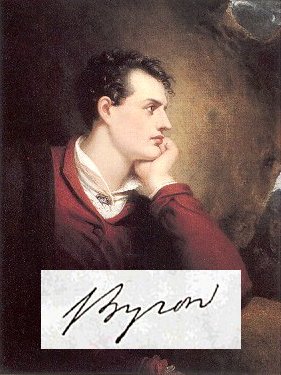
Don Juan, himself.

Byron

Believed

You could make a

River from a writhing,

Overturned woman, her husband

Nearby.

***

Every once in a while I write something I call a cinquain tribute, a cinquain in which the last name of a poet is snuck in via acrostic – the first letter of each line.  I enjoy these because the nature of a cinquain – in its brevity and tanka-like feeling – lends itself well to paying personal tribute to the greats.

Here, we have Lord Byron and Keats.  They didn’t necessarily like each other.

Byron was a wealthy man of the world with a killer wit.  His famous epic “Don Juan” has the main character insisting that his name is pronounced “Ju-an” like “ruin”.

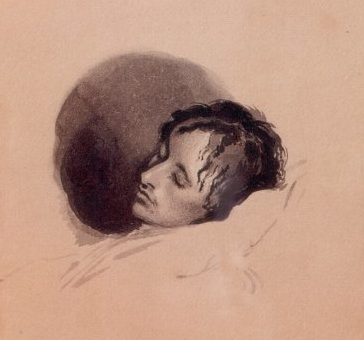
Keats, on the other hand, was a poor kid who studied to be a doctor while at the same time becoming one of the greatest poets in the English language.  He also knew how to box.

Lord Byron looked down on young Keats, as did most of the world, the latter’s genius not being fully acknowledged until his passing.  Bryon, however, was a literary celebrity in his own time.

Also: there may have been a time where I referred to myself as The Young Keats of the Streets.  I turn thirty this weekend, so no more of that.
Image

Towards the end, age 25.

Keats

Knowing

Even then that

A man was only a

Tome of possibility he

Still sang.


Happy singing!

J

* translation 3/3 on the friday influence

(from Proverbios y Cantares – Antonio Machado) *

XXXII.

Oh faith of meditation!

Oh faith after deep thought!

When a heart returns to earth,

the human cup overflows, and the sea swells.

***

This week, The Friday Influence presents the work of the great Spanish poet Antonio Machado.

I first ran across the above poem during my first trip to Powell’s in Portland two years ago.  I spied Machado’s Poesias Completas on the shelf and immediately flipped through to these lines.

I was moved by the tension between the mind and the senses implied in these lines.  I mean, that’s what it’s like to be overwhelmed, to be interrupted and taken from thought to body.  The sea swells!  I fell in love and took the book home with me.

I see in these lines the days when I am so focused on the page that to be taken away or distracted hurts – mainly it makes me fussy.  Phil Levine once said: when a poem comes, the phone can wait, the knock at the door can wait, it all can wait.  Ignore it.  I respect the necessity for that kind of attention.  I figure: it’s my poetry – if I don’t make time for it and give it the attention it deserves, who will?

I believe this is a shade of what Keats meant when he spoke of the poet as being “the most unpoetical of any thing in existence.”

***

I have enjoyed this three part stint of translating.  I guess four, if you count my riffing around with Goethe.

For this week’s post, I collaborated with Andrea Schreiber, a self-styled polyglot and linguist with a true love of language.  She is also my girlfriend.  Meaning, she puts up with me when I get fussy.  And she has seen Machado’s Spain, the roads he saw, the sea…  She helped steer my translations towards the spirit of the poems.  I thank her.

Here are a few more from Machado:

XXI.

Last night I dreamed that I saw

God and that I spoke with God;

and dreamed that God listened…

later I dreamed I had dreamed.

XXVIII.

Everyone has two

battles to fight:

in dreams, you wrestle with God;

awake, with the sea.

XLI.

It is common knowledge that cups

are used for drinking;

Sadly, it is unknown

what use we have for thirst.

XLIV.

Everything moves on, and everything stays;

it is our lot to move on,

move on making roads,

roads over the sea.

XLV.

To die…and fall like a drop

of ocean back to the ocean?

Or, be what I never could be:

a man, without shadow, without dreams,

a man that goes forward

without roads, without mirrors?

***

Happy forwarding!

J

* all poems translated by Jose Angel Araguz and Andrea Schreiber.  (word to your late night conversations!)