* contemplating one-sidedness via bill knott

This week’s poem is another gem from Bill Knott.

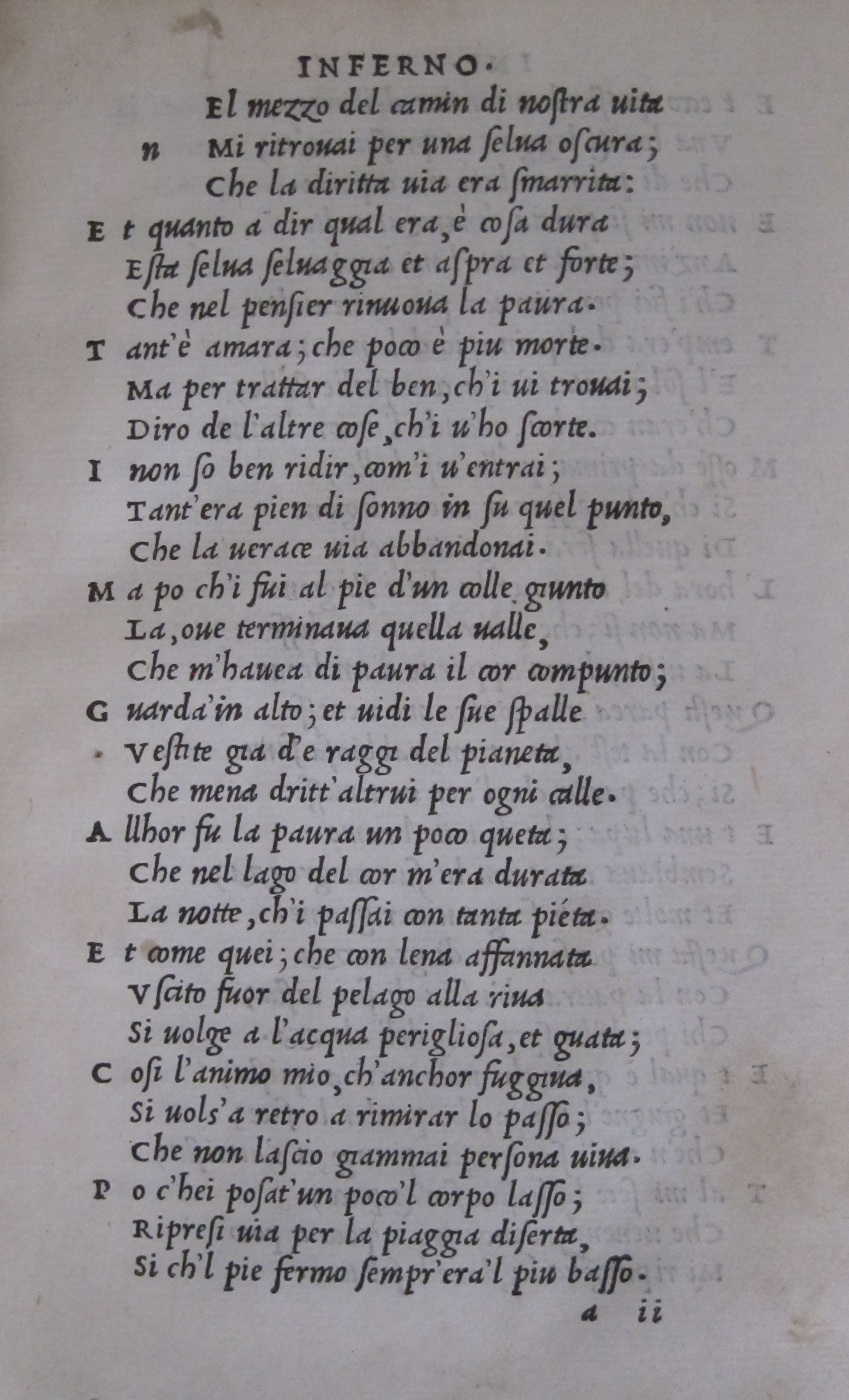
I’m always happy to run into poems that take on an overlooked part of life and refresh it, make it new by simple acknowledgement. In the case of Knott’s poem “Paradise,” the act of reading a book with facing translations is blown up for the meeting of worlds and circumstances that it is. The choice of words to describe what he terms “Righthandland” – gutter, damned, pulp, tongue – and what it means to dwell as a reader in one language with only glimpses of the original is spot-on. Enjoy!
* the music facing *

* notes from Lefthandland *

Paradise – Bill Knott

Always reading the recto
translation of a verso
original, my eye fades.
I notice how the paper
here on this side seems
darker than its opposite:
it is brighter over there
on the lefthand page, the
words of the real poem
give it that glow which
the prized act of creation
emits.  We who must live
here in Righthandland
are damned no matter
how hard we try to rhyme
minds with that perfect
realm across the gutter.
Even if our pulp comes
from the same stock,
we fear closing the book
will bring us face to face,
mouth to mouth with
that tongue we’ve always
lost, and can never kiss.

***

Happy nevering!

Jose

* beginning with juan felipe herrera & some news

This week’s poem by Juan Felipe Herrera (recently appointed as the first Chicana/o U.S. Poet Laureate) caught me towards the end the first time I read it. The way the details come together. The turn and return at the end to the image of something dark around the neck. Each reading of it since that first helps me appreciate the lyrical nerve at work.

The words about the grandmother had me in my memories of my own grandmother who passed when I was nineteen. I’ve been in a similar space as the poem describes, “inventing her memory.” For me, “black sparkles” is ink, each word more of the “leash” the poet writes of.

Cimabue, Goya, Beginnings – Juan Felipe Herrera

I carry a dark necklace around my neck.
It’s painted on.

No one has taken notice.

They think it’s an outline or an odd shadow.
No one has stared longer than a few seconds.

I’ll tell you.

I didn’t know where to put all the fragments of the novel
that family never finished. It had such sweet beginnings,
but it grew umber with a one-eyed madonna hovering
over the lampshade.

So many years, I whispered to her
come to me,
listen to me
I understand.

She would appear to me with gold-leaf
around her braids and seven daggers erect over the heart;

perhaps the last desire; the first real words
escaping from my grandmother’s grave, trying to touch
my hair as I sat at seventeen, writing,
inventing her memory.

Her voice was so loving,
now, all that remains is this broken leash
of black sparkles.

Frescoes in the Upper Church of San Francesco in Assisi, southern transept, scene: Apocalypse, Detail by Cimabue

Frescoes in the Upper Church of San Francesco in Assisi, southern transept, scene: Apocalypse, Detail by Cimabue

I’d also like to announce that my full-length microfiction collection Everything We Think We Hear has just been accepted for publication by Floricanto Press!!!

This manuscript has gone through several incarnations since 2012. The move towards microfiction happened in the last year. Something conceptually clicked about these pieces as I was working with FutureCycle Press on the finishing touches of my recent chapbook Reasons (not) to Dance. FutureCycle’s belief in one project breathed life into another.

I’ll be sharing more updates on the project as the book comes together.

Happy everything!

Jose