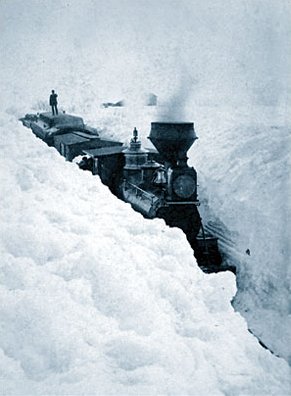
 The Wikipedia page for Snow, under the heading “Effects on human society,” features the image here of a snow blockade in southern Minnesota in 1881. While awe is something I’ve always associated with snow – at least for the first ten minutes of a downfall, then I just get cranky – there’s something altogether new and refreshing experienced with this image. And here, I mean refreshing as in the “refresh” button on your computer screen that makes everything *new.*
There’s the sheer daunting presence of the snow in the image, how there’s essentially more snow than train. There’s the fact the train continues to push forward, it’s engine stubborn and pushed. Then there’s the human figure standing on the train who maybe doesn’t believe what they see, as I don’t; or maybe does, as the above circumstance may have been an everyday occurence for trains.
I look at the lone figure and think: Well, there’s a poet. Not in the sense that I would impose any romantic notion upon them, but rather there’s a situation a poet seeks. Everyday snow and everyday train, but how often from this perspective?
This week’s poem by Lisel Mueller takes into a similar, refreshing perspective. The intimacy of the lyric charges the snow imagery with a tone that evokes both the lightness and light of snow. Snow becomes a way to see and feel ourselves anew.
Snow – Lisel Mueller*
Telephone poles relax their spines;
sidewalks go under. The nightly groans
of aging porches are put to sleep.
Mercy sponges the lips of stairs.
While we talk in the old concepts –
time that was, and things that are –
snow has leveled the stumps of the past
and the earth has a new language.
It is like the scene in which the girl
moves toward the hero
who has not yet said, “Come here.”
Come here, then. Every ditch
has been exalted. We are covered with stars.
Feel how light they are, our lives.
*
Happy lighting!
José
*from Alive Together: New and Selected Poems

 The Influence