I’m a fan of when poems seem self-contained visually, but surprise me as I begin reading. This week’s poem – “Finding a Bible in an Abandoned Cabin” by Robert Wrigley – is a good example of what I mean. On a purely visual level, the poem sits in two six line stanzas. When one considers the title includes the word “bible,” the symmetry of these stanzas mirror an open book. This suggestion charges the poem with expectation.
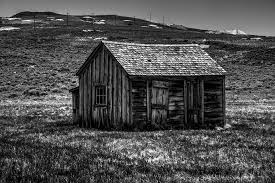 In the first stanza, the title’s premise is followed through in rich detail. From the look of “the book’s leather cover” to the “back-of-the-neck lick of chill” the speaker feels as they move closer to the book, Wrigley sets up image and evocation as a means of attention. The poem would be engaging enough with such vivid description, but it grows in its depth across the stanza break.
The speaker’s hesitant movement and approach in the first stanza is pushed back against in the first line of the second stanza as we’re told “the book / opened like a blasted bird.” Suddenly, the speaker’s knack for articulation is put in the service of keeping track of the new details. The choice in words remains rich as we’re told about the “thoroughfares of worms, and a silage / of silverfish husks” that have rendered a book down to “perfect wordless lace.” What is most surprising is how much life is found in these “abandoned” things, and how these things live now in this poem, another kind of “box” of “miraculous inks.”
Finding a Bible in an Abandoned Cabin – Robert Wrigley
Under dust plush as a moth’s wing,
the book’s leather cover still darkly shown,
and everywhere else but this spot was sodden
beneath the roof’s unraveling shingles.
There was that back-of-the-neck lick of chill
and then, from my index finger, the book
opened like a blasted bird. In its box
of familiar and miraculous inks,
a construction of filaments and dust,
thoroughfares of worms, and a silage
of silverfish husks: in the autumn light,
eight hundred pages of perfect wordless lace.
from Earthly Meditations: New and Selected Poems (Penguin 2006)

 The Influence