* all’s misalliance with robert lowell

The more time you spend around words, the more they keep moving around.

When I first read this week’s poem, “Epilogue” by Robert Lowell, I focused on the line: Yet why not say what happened? This line gave me permission and nerve at a time when I needed it.

Reading the poem again years later, a shorter sentence strikes me: All’s misalliance. I’m moved by the way the word “all” is in there twice, once mostly solitary, and then immediately crowded in, the letters playing out the concept of the line.

As I’m sure is clear by now, I’m awfully in my head this week.

I come back to this poem every time I do a long stretch of revisions, a stretch that usually involves some sort of paradigm shift, a change in outlook in my approach to the line.

There’s so much in here that is good. The poem throughout has the feel of advice given between conspirators. The conspiracy is the finding out and articulating of “living names.” Which is why we revise, to say it better.

You must revise your life, Rilke says in a poem, at least in one translation. In another translation, the same line reads: You must change your life. See what I mean? Words keep moving, and you must keep moving words.

I’ll try and be a little more grounded next week 🙂

* Vermeer's veneer *

* Vermeer’s veneer *

Epilogue – Robert Lowell

Those blessèd structures, plot and rhyme—
why are they no help to me now
I want to make
something imagined, not recalled?
I hear the noise of my own voice:
The painter’s vision is not a lens,
it trembles to caress the light.
But sometimes everything I write
with the threadbare art of my eye
seems a snapshot,
lurid, rapid, garish, grouped,
heightened from life,
yet paralyzed by fact.
All’s misalliance.
Yet why not say what happened?
Pray for the grace of accuracy
Vermeer gave to the sun’s illumination
stealing like the tide across a map
to his girl solid with yearning.
We are poor passing facts,
warned by that to give
each figure in the photograph
his living name.

***

Happy moving!

Jose
flynn: a lyrical alignment

I had so much fun with last week’s lyrical alignment (quiet, proper, inner fun, of course) that I’ve gone ahead and cooked up a new one!

This week, I’m taking a passage from Gillian Flynn’s novel Gone Girl, a thriller about a wife gone missing. The excerpt below is from the perspective of the husband as he meditates on the rocky stage he was at spiritually before the disappearance. Of course, he is the prime suspect.

My saying of course above is exactly the kind of sense of expectation the excerpt below riffs on. Given that it is a thriller, I knew I could expect one of a number of plots. There were expectations.

So much of writing is playing in and out of (and through) expectations. Writing is an art whose medium, words, belongs to everyone. Each word carries an expectation, that plays off the next, and so on. What makes a piece of writing more than the words on the page is how well the writer draws the world – your world as well as the world around you – into orbit with what’s happening at the level of language.

What drew me about the novel is how great a sense Flynn has about relationships. I read quickly, at turns rooting for the couple, at times worried.

In an effort to avoid any spoilers, I’ll stop there. Flynn does a solid job.

* you ain't seen nothing already *

* you ain’t seen nothing already *

The Same Dog-eared Script

aligned from Gillian Flynn’s novel “Gone Girl”

For several years, I had been bored. Not a whining,
restless child’s boredom (although I was
not above that) but a dense, blanketing
malaise. It seemed to me that there was nothing
new to be discovered ever again.
Our society was utterly, ruinously
derivative (although the word “derivative”
as a criticism is itself derivative).
We were the first human beings who
would never see anything for the first time.
We stare at the wonders of the world, dull-eyed,
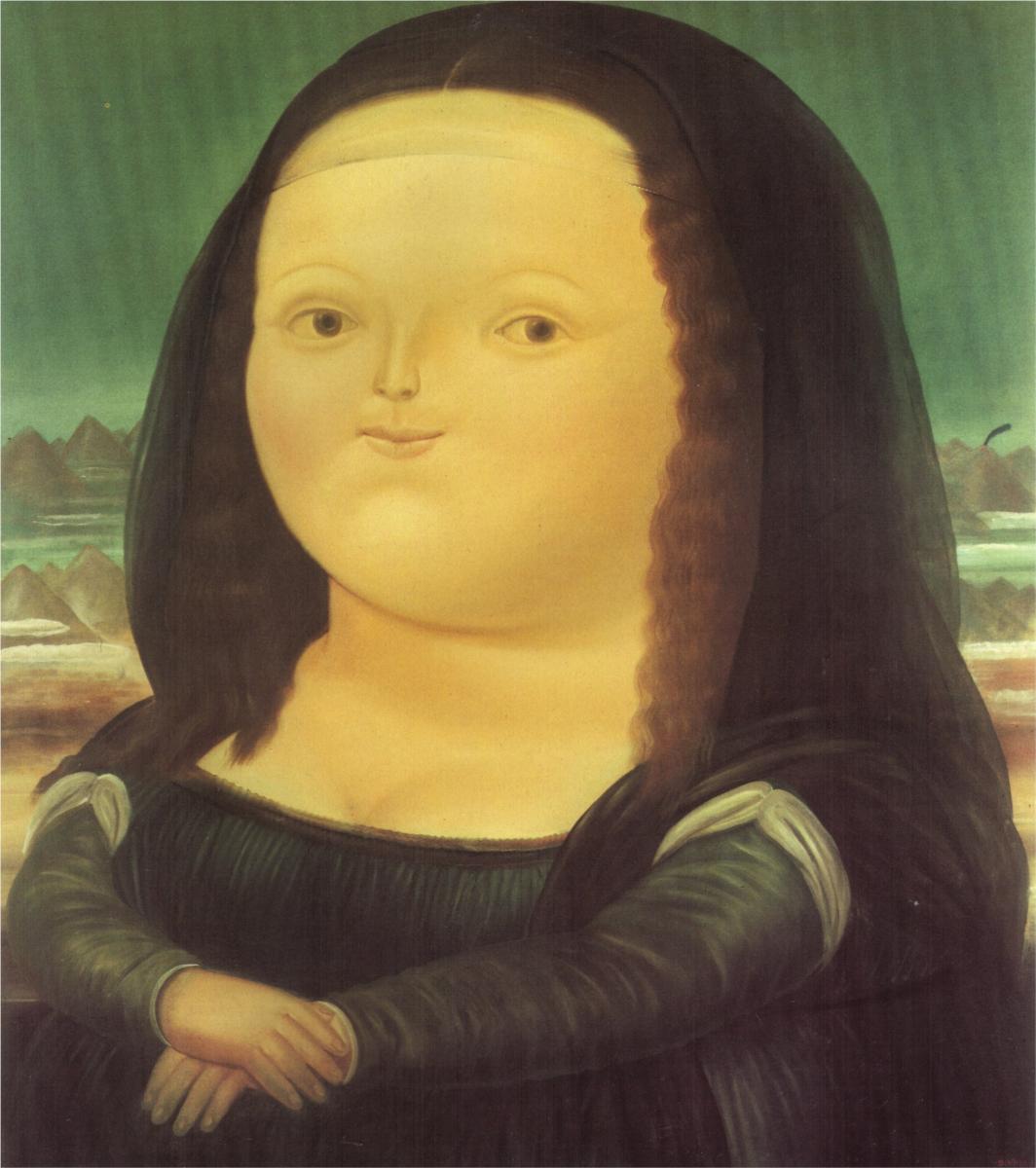
underwhelmed. “Mona Lisa,” the Pyramids,
the Empire State Building. Jungle animals
on attack, ancient icebergs collapsing,
volcanoes erupting. I can’t recall a single
amazing thing I have seen firsthand that I
didn’t immediately reference to a movie
or a TV show. A fucking commercial. You know
the awful singsong of the blase’: “Seeeen it.”
I’ve literally seen it all, and the worst thing, the thing
that makes me want to blow my brains out, is:
the secondhand experience is always better.
The image is crisper, the view is keener, the camera
angle and the soundtrack manipulate
my emotions in a way reality can’t
anymore. I don’t know that we are
actually human at this point, those of us
who are like most of us, who grew up with
TV and movies and now the Internet.
If we are betrayed, we know the words to say;
when a loved one dies, we know the words to say.
If we want to play the stud or the smart-ass
or the fool, we know the words to say.
We are all working from the same dog-eared script.

***

Happy scripting!

Jose

p.s. Please check out the latest (and first!) issue of The Merrimack Review, including my poems “Icarus” & “La Esquina,” here.