First, a bit of news: the new issue of RHINO Poetry is available for purchase! Check out my poem “Joe” – selected for the 2015 Editor’s Prize – here as well as selections of other fine work in issue here. Thank you to everyone at RHINO for their support!
***
This weekend brings with it a total lunar eclipse which is being reported to be the shortest lunar eclipse of this century. In honor of its brevity, here’s the shortest poem I have about the moon:
Moon – Jose Angel Araguz
A widow turning over in her sleep.
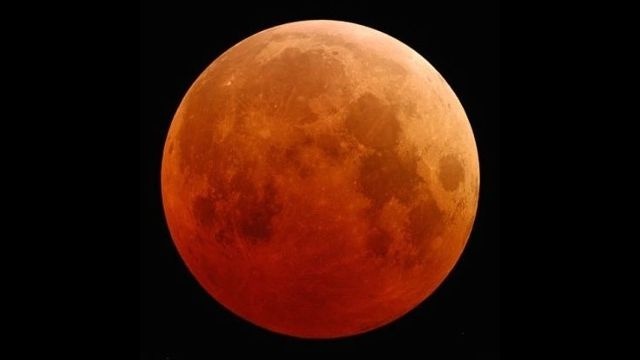
* blushing moon *
Working on a recent manuscript recently, I got called out about the moon: It’s always the moon! And it’s true, I do try to hang too much on it. It’s hard not to. From Li Po getting drunk underneath it and Sir Philip Sidney’s “sad steps” to Philip Larkin’s “lozenge of love” and this week’s poem, the moon keeps being sought after with interest and fascination.
…like a coin we spend, only to find again (sorry couldn’t help it 🙂 ).
This week’s poem – “Moon” by Kathleen Jamie – put the moon on my mind again when I read it earlier this week. It does what I work hard to do when talking about the moon, which is bring it into conversation with the personal in a new way.
Jamie’s poem was featured in The Best American Poetry Blog series “Introducing Scottish poets” curated by Robyn Marsack – find out more about her work and others here.
Moon – Kathleen Jamie
Last night, when the moon
slipped into my attic-room
as an oblong of light,
I sensed she’d come to commiserate.
It was August. She travelled
with a small valise
of darkness, and the first few stars
returning to the northern sky,
and my room, it seemed,
had missed her. She pretended
an interest in the bookcase
while other objects
stirred, as in a rockpool,
with unexpected life:
strings of beads in their green bowl gleamed,
the paper-crowded desk;
the books, too, appeared inclined
to open and confess.
Being sure the moon
harboured some intention,
I waited; watched for an age
her cool glaze shift
first toward a flower sketch
pinned on the far wall
then glide to recline
along the pinewood floor
before I’d had enough. Moon,
I said, we’re both scarred now.
Are they quite beyond you,
the simple words of love? Say them.
You are not my mother;
with my mother, I waited unto death.
from The Overhaul (Minneapolis: Graywolf, 2015)
***
Happy mooning!
Jose