* dreaming with miroslav holub

* rules were meant to break your head *

* rules were meant to break your head *

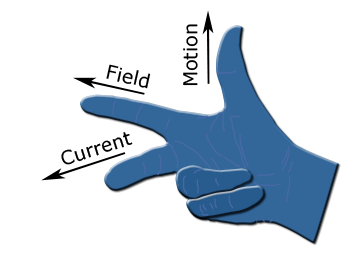
The above image is in reference to Fleming’s right-hand rule, a term used in talking about electromagnetism.

The term appears in this week’s poem, “Dreams” by Miroslav Holub. When writing a dream poem and/or about dreams, I try to always be conscious of the why behind each dream detail. Each detail should feel necessary rather than just shocking or “dream”- like.

The details that surprise me most in Holub’s poem are those that are closest to everyday reality. The short lyric travels from the outlandish to the concrete, and ends on “Just grass” as if defying the expectations of a poem about dreams. Even the reference to the right-hand rule, which was outside of my immediate understanding, is handled as an everyday detail. Holub was a scientist; if dreams are made up in part of the details of everyday life, Holub’s lyric stays true to its revelatory impulse all the way through while remaining consistent to the poet’s life.

***

Dreams – Miroslav Holub

They sap man’s substance
as moon the dew.
A rope grows erect
from the crown of the head.
A black swan hatches
from a pebble.
And a flock of angels in the sky
is taking an evening class
on the skid pan.

I dream, so I dream.
I dream
that three times three is nine,
that the right-hand
rule applies;
and when the circus leaves
the trampled ground will
once more overgrow with grass.

Yes, grass.
Unequivocal grass.
Just grass.

***

Happy grassing!

José

* moebius stripping with michael ondaatje

This is the real secret of life — to be completely engaged with what you are doing in the here and now. And instead of calling it work, realize it is play.

– Alan Watts

I like this quote because of the shift in gears it implies about life and how we approach it. I feel it easily mirrors something done in writing, how one must fight against being caught up in making a point and rather be open to what is at play. In a poem, it is being aware of the possibilities in an image or a turn of phrase, and digging further.

This week’s poem – “The Time Around Scars by Michael Ondaatje” – digs into the image of a scar and ties it to ideas of memory and time. As the poem develops, I feel myself as a reader traveling as if on a moebius strip. Ondaatje, by staying close to an image and emotion, is able to create a reading experience where time is traversed as it only can be in a poem.

* star time *

* star time *

The Time Around Scars – Michael Ondaatje

A girl whom I’ve not spoken to
or shared coffee with for several years
writes of an old scar.
On her wrist it sleeps, smooth and white,
the size of a leech.
I gave it to her
brandishing a new Italian penknife.
Look, I said turning,
and blood spat onto her shirt.

My wife has scars like spread raindrops
on knees and ankles,
she talks of broken greenhouse panes
and yet, apart from imagining red feet,
(a nymph out of Chagall)
I bring little to that scene.
We remember the time around scars,
they freeze irrelevant emotions
and divide us from present friends.
I remember this girl’s face,
the widening rise of surprise.

And would she
moving with lover or husband
conceal or flaunt it,
or keep it at her wrist
a mysterious watch.
And this scar I then remember
is a medallion of no emotion.

I would meet you now
and I would wish this scar
to have been given with
all the love
that never occurred between us.

***

Happy occurring!

Jose