This week’s poem, “If You Ever Visit Huhi” by Gerardo Pacheco Matus, is accompanied with some comments by the poet talking about the craft behind the poem. I had the distinct pleasure of meeting Gerardo at this year’s CantoMundo conference. Between lectures, workshops, and readings, I had the opportunity to get know him and his work, and I am happy to be able to share some of it here with y’all.
The poem below is full of the heart and wisdom of the poet I met and shared rough drafts with during Canto. What I moved me right away in the poem is the songlike nature, the refrain working nicely to move the poem through various tones of emotion and scenes. I was happily surprised to learn that this poem had its origins in a musical form.
Here is Gerardo on the poem:
I believe that poems or poetry is just another way to tell a story. Indeed, this is what I aim when I am writing a poem.
“If You Ever Visit Huhi” is a poem that uses refrains. At the time, I wrote this poem, I was intrigued/ mesmerized by villanelles. Indeed, this poem began as a villanelle. The repeated line, “if you ever visit huhi” drove me nuts for days. My first attempts of this piece were villanelles, but the poem wasn’t working.
Professor Paul Hoover took a look at the poem, and his first advised was to get rid of the form (villanelle) and let it be. As you may know, I felt puzzled by breaking away from the form, but I knew it needed to be done. I thought that by keeping some elements of the form, in this case the refrains, will be beneficial. I kept the refrains and the narrative element and the poem.
One of the few things I remember or the teaching lesson if you will is to work with form and also experiment with form. I wanted to comply with form so bad that I wasn’t paying attention to other important things in the poem. I wanted to force this idea/ story into a form that wasn’t working. I am glad I broke away from the form and experimented a little.
What I most connect with right away in Gerardo’s comments is that crucial space where a poem begins to move away from the form you originally saw it in and have to begin to trust the poem to guide you in writing it. The move from the villanelle into a longer, more narrative piece made for a strong poem that sings its details. Intuition is innate; but finding the right moment to give over to it is the hard part. Successfully recognizing such moments and following them through with vision and insight can result in astonishingly rich and detailed poems like the one below.
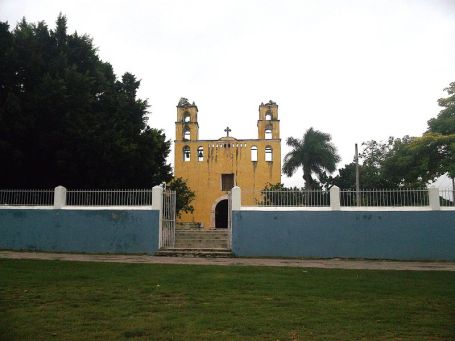
If You Ever Visit Huhi – Gerardo Pacheco Matus
if you ever visit Huhi, find my parents,
they live in a small house with mud walls.
they must be old by now, but they are waiting
for me. tell them you saw me here in the desert,
alone, and thirsty. tell them i want to come back
home to rest in peace in my hammock. tell them
i have not slept for years and i want to dream again.
if you ever visit Huhi, go to the cemetery and find
a grave, newly dug. find don juanito, tell him
i am coming home soon. tell him my parents will
pay him with two chickens and a dove if he gives
me lots of water when the droughts begin,
i am thirsty and you do not know how painful
it is to be thirsty and have no water to drink.
if you ever visit Huhi, find doña micaela,
mi abuela, and tell her to cook me a good cochinita pibil
with lots of red onions, and chiles habaneros.
tell her to bring it to the graveyard every dia de muertos,
so those who have no one to cook for them
can taste it too. tell her i miss her cooking
and her laughter, please if you find her alive tell her
i am always thinking about her and my grandfather, el leñador.
if you ever visit Huhi, go to the church and find
el padrecito and tell him to offer a mass for my
soul, a mass will give me strength. knowing
someone is waiting for me makes me happy.
tell him i am coming home soon, my parents
will pray to the Virgin de Guadalupe a whole year.
tell him if he has some left-over wine, he can
pour some on top of my grave. i am thirsty.
if you ever visit Huhi, wait in the dark alleys
i once roamed, listen to my cries, be silent, do not
be afraid, as it is only me, your old friend,
the one who roams the desert alone. soon, i will arrive
at the town where i was born many summers ago.
if you ever visit huhi, visit the lagoons,
you will find me there drinking
water as i am dead and very thirsty.
This poem was published in Howard University’s Amistad Literary Journal, fall/ winter 2010
*
Happy visiting!
José
P.S. Make sure to check out my post earlier this week regarding my new chapbook, The Divorce Suite!
 I agree with those who hold that one of poetry’s major ambitions should be to refresh the language. Through engagement and interrogation of words shared in common, poems can bring us closer to meaning what we mean. An example of the kind of interrogation I mean is evident in this week’s poem from fellow CantoMundo poet Elizabeth Acevedo’s new chapbook, Beastgirl & Other Origin Myths (YesYes Books).
 The Influence