Poems have a way of changing the things around us, allowing us to reconcile with and reimagine them at the same time. In this week’s poem, “The Wedding Ring” by Denise Levertov, a wedding ring goes from being listed among forgotten things in a basket to being seen for what else it could become. Along the way, the speaker goes into what the ring has meant up to this point.
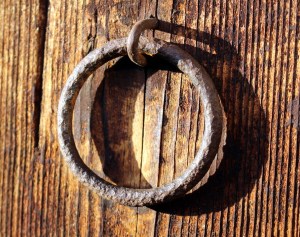 What occurs in this mix of looking backward and forward is an evocation of the personal meaning of the wedding ring; this evocation isolates the ring, and allows for an imaginative distance. The “artificer” imagined towards the end who is able to re-work the ring strikes me as a metaphor for the poet. In poems, we work “simple gifts” out of the materials of a fleeting existence.
The Wedding Ring – Denise Levertov
My wedding-ring lies in a basket
as if at the bottom of a well.
Nothing will come to fish it back up
and onto my finger again.
It lies
among keys to abandoned houses,
nails waiting to be needed and hammered
into some wall,
telephone numbers with no names attached,
idle paperclips.
It can’t be given away
for fear of bringing ill-luck
It can’t be sold
for the marriage was good in its own
time, though that time is gone.
Could some artificer
beat into it bright stones, transform it
into a dazzling circlet no one could take
for solemn betrothal or to make promises
living will not let them keep? Change it
into a simple gift I could give in friendship?

 The Influence