* from hands to manos

* manos *

* manos *

This week’s post is a meditation on form via sharing some new publications.

First, the good folks over at Rattle have recently shared the content of their Summer 2014 issue online which includes my own poem “Abandoned Church.” Rattle is unique in that they ask for some insight into the work via the contributor’s bio, which allowed me to share a bit of my thinking behind the form of this and other kin poems:

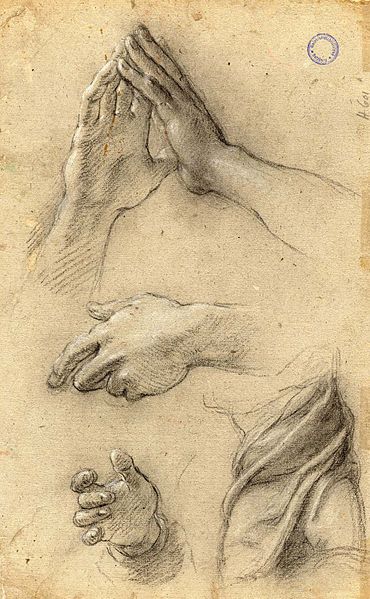
“These poems come from working at times in a five-line form, which I call ‘hands,’ maybe because each could be written on the palm of a hand. I consider them the poetic, unkempt nephews to Yasunari Kawabata’s ‘palm of the hand’ stories. These pieces are surprising me, pushing me to be concise and spooky, narrative and imagistic within a limited frame.”

Read the poem “Abandoned Church” here.

I’m also happy to announce the release of the new issue of Inflectionist Review which includes my poems “First Night” and “Blue in the Rain” – the latter of which is also in the “hands” form. Check out the issue here.

My two guides into the form have been the short lyrics of Yannis Ritsos as well as my reading and writing in the Japanese tanka form. Here’s some of that Ritsos mojo:

A Door – Yannis Ritsos

The carpentry shop,
the ironmonger,
the grocery store,
the farmer’s rubber boots
on the porch,
the low, cloudy sky,
soapsuds,
and, so unexpectedly,
a blue door
fallen flat among the ruins
with the key
still in place.

***

Working in and out of various forms, I’m always curious if people take note or not. Ultimately, what matters is writing a solid poem worth rereading, which is the ongoing good fight.

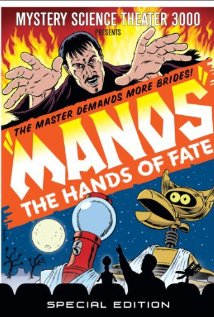
Of course, all this talk of “hands” has me thinking about these guys:
* the hands of fate *

* the hands of fate *

Happy fating!

Jose
flynn: a lyrical alignment

I had so much fun with last week’s lyrical alignment (quiet, proper, inner fun, of course) that I’ve gone ahead and cooked up a new one!

This week, I’m taking a passage from Gillian Flynn’s novel Gone Girl, a thriller about a wife gone missing. The excerpt below is from the perspective of the husband as he meditates on the rocky stage he was at spiritually before the disappearance. Of course, he is the prime suspect.

My saying of course above is exactly the kind of sense of expectation the excerpt below riffs on. Given that it is a thriller, I knew I could expect one of a number of plots. There were expectations.

So much of writing is playing in and out of (and through) expectations. Writing is an art whose medium, words, belongs to everyone. Each word carries an expectation, that plays off the next, and so on. What makes a piece of writing more than the words on the page is how well the writer draws the world – your world as well as the world around you – into orbit with what’s happening at the level of language.

What drew me about the novel is how great a sense Flynn has about relationships. I read quickly, at turns rooting for the couple, at times worried.

In an effort to avoid any spoilers, I’ll stop there. Flynn does a solid job.

* you ain't seen nothing already *

* you ain’t seen nothing already *

The Same Dog-eared Script

aligned from Gillian Flynn’s novel “Gone Girl”

For several years, I had been bored. Not a whining,
restless child’s boredom (although I was
not above that) but a dense, blanketing
malaise. It seemed to me that there was nothing
new to be discovered ever again.
Our society was utterly, ruinously
derivative (although the word “derivative”
as a criticism is itself derivative).
We were the first human beings who
would never see anything for the first time.
We stare at the wonders of the world, dull-eyed,
underwhelmed. “Mona Lisa,” the Pyramids,
the Empire State Building. Jungle animals
on attack, ancient icebergs collapsing,
volcanoes erupting. I can’t recall a single
amazing thing I have seen firsthand that I
didn’t immediately reference to a movie
or a TV show. A fucking commercial. You know
the awful singsong of the blase’: “Seeeen it.”
I’ve literally seen it all, and the worst thing, the thing
that makes me want to blow my brains out, is:
the secondhand experience is always better.
The image is crisper, the view is keener, the camera
angle and the soundtrack manipulate
my emotions in a way reality can’t
anymore. I don’t know that we are
actually human at this point, those of us
who are like most of us, who grew up with
TV and movies and now the Internet.
If we are betrayed, we know the words to say;
when a loved one dies, we know the words to say.
If we want to play the stud or the smart-ass
or the fool, we know the words to say.
We are all working from the same dog-eared script.

***

Happy scripting!

Jose

p.s. Please check out the latest (and first!) issue of The Merrimack Review, including my poems “Icarus” & “La Esquina,” here.