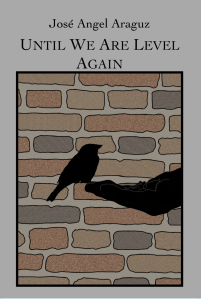
 In the spirit of the syllabic breakthrough I mentioned last week in the poem that inspired the title for my latest collection, Until We Are Level Again (Mongrel Empire Press), I share “A Letter to Su T’ung Po” by W. S. Merwin. Merwin has been an inspiration for over a decade. His lyric insight and meditative verve worked through in syllabics made me ambitious and had me counting mine own syllables regularly. The poem below is a fine example of how sometimes the words fall into place how we need them.
Revising from old journals earlier this week, I discovered the following note I made underneath where I had written out Merwin’s poem by hand. I share it now as a way to mingle with the time travel implied in the title and content of the poem:
I heard Merwin read this poem a week after filing for divorce from my first marriage. Ani was with me , both of us full of questions. This poem is a river in itself. The last line crosses centuries in a gasp, like one stepping away from the face of a river.
A Letter to Su T’ung Po – W. S. Merwin
Almost a thousand years later
I am asking the same questions
you did the ones you kept finding
yourself returning to as though
nothing had changed except the tone
of their echo growing deeper
and what you knew of the coming
of age before you had grown old
I do not know any more now
than you did then about what you
were asking as I sit at night
above the hushed valley thinking
of you on your river that one
bright sheet of moonlight in the dream
of the water birds and I hear
the silence after your questions
how old are the questions tonight
from The Shadow of Sirius (Copper Canyon Press, 2009)
 The Influence