Over the summer, I got a chance to add to my forthcoming poetry collection, An Empty Pot’s Darkness, which will be published in 2019 by Airlie Press. This book is an expansion of my chapbook Corpus Christi Octaves (Flutter Press) and its series of lyric sequences about two late friends from my hometown in Texas. This new collection builds on the theme of mortality, the latest addition being a “testament” poem.
 Testament poems tend to be a mix of a poet’s last will in verse (a la Francois Villon) and a catalogue of wishes and hopes (a la Pablo Neruda). This particular mode of lyric meditation, for me, ended up feeling expansive. I was surprised by how I ended up writing less about the life live and more about the act of writing as living and survival.
I see a similar emphasis on survival in the poem below by Carolyn M. Rodgers. The poem begins by immediately departing from the testament’s focus on the self and instead addressing the poem to another. By doing so, connection becomes part of the survival act. The poem moves in its declarations and images of hardship, creating a narrative that reaffirms life through active survival. Speaking of how “we can stand boldly in burdening places (like earth here),” Rodgers honors this survival as the undeniable fact of who we are.
Testament – Carolyn M. Rodgers
child,
in the august of your life
you come barefoot to me
the blisters of events
having worn through to the
soles of your shoes.
it is not the time
this is not the time
there is no such time
to tell you
that some pains ease away
on the ebb & toll of
themselves.
there is no such dream that
can not fail, nor is hope our
only conquest.
we can stand boldly in burdening places (like earth here)
in our blunderings, our bloomings
our palms, flattened upward or pressed,
an unyielding down.
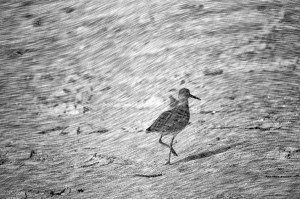 Along with this personal connection, Hirsch’s poem moves me for the way it braids together a variety of wordplay. From the play on “branch” as both the specific locale of the title to the poem’s riffing on bird language, there is a purposeful cleverness at work. What this levity does for the poem is give it an imaginative momentum that keeps over-seriousness and sentimentality from taking over by bringing them together directly. The earnest love of books and language meets the bird imagery and metaphor to evoke the exhilaration of the speaker’s younger self.
 The Influence