* considering Thom Gunn

Writing poetry has in fact become a certain stage in my coping with the world, or in the way I try to understand what happens to me and inside me. Perhaps I could say that my poetry is an attempt to grasp, with grasp meaning both to take hold of in a first bid at possession, and also to understand (Thom Gunn)

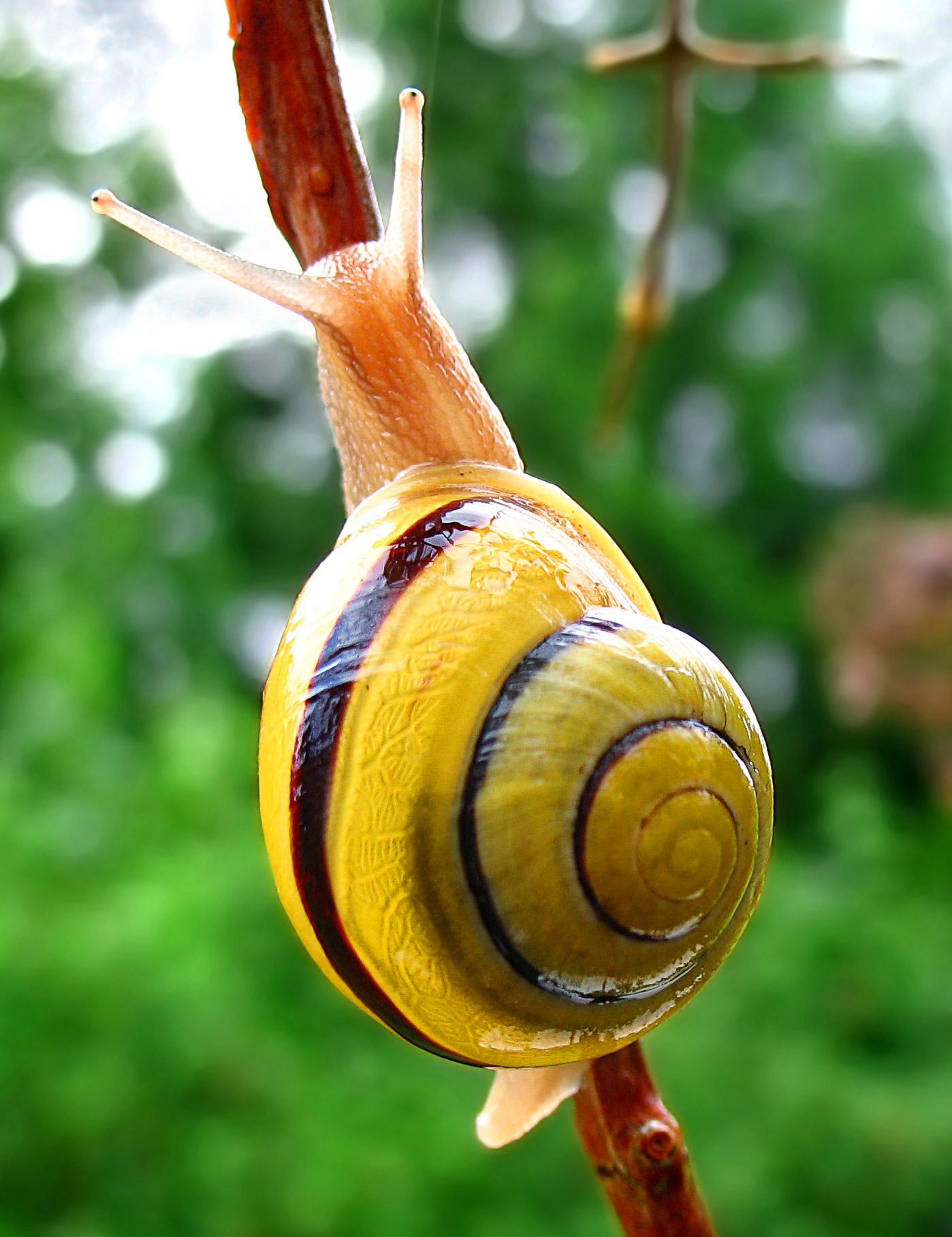
To continue in the syllabic vein begun with last week’s poem, I present below Thom Gunn’s “Considering the Snail.”

There is much to admire in the poem. The pace, for one, feels apt for the subject matter.

Then there are the seemingly happenstance (but more likely deliberate) end words emphasized by the form. One choice moment for me is the way the line:

What is a snail’s fury? All

breaks right at seven syllables and seems to both answer the question by breaking on “All” as well as progress the line.

“Progress” as the last word of the poem, seems to be at the heart of the poem, both in concept and in form.
* for your consideration *

* for your consideration *

Considering the Snail – Thom Gunn

The snail pushes through a green
night, for the grass is heavy
with water and meets over
the bright path he makes, where rain
has darkened the earth’s dark. He
moves in a wood of desire,

pale antlers barely stirring
as he hunts. I cannot tell
what power is at work, drenched there
with purpose, knowing nothing.
What is a snail’s fury? All
I think is that if later

I parted the blades above
the tunnel and saw the thin
trail of broken white across
litter, I would never have
imagined the slow passion
to that deliberate progress.

***

Happy progressing!

Jose

p.s. I have two haiku in the latest issue of A Hundred Gourds. Check them out here and here.

* youthful counting with W.S. Merwin

I remember when I came across this week’s poem in 2008.

I was living another life on a street called Olive. The newsprint of the journal I was subscribed to at the time was never more precious, seemingly perishable, as when I read and later copied out this lyric by hand.

I knew then the poem was doing more than I could see.

The lack of punctuation echoed what I had then read and reread of Robert Frost, how he felt the language and phrasing of speech should guide as it does here. Also: how Frost could fill in a fifty character telegraph message with one sentence and no need for punctuation.

The other thing I catch now that I didn’t then is how the poem is worked out in ten syllable lines. I have been doing this kind of syllabic counting for years, but rarely have I caught others in the act. Makes  me want to go over so many poems again and reread them with sharper eyes.

Which is the hope, really, of youth: to sharpen.

Over time, I’ve seen that one does not necessarily sharpen, but things do: memories especially.

Merwin’s last line here is for the ages.

* not so insta-gram *

* not so insta-gram *

Youth – W.S. Merwin

Through all of youth I was looking for you
without knowing what I was looking for

or what to call you I think I did not
even know I was looking how would I

have known you when I saw you as I did
time after time when you appeared to me

as you did naked offering yourself
entirely at that moment and you let

me breathe you touch you taste you knowing
no more than I did and only when I

began to think of losing you did I
recognize you when you were already

part memory part distance remaining
mine in the ways that I learn to miss you

from what we cannot hold the stars are made

 ***

Happy mading!

Jose