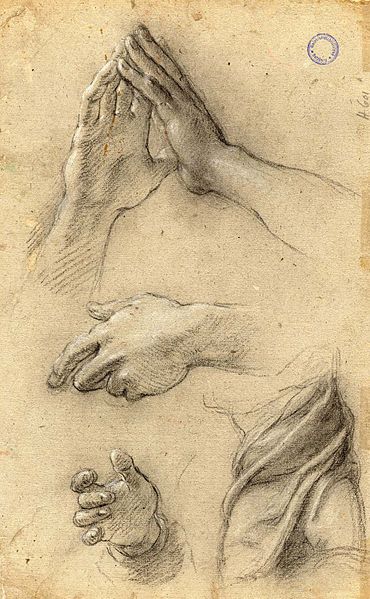
* from hands to manos

* manos *

* manos *

This week’s post is a meditation on form via sharing some new publications.

First, the good folks over at Rattle have recently shared the content of their Summer 2014 issue online which includes my own poem “Abandoned Church.” Rattle is unique in that they ask for some insight into the work via the contributor’s bio, which allowed me to share a bit of my thinking behind the form of this and other kin poems:

“These poems come from working at times in a five-line form, which I call ‘hands,’ maybe because each could be written on the palm of a hand. I consider them the poetic, unkempt nephews to Yasunari Kawabata’s ‘palm of the hand’ stories. These pieces are surprising me, pushing me to be concise and spooky, narrative and imagistic within a limited frame.”

Read the poem “Abandoned Church” here.

I’m also happy to announce the release of the new issue of Inflectionist Review which includes my poems “First Night” and “Blue in the Rain” – the latter of which is also in the “hands” form. Check out the issue here.

My two guides into the form have been the short lyrics of Yannis Ritsos as well as my reading and writing in the Japanese tanka form. Here’s some of that Ritsos mojo:

A Door – Yannis Ritsos

The carpentry shop,
the ironmonger,
the grocery store,
the farmer’s rubber boots
on the porch,
the low, cloudy sky,
soapsuds,
and, so unexpectedly,
a blue door
fallen flat among the ruins
with the key
still in place.

***

Working in and out of various forms, I’m always curious if people take note or not. Ultimately, what matters is writing a solid poem worth rereading, which is the ongoing good fight.

Of course, all this talk of “hands” has me thinking about these guys:
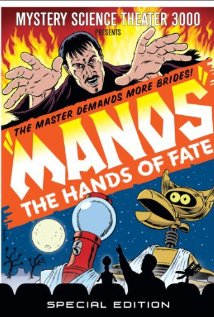
* the hands of fate *

* the hands of fate *

Happy fating!

Jose
* clepsydrally musing & borges

Found myself recently turning back to a sonnet by Jorge Luis Borges for an epigraph for a new poem. Below is the original poem in Spanish, followed by my own modest translation.

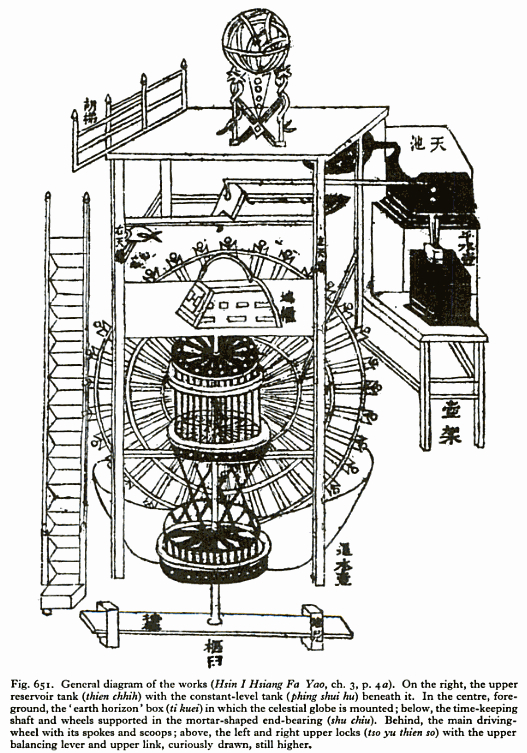
Two things stood out to me in translating. First, the word clepsydra which, after much maneuvering and reading through information, turns out to refer to a long history of water clocks. The clepsydra of the poem is both clock and music box, and so the gotas/drops work both on a physical level as well as on an aural one (music notes as water drops). So fascinating and strange a word it is, I decided to keep it in the poem, if only to have folks go and do some searching themselves. If you do, you’ll see stuff like this:

* water clock tower *

* water clock tower *

The other thing that stood out to me revisiting this sonnet is the long question in the second half of the poem. It is traditional for sonnets to have a turn, and here Borges takes up six lines for an epic, wide turn of argument, amping up the rhetoric and emotional power as he goes.

Caja de Música – Jorge Luis Borges

Música del Japón. Avaramente
De la clepsidra se desprenden gotas
De lenta miel o de invisible oro
Que en el tiempo repiten una trama
Eterna y frágil, misteriosa y clara.
Temo que cada una sea la última.
Son un ayer que vuelve. ¿De qué templo,
De qué leve jardín en la montaña,
De qué vigilias ante un mar que ignoro,
De qué pudor de la melancolía,
De qué perdida y rescatada tarde,
Llegan a mí, su porvenir remoto?
No lo sabré. No importa. En esa música
Yo soy. Yo quiero ser. Yo me desangro.

 ***

Music Box – Jorge Luis Borges

Music from Japan. Reluctantly,
the drops from the clepsydra fall
in a slow honey, made of an invisible gold
whose pattern over time repeats
eternal, fragile, mysterious and clear.
I fear that each drop will be the last.
They are a yesterday returning. From what temple,
from what meager garden on the mountain,
from what vigils before a sea I’ve never seen,
from what modest melancholy, from what lost
and recollected afternoon do they come to me,
their remote future? I do not know.
It does not matter. In that music
I am. I want to be. I bleed away.

***

Happy desangrandose!

Jose

p.s. Check out a far more competent and eloquent translation by Tony Barnstone here.