Confessional Poem – Rosa Alcalá
The girl next door had something to teach me
about what to air: On the line
somebody’s business gets told
then recounted; it’s best to thread a tale
for the neighbors, an orchestration
of sorts. But I am far from modest
in my telling of lies. There are three references
I put forward: each a past lover
who liked a different kind of underling
to his genius. You wouldn’t know it
from the delicates I roll
into the yard. It’s all the same peek-a-boo lace
and stunted imagination. Of course,
all of this is scanty truth. Who hangs anything out to dry
anymore, when invention has halved the work?
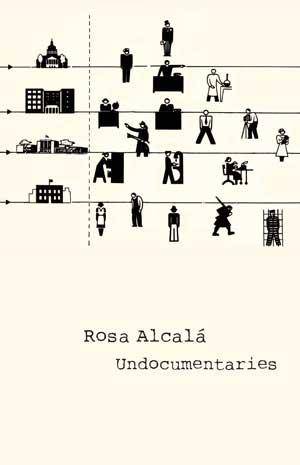
* undocumentaries *
Over the past year, I’ve enjoyed writing reviews for The Volta Blog. My latest review is of Rosa Alcalá’s Undocumentaries. The poem above is one example of how Alcalá digs out the complications to be found behind conventional metaphors. In my review, I break down the above poem, making connections with Sylvia Plath and the tasks (and consequences) a poet sets and works out for themselves.
Due to length considerations, I had to cut a bit of the original ending to the essay. Here’s a cut paragraph that I feel is essential in conveying my own personal connection with the collection:
“What goes unsaid in an essay like this – an essay which boils down to I read the poems, I thought about the poems – is worth considering given the Alcala’s idea of the “Undocumentary.” I read these poems for the first time in my thirty-second year of life. I am back in academia out of some sense of purpose or perhaps a need of one. I haven’t shared a house with my family for over fifteen years – in fact, it has been almost four years since I saw them. So much time apart and yet they keep coming up in my own poems. When Alcala writes about distance, I know what she means: it is the distance between family, a distance both physical and emotional, a distance of language and understanding. It is a distance one tries to cover through words because that is the only thing that is real to poets: real in its unreality.”
Check out the full review here.
Happy unrealiting!
Jose
 The Influence